Wall mould response planning for homes and buildings
Plan Wall Mold Treatment Without Missing the MoistureShort answer. Do not treat wall mould as a paint or stain problem. First protect people from an urgent hazard, identify and correct the moisture source, determine how much wall and hidden material may be affected, and choose a response that matches the extent and occupant needs. Extensive, recurring, concealed, sewage-related or otherwise uncertain mould should be assessed by an appropriate professional. Cosmetic covering alone does not resolve moisture.
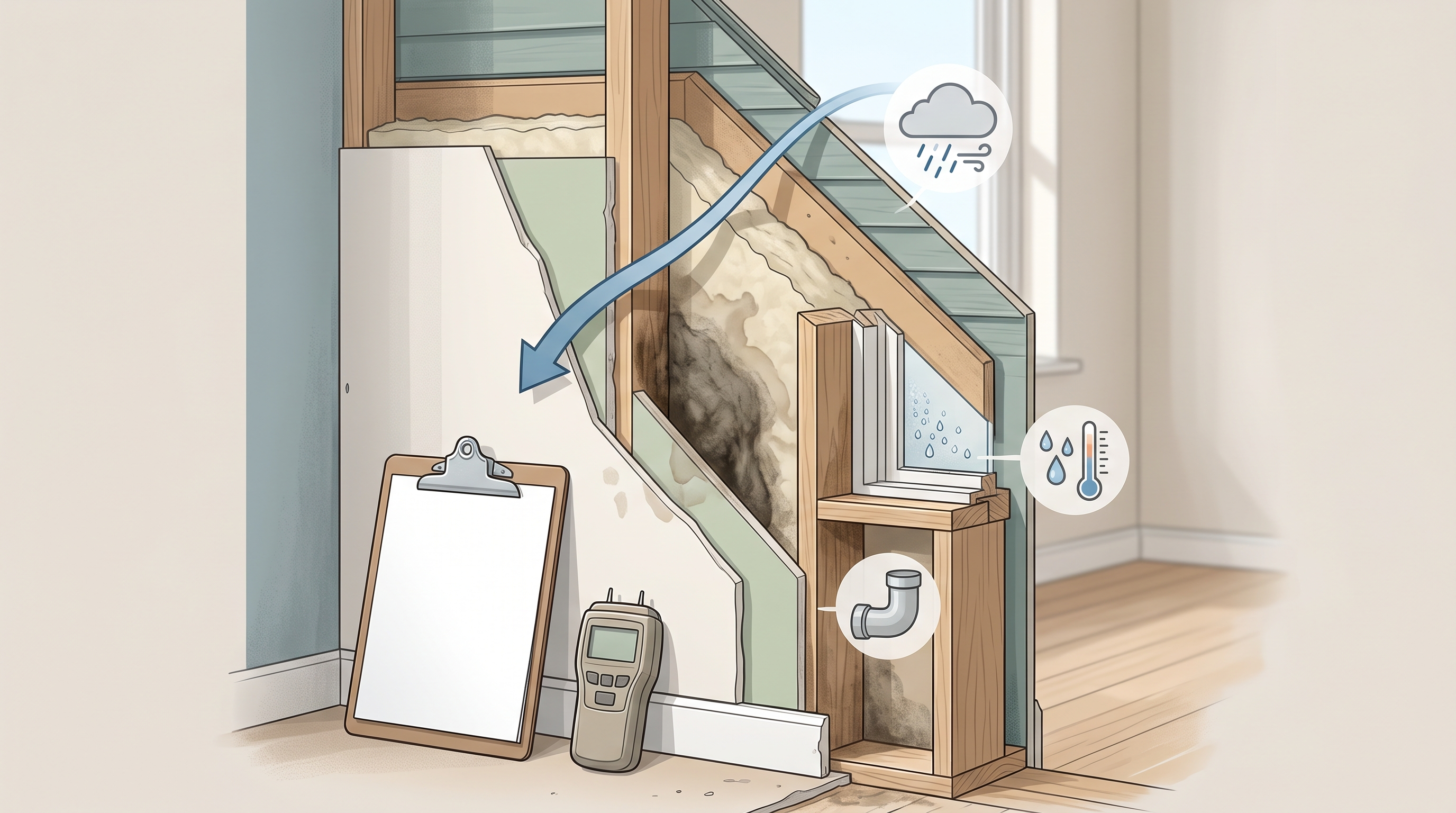
The visible mark is one clue; the moisture source, wall material and hidden extent shape the response.
Table of contents- What visible wall mould tells you
- Assess moisture, extent and wall material
- Plan the response in the right order
- Know when to seek professional help
- Handle health questions appropriately
- Common treatment mistakes
- Frequently asked questions
- Contact Asmmoldremoval
What visible wall mould does and does not tell you
Mould growth requires moisture. A visible patch therefore points to a moisture condition that needs investigation, but appearance alone does not reveal the complete source or extent. Water may come from plumbing, exterior entry, roof or window leakage, condensation, ground moisture, a past flood, high indoor humidity, or several interacting causes.
A wall finish can hide part of the problem. Painted drywall, plaster, masonry, wood, insulation, trim and wall cavities absorb and release moisture differently. A small surface mark may be localized, or it may be the visible edge of a concealed wet area. Conversely, a dramatic old stain does not prove active growth today. Assessment should distinguish current moisture from historic damage without assuming that a photograph can do so.
Colour does not reliably identify a species or establish toxicity. “Black mould” is often used as a broad marketing phrase, but a dark patch is not a medical diagnosis. The practical questions are whether moisture is present, what materials are affected, how extensive the condition is, why it occurred and what safe scope is appropriate.
Asmmoldremoval presents removal and remediation information on its website. That establishes a contact path, not a verified method or outcome for a particular wall. Ask the business to define its current assessment, containment, removal, drying, restoration and verification scope in writing.
Assess the moisture source, extent and wall assembly
Health Canada’s guidance on moisture and mould makes moisture control central to the response. Before choosing a cleaner, coating or contractor, collect evidence that will help locate and stop the water.
| Decision factor | Questions to document | Why it changes the plan |
|---|---|---|
| Water source | Is there a leak, condensation, exterior entry, flooding or unknown source? | Treatment without source correction can leave the growth conditions in place |
| Timing | When was it first seen, and does it change with weather, plumbing use or season? | Patterns can help the appropriate professional investigate the source |
| Extent | Is it one small visible area, several areas, recurring or suspected behind finishes? | Larger, distributed or hidden conditions can require professional assessment |
| Material | What finish and backing are present, and what adjacent materials became wet? | Porous and concealed materials may not be addressed like a washable surface |
| Water category | Was sewage, contaminated floodwater or another hazardous source involved? | Additional biological and occupational hazards can change who should respond |
| Occupants | Are there symptoms, medically vulnerable people, children, older adults or pets? | Exposure and temporary-use decisions may need healthcare or public-health input |
| Building systems | Are electrical, structural or HVAC components affected? | Qualified trades or specialists may be required before disturbance |
Photograph the area without disturbing it and record dates, odours, water events and changes. Do not cut into a wall or remove a large area simply to “see what is there” unless the work has been assessed and planned. Disturbance can spread dust and expose electrical, plumbing, structural or contaminated materials.
For active flooding, sewage, electrical danger, major structural damage, fire damage, a gas concern or another immediate hazard, leave the affected area and contact the appropriate emergency service, utility, building authority or qualified responder. Routine mould cleanup should wait until urgent hazards are controlled.
Plan wall mold treatment in the right order

Do not move from stain to cosmetic repair until moisture, extent and safe scope are understood.
- Protect occupants. Limit unnecessary access and decide whether health or public-health guidance is needed. Do not diagnose symptoms from the mould colour or location.
- Stop urgent water. Address active leaks or flooding through the appropriate property, utility, emergency or qualified trade route. Avoid electrical hazards.
- Investigate the source. Determine whether plumbing, envelope, roof, window, drainage, ventilation, humidity or another condition is involved. Use qualified specialists for systems outside your competence.
- Define the affected scope. Consider visible area, hidden cavities, adjacent rooms, porous materials, recurring locations and any contaminated water.
- Choose who should perform the work. Compare the situation with current public-health guidance. When the condition is extensive, recurring, hidden, hazardous or uncertain, obtain professional assessment rather than improvising.
- Write the remediation plan. The responsible provider should define containment, material handling, cleaning or removal, drying, waste, worker protection, adjacent-area protection, restoration and verification appropriate to the case.
- Restore only after prerequisites are met. Do not close a wall or apply a cosmetic finish while the source, dryness or affected material remains unresolved.
- Monitor the cause. Keep records and watch the corrected area during relevant weather and use conditions. Recurrence is a signal to reassess, not simply repeat the same surface treatment.
This sequence intentionally does not prescribe bleach, vinegar, antimicrobial products, encapsulants, fogging, abrasive cleaning or a universal personal-protective-equipment setup. Product labels, material condition, extent, ventilation, occupant risk and occupational requirements can change what is appropriate. Mixing cleaning chemicals can be dangerous.
Know when professional mould assessment is appropriate
The City of Toronto’s public-health guidance on mould and Canada Mortgage and Housing Corporation’s mould-in-housing information provide useful orientation. Consult the current guidance rather than relying on an old area threshold copied into a blog.
Professional help deserves consideration when mould is extensive, repeatedly returns, may be behind walls or ceilings, follows major water damage or sewage, involves HVAC or difficult-to-access spaces, affects materials that may require controlled removal, coincides with structural or electrical concerns, or cannot be safely scoped by the occupant. A landlord, condominium, insurer or workplace may also have reporting and contractor requirements.
Ask a prospective provider:
- What assessment occurs before a scope and price are proposed?
- How will the moisture source and affected wall assembly be documented?
- Which areas and materials are included, excluded or provisional?
- What containment and adjacent-area protection are planned?
- Which materials are cleaned, removed, dried or restored, and on what basis?
- What worker-safety, occupant-safety and waste procedures apply?
- Who handles plumbing, envelope, electrical, structural or HVAC work?
- What evidence determines that restoration can begin?
- What documentation and follow-up are provided?
- Which credentials, insurance, methods, products, warranties and limitations can be verified in writing?
A test result should have a decision purpose. Ask what question a proposed air, surface or material test will answer and how the result would change the scope. Testing should not be sold as a substitute for correcting visible mould and moisture, nor should it be presented as a health diagnosis.
Handle mould and health questions without self-diagnosis
Mould exposure can affect people differently. A blog cannot determine whether a symptom is caused by a building condition, identify an individual risk level, or declare a property safe for a particular person. If someone has symptoms or a condition that raises concern, contact a healthcare professional and describe the observed building condition and timing.
Follow public-health advice about reducing exposure while the condition is assessed. Do not ask a remediation provider to diagnose an illness, and do not ask a healthcare provider to determine the building scope. These professionals answer different questions and may need to coordinate through the occupant or property owner.
Statements such as “non-toxic,” “eco-friendly,” “hospital-grade,” “safe for children,” “kills all mould,” or “mould-free guarantee” require evidence and context. Do not treat them as a substitute for moisture correction, appropriate material handling or transparent limitations.
Common wall mold treatment mistakes to avoid
Painting over the visible area
A coating can hide appearance without resolving moisture or affected material. Determine the cause and safe scope before cosmetic restoration.
Choosing a chemical before understanding the wall
A product label cannot tell you whether mould is behind the finish, whether material should be removed, or whether contaminated water or another hazard is involved.
Opening a cavity without a plan
Disturbance may spread contaminants or expose utilities and damaged materials. Define containment, worker protection and waste handling first.
Identifying risk from colour
Appearance does not establish species, toxicity or health cause. Focus on moisture, extent, material and appropriate professional input.
Restoring before confirming dryness and source correction
Closing the assembly too early can conceal unresolved conditions. The responsible provider should state the restoration prerequisites.
Frequently asked questions about wall mold treatment
Can I paint over mould on a wall?
Painting alone does not correct the moisture source or determine whether affected material remains. Assess and address those issues before cosmetic restoration.
Does black colour mean the mould is toxic?
No conclusion about species, toxicity or health impact should be made from colour alone. Follow public-health guidance and address moisture and growth appropriately.
Do I need mould testing before treatment?
Not every situation benefits from testing. Ask what decision the test will support and whether current public-health guidance recommends it for the case. Visible mould and moisture still require action.
When should I call a professional?
Seek professional input when the condition is extensive, recurring, hidden, linked to contaminated water, difficult to access, connected to building systems, or beyond a safely understood scope.
How do I prevent wall mould from returning?
No one can promise recurrence prevention from a generic treatment. Correct the verified moisture cause, restore appropriately, maintain the relevant building systems and monitor the area.
Take the next step with a documented wall concern
Record the location, dates, water events, visible extent, wall material, odour, recurrence and any building-system concerns without disturbing the area. Review Asmmoldremoval’s current service information, learn how the business describes itself on the about page, and use the contact page to ask about assessment, moisture investigation, scope, methods, credentials, insurance, price, timing and limitations. Rely on the case-specific written plan and current public-health guidance—not a surface stain or generic product claim.