Moisture-first basement planning guide
Plan Basement Mold Control Around the Moisture SourceBasement mould—often searched as “mold”—is not controlled by wiping the visible patch and walking away. A durable plan connects the affected material to the water, humidity or condensation that allowed growth, then coordinates source correction, cleanup and follow-up.
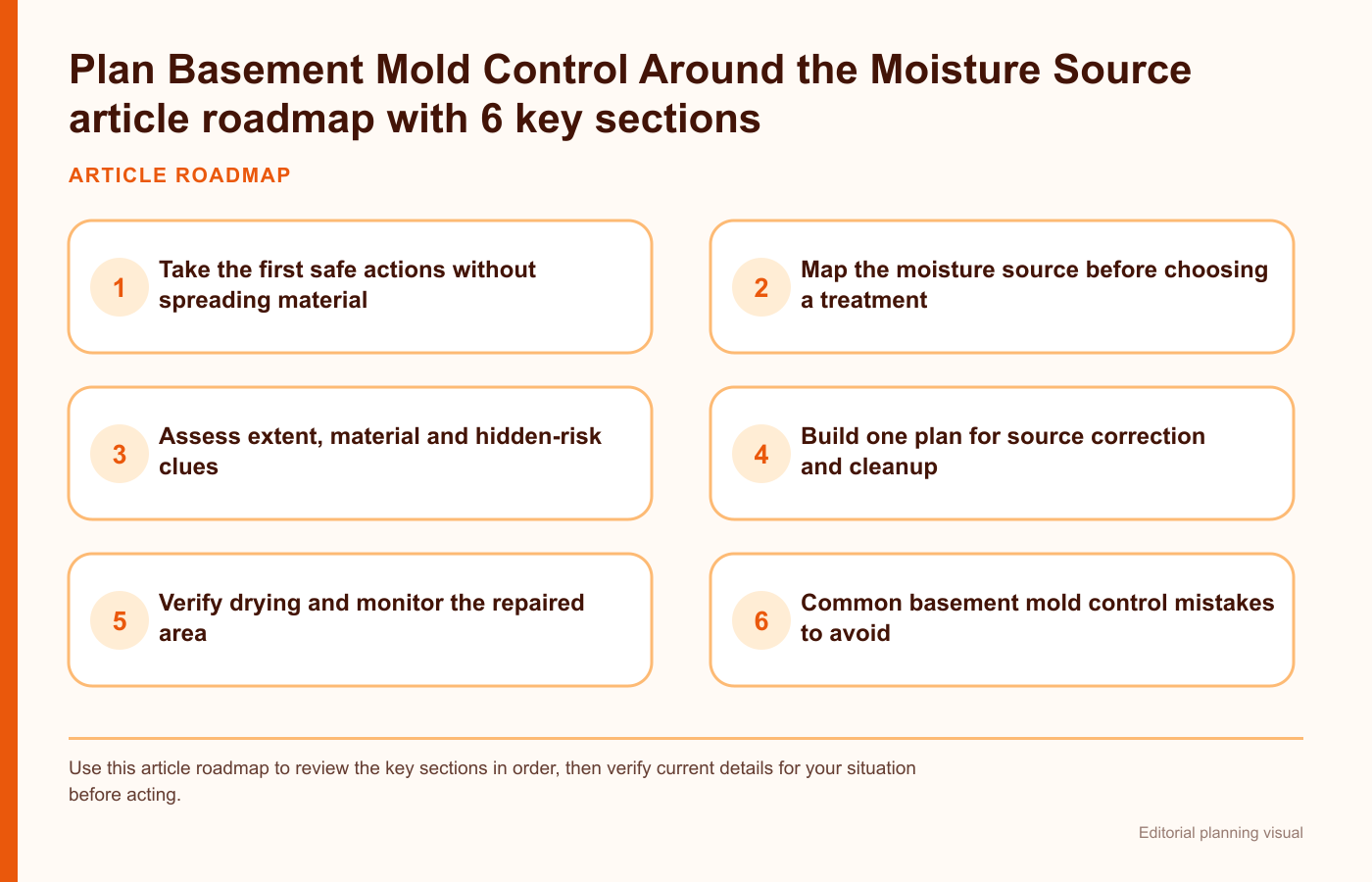
- Take the first safe actions
- Map the moisture source
- Assess extent and materials
- Build one coordinated plan
- Verify the moisture correction
- Avoid common mistakes
- Frequently asked questions
- Prepare an assessment request
Take the first safe actions without spreading material
If water is actively entering, put personal safety first. Stay out of areas with electrical hazards, sewage, unstable materials, structural damage or unsafe access. Follow emergency and insurance instructions that apply to the property. Do not start demolition merely to “see how far it goes.” Disturbing finishes can release dust and expose hidden damage.
Create a simple incident record: when the issue was noticed, recent rain or plumbing events, odour, visible staining, affected rooms, damp contents and any previous repairs. Take wide and close photographs from a safe position. Record humidity with a basic hygrometer if one is already available, but treat the reading as one snapshot rather than a diagnosis.
Health Canada's current guide to moisture and mould indoors recommends controlling dampness and addressing visible mould. It also explains protective equipment and when professional help should be considered. People with health concerns should speak with a health-care provider; a remediation company should not diagnose symptoms.
Pause and seek qualified help when growth is extensive, keeps returning, may be behind finishes, follows sewage or contaminated flooding, involves HVAC, affects a highly vulnerable occupant, or can only be reached through unsafe work.
Map the moisture source before choosing a treatment
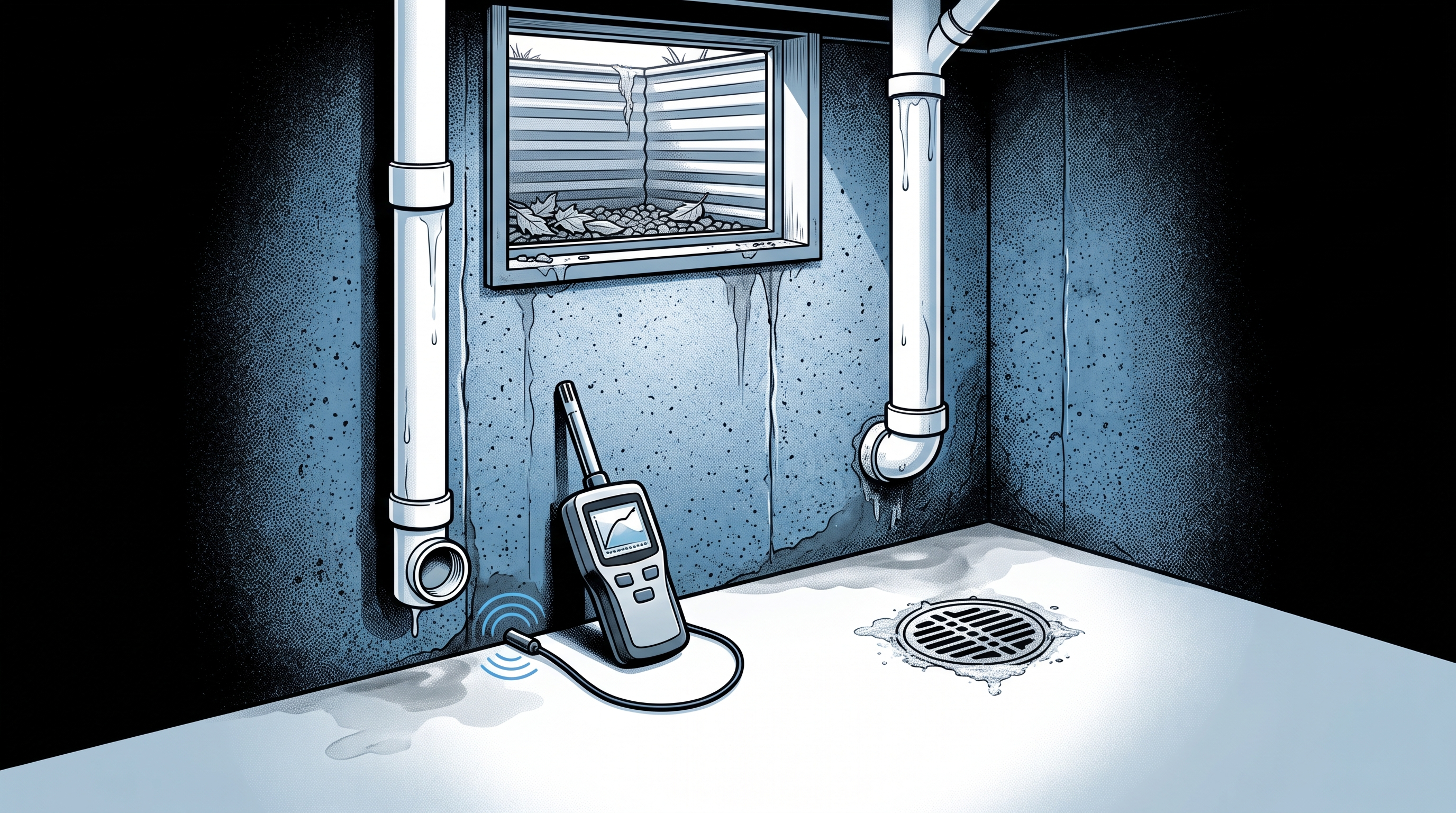
Basement moisture usually follows a path. Start outside and work inward. Check grading, downspout discharge, window wells, foundation penetrations and evidence that water accumulates beside the building. Indoors, review supply and drain plumbing, water heaters, laundry equipment, sump systems, floor drains and the joint between floor and wall. Note whether staining aligns with rain, snowmelt, plumbing use or a particular season.
Humidity and condensation create a different pattern. Cool foundation surfaces, stored cardboard against an exterior wall, restricted airflow and warm humid summer air can produce local dampness even without a visible leak. A dehumidifier may help manage indoor humidity, but it does not repair exterior water entry, a leaking pipe or missing drainage. Emptying a bucket is not proof that the source is controlled.
| Observation | Possible pathway to investigate | Decision needed |
|---|---|---|
| Worse after rain or thaw | Grading, window well, foundation entry or drainage | Who can assess and correct the building-water pathway? |
| Localized below plumbing | Supply, drain, fixture or appliance leak | Can the water be isolated safely and repaired? |
| Broad surface condensation | High humidity on cold material | How will humidity, airflow and surface temperature be managed? |
| Recurring behind stored items | Cold wall, damp contents and poor air movement | What storage and moisture changes are required? |
| Unknown or multiple patterns | Hidden or interacting sources | Is a building or moisture assessment needed before cleanup? |
Assess extent, material and hidden-risk clues
Measure the visible area without scraping or cutting. Identify whether the affected surface is a hard finish, unfinished concrete, wood, drywall, insulation, carpet, ceiling tile, stored paper or upholstered contents. Porous materials can hold contamination differently from cleanable hard surfaces, and water damage can weaken finishes or framing.
Health Canada's mould guidance describes small, medium and extensive area categories and recommends considering professional help for extensive growth. Area alone is not the only boundary. Repeated growth, strong odour with little visible evidence, damp cavities, contaminated water, widespread contents or symptoms of building failure can justify professional assessment even when the visible patch seems limited.
Do not identify “black mould” or any other species by colour. Many moulds can look dark, green, white or irregular under different conditions. The planning question is whether indoor growth and moisture are present and how they can be addressed safely—not whether a photograph resembles a named organism.
Build one plan for source correction and cleanup
A useful scope explains sequencing. Active water is stopped or managed first. Materials are assessed before being opened. The work area, contents and access route are planned. Affected materials are cleaned or removed according to condition and qualified guidance. The moisture defect is repaired, remaining assemblies are dried, and only then are finishes restored.
- Define the source work. Name the plumber, drainage, foundation, roofing, HVAC or building professional responsible, where applicable.
- Define the affected work. List rooms, materials and suspected hidden locations; avoid a vague “spray basement” scope.
- Define exposure controls. Ask how occupants, contents, airflow and the route through the home will be managed.
- Define disposal and restoration. Clarify who removes damaged material and who restores drywall, insulation, trim or flooring.
- Define completion evidence. Agree on photographs, moisture observations, source-repair records and follow-up rather than an unsupported “mould-free” promise.
ASM Mold Removal's owned website presents inspection and remediation services. Use that as a starting point for an assessment, then confirm who performs each part of the source, cleanup and restoration work. Ask for current credentials, insurance, methods, service area and warranty wording directly; do not rely on a database description or old advertisement.
Verify drying and monitor the repaired area
Completion is not simply the day visible material is removed. Confirm that the documented source repair is finished and that affected materials have dried appropriately before rebuilding. Compare conditions during the same triggers that caused the issue: after rainfall, during humid weather, after laundry use or during snowmelt. Keep downspouts, sump equipment, floor drains and dehumidifiers maintained according to qualified instructions.
Create a 30-, 60- and 90-day observation log suited to the source. Record odour, visible staining, humidity trends and any new water event. Do not repeatedly open walls to inspect them. If evidence returns, preserve the log and revisit the source assumption. Recurrence can mean the original pathway was not corrected, a second source exists or materials were restored before conditions stabilized.
Routine air testing is not automatically the best completion measure. Health Canada emphasizes identifying and controlling moisture and visible mould. If testing is proposed, ask what decision the result will change, who will interpret it, and whether the method is independent from the company selling the remediation.
Common basement mold control mistakes to avoid
- Painting over a damp surface. A coating does not repair water entry or dry a wet assembly.
- Using colour to identify risk. Appearance cannot reliably identify species or health effect.
- Starting demolition without a plan. Hidden services, contaminated dust and damaged materials can increase risk.
- Cleaning but ignoring the source. The same conditions can support return growth.
- Assuming a dehumidifier fixes every problem. It cannot repair plumbing or foundation entry.
- Accepting a vague guarantee. Ask what area, conditions, exclusions, maintenance and remedy the written terms actually cover.
- Rebuilding too soon. Confirm source correction and drying before closing finishes.
Frequently asked questions
Can I clean a small basement mould patch myself?
Health Canada provides general guidance for small and medium areas, including protective equipment. However, extent, material, water source, occupant vulnerability and hidden growth matter. If the situation is unsafe, recurring, extensive or unclear, seek qualified help rather than using area alone.
Does a musty smell prove there is mould?
A musty odour is a clue that deserves moisture investigation, not a species diagnosis. Look for dampness and building pathways without destructively opening materials. A qualified assessment may be appropriate when odour persists without a visible source.
Will basement air testing show that the problem is solved?
Not by itself. Ask what question the test answers and how it relates to visible conditions, moisture and the work performed. Health Canada does not recommend routine air testing as a substitute for addressing moisture and visible mould.
Prepare a moisture-first assessment request
Gather the event timeline, privacy-safe photographs, approximate visible area, affected materials, recent water events and repairs, humidity observations, occupant or access constraints and insurance instructions. Review ASM's about page, then use the contact page to ask for a current assessment scope.
Request separate explanations for the moisture source, cleanup, restoration and verification. Confirm fees, service area, credentials, insurance, methods and any warranty terms in writing. A strong next step should clarify the cause and sequence; it should not promise medical outcomes or a permanently mould-free basement.
General information only, not medical, engineering or property-specific remediation advice. Unsafe, contaminated, extensive or structurally uncertain conditions require qualified assessment.