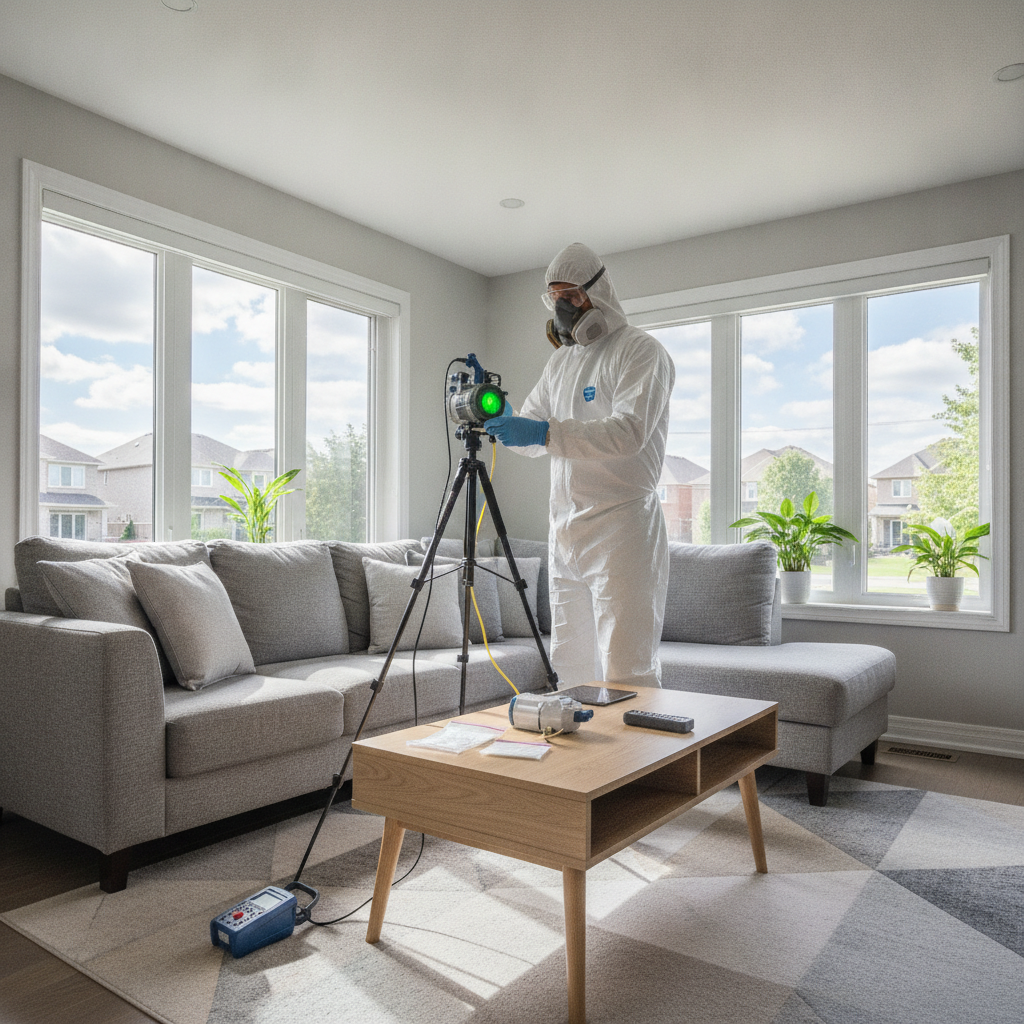
Mould air testing is the process of collecting and analyzing indoor air to determine the presence and concentration of airborne mold spores. It guides safe remediation plans and verifies clearance. From our Scarborough, ON headquarters at 1225 Kennedy Rd, Asmmoldremoval offers same-day mould air testing and full remediation across Ontario.
By Asmmoldremoval • Last updated: 2026-06-13
At a Glance
Mould air testing assesses airborne spore levels to confirm hidden growth, inform remediation, and validate that a space is safe to reoccupy. Accurate results require outdoor control samples, calibrated pumps, and certified labs. Use testing when you see moisture damage, musty odors, or experience unexplained respiratory irritation.
This complete guide brings together what homeowners, buyers, sellers, and facility teams actually need to decide on mould air testing—without jargon or drama.
- What mould air testing is, how it works, and when to use it
- Seven warning signs you shouldn’t ignore (with real examples)
- Sampling methods compared: spore traps, cultures, and qPCR
- Best practices we use on Ontario jobs for reliable results
- Local tips for Scarborough and the broader ON climate
- Action steps to book a same-day inspection and remediation
What Is Mould Air Testing?
Mould air testing is a professional indoor air assessment that captures airborne spores and fragments using calibrated pumps and cassettes. A certified lab identifies genera and relative concentrations. Results help confirm hidden mold sources, shape remediation scope, and verify clearance after cleanup.
In plain terms, it’s how we “see” what your eyes can’t: microscopic spores moving through the air you breathe. While visible growth tells one story, airborne counts reveal how far contamination has spread—especially after doors close and HVAC turns on.
How mould air testing fits into a full inspection
- Moisture first: Mold needs moisture to colonize. We map leaks and humidity with moisture meters and thermal imaging before testing.
- Source to spread: Surface sampling shows what’s growing; air sampling shows what you’re inhaling.
- Data you can act on: Results translate into containment design, HEPA air filtration targets, and post-remediation verification.
Indoor relative humidity above 60% often supports active mold growth, and wet materials can amplify spores within 24–48 hours. That’s why prompt testing after leaks or attic frost issues matters.
7 Warning Signs You Need Mould Air Testing
Schedule mould air testing when odors, symptoms, or moisture damage suggest hidden growth. Seven red flags: musty smells, recent water events, staining, condensation, allergies indoors, attic frost, and visible spots returning after cleaning. Early testing shortens remediation and limits mold damage.
- Persistent musty odor: A damp, earthy smell that returns after cleaning points to concealed growth in wall cavities or subfloors.
- Recent water event: Floods, roof leaks, or burst pipes can aerosolize spores. Air sampling within 24–72 hours documents baseline conditions.
- New or spreading stains: Yellowing, gray, or black discoloration on drywall or ceiling tiles often correlates with elevated spore counts.
- Condensation on windows/HVAC: Cold surfaces condense moisture; repeated fogging suggests humidity control issues and potential spore release.
- Symptoms that ease outdoors: Coughing, congestion, or eye irritation that improves outside signals an indoor air trigger.
- Attic frost or sheathing darkening: In ON winters, warm moist air can frost under roof decks, then melt and feed mold in spring.
- Recurrence after wipe-downs: If “bleach and paint” only hides spots temporarily, the source is active and likely aerosolizing.
We see these patterns repeatedly during free inspections across Ontario—especially in attics with blocked baffles and bathrooms lacking exhaust to the exterior.
Why Mould Air Testing Matters
Air testing matters because health exposure and remediation design depend on airborne load, not just what’s visible. It documents conditions for real estate, insurance, and clearance, and it pinpoints rooms needing containment and HEPA filtration to prevent cross-contamination.
Here’s the thing: mold is a moisture problem first, but indoor air is how it reaches your lungs. Testing gives you defensible data for decisions that affect health and property value.
- Health context: Some spores are respirable at 1–10 microns. Elevated counts indoors versus outdoors indicate an indoor source.
- Project design: Results direct where to place barriers, negative air machines, and scrubber runtime.
- Documentation: Buyers, sellers, and facility teams often need written proof of improvement after remediation.
In our Ontario practice, we pair air samples with surface tape-lifts on suspect materials. That one-two punch catches both airborne load and the specific species colonizing building materials.
How Professional Air Sampling Works
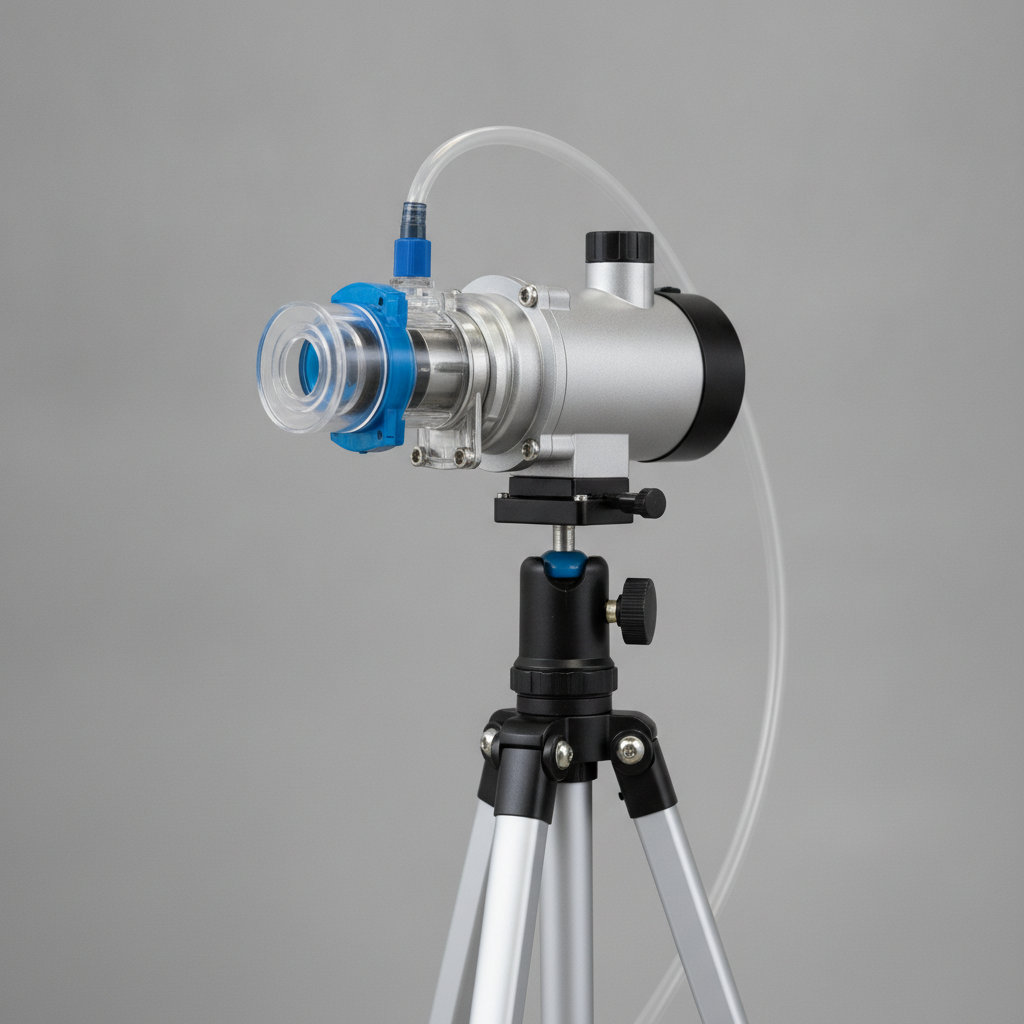
Professional mould air testing uses a calibrated pump (often 15 LPM) drawing air through a spore trap cassette for a set time (commonly 5–10 minutes). We collect outdoor control samples, maintain chain of custody, and send cartridges to a certified lab for microscopy and reporting.
Air sampling isn’t guesswork. We follow a repeatable protocol so results are comparable across rooms, days, and projects.
- Plan the sample map: Identify representative rooms, HVAC returns, and suspected sources. Include one outdoor control for every 5–7 indoor samples.
- Calibrate the pump: Verify flow at the start and end. Typical total air volume per cassette is 75–150 liters.
- Position at breathing height: Set the tripod around 3–5 feet off the floor, away from vents and walls.
- Run the sample: 5–10 minutes per location at the target flow rate. Avoid heavy activity during collection.
- Document everything: Temperature, humidity, activity level, and any cleaning or renovation within the last 24 hours.
- Ship with chain of custody: Overnight to a certified lab for analysis and a written report.
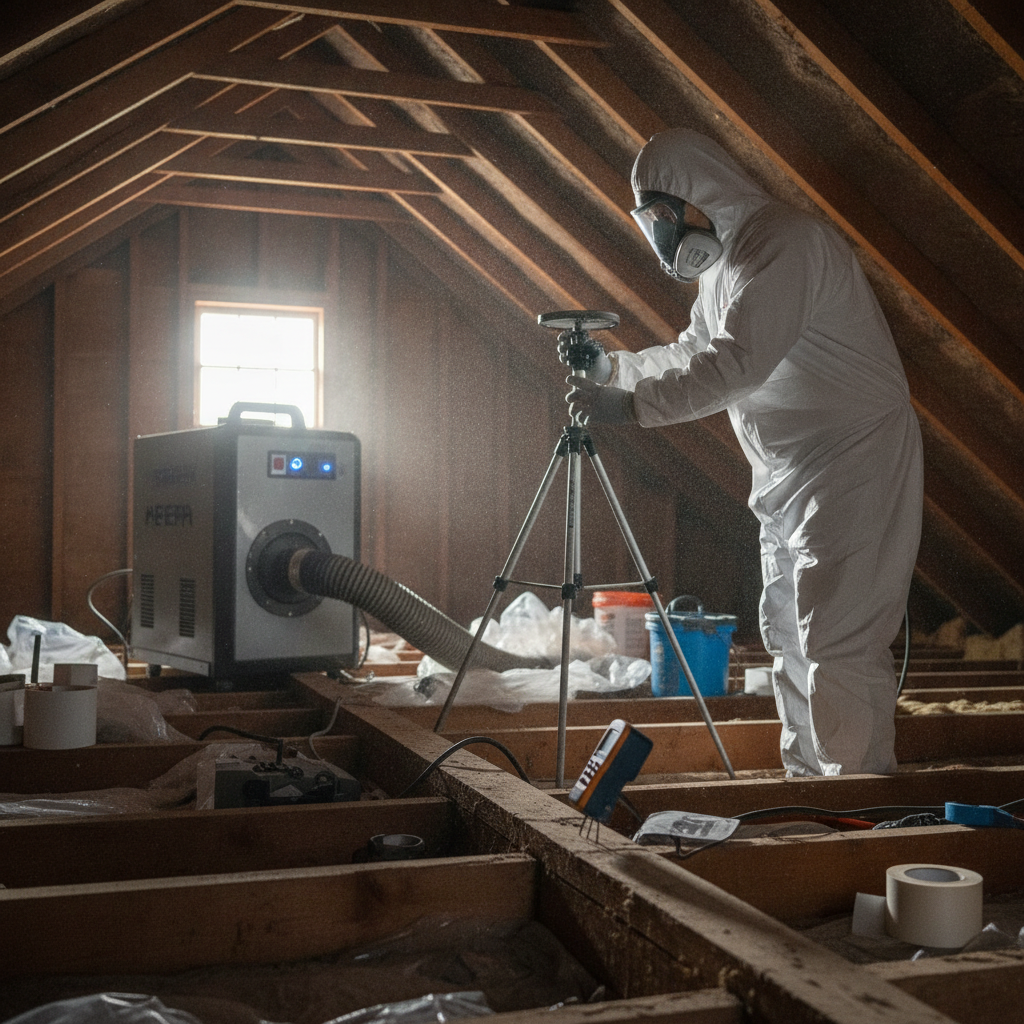
During remediation, we operate HEPA air scrubbers sized for room volume and change filters when pressure drops, maintaining targeted air changes per hour inside containment.
Local considerations for Scarborough
- Winter stack effect can push warm, moist air into attics. Prioritize attic sampling and ventilation checks in Scarborough homes.
- Spring thaws and summer humidity spikes increase attic and basement risk; schedule testing after storms or heat waves.
- Older Scarborough housing often lacks bath fans vented outdoors; inspect ducting to prevent moisture recycling into ceilings.
Sampling Methods Compared: Spore Trap, Culture, and qPCR
Spore traps are the go-to for rapid, broad detection. Cultures grow viable organisms to species level but take days. qPCR detects DNA fragments with high sensitivity. We choose based on timeline, clinical concerns, and the need for viability or speciated results.
No single method answers every question. We often combine techniques to triangulate the true condition of your indoor air.
| Method | What it detects | Turnaround | Best use | Limitations |
|---|---|---|---|---|
| Spore trap (non-culture) | Total spores and fragments by genus | Same-day to 48 hours | Screening, clearance, mapping spread | No viability; speciation limited |
| Cultured impaction | Viable colonies grown on media | 3–7 days | Species-level ID, viability questions | Misses non-viable fragments |
| qPCR (DNA-based) | Species DNA, very low detection limits | 1–3 days | Health-sensitive cases, hard-to-detect species | Special lab; cost; interpretation nuance |
For a 1,000–1,500 sq ft home, it’s common to run 2–4 indoor samples plus one outdoor control, then target additional rooms as findings evolve.
Best Practices (and Mistakes to Avoid)
For reliable mould air testing, control variables, document conditions, and always collect an outdoor control. Avoid sampling during active demolition, right after heavy cleaning, or without calibrating equipment—those errors can skew results by orders of magnitude.
Do this for reliable data
- Stabilize the space: Normal activity, windows closed 12–24 hours before sampling.
- Outdoor control: At least one per project to compare indoor/outdoor ratios.
- Standard volumes: 75–150 liters per cassette keeps counts interpretable.
- Room selection: Bedrooms, living areas, basements, near suspected sources, and one HVAC return.
- Document RH/Temp: Record indoor RH; aim to keep it under 50–55% for prevention.
Avoid these common mistakes
- Sampling mid-renovation: Demolition spikes dust and spores; results won’t reflect steady-state conditions.
- Cleaning immediately beforehand: Wiped surfaces can temporarily lower airborne counts.
- Skipping moisture diagnostics: Without fixing leaks or ventilation, mold returns despite “good” air tests.
- Forgetting the HVAC: Dirty returns and wet coils aerosolize spores building-wide.
We align testing with our certified containment and HEPA protocols so lab numbers match what people actually breathe after cleanup.
Tools and Resources We Use
Our teams pair calibrated pumps and spore traps with moisture meters, thermal imaging, HEPA air scrubbers, and dehumidification. This toolkit finds the source, contains spread, and verifies safe reoccupation with post-remediation testing and documentation.
- Air pumps and cassettes: Calibrated at flow; chain of custody for lab work.
- Moisture diagnostics: Pin/probe meters and infrared imaging to chase hidden leaks.
- HEPA air filtration: Sized for air changes; pressure monitoring across containment.
- Dehumidifiers and ventilation fixes: Keep indoor RH below 50–55% to suppress regrowth.
- Documentation: Photo logs, sample maps, and a Mold Remediation Warranty Certificate after successful clearance.
Want a same-day assessment? Book your free inspection and we’ll bring the right tools for on-the-spot answers.
Case Studies from Ontario Projects
Real projects show how data-driven testing speeds safe cleanup. In attics, basements, and commercial suites, pairing air and surface samples with moisture fixes reduced spore counts below outdoor controls and prevented recurrence—documented for owners and real estate stakeholders.
Scarborough attic with winter frost
An older Scarborough home showed attic sheathing darkening and winter frost. Air samples in bedrooms exceeded outdoor controls. We opened baffles, added proper bath fan venting to the exterior, performed attic mold remediation, then retested. Indoor counts fell below outdoor within 48 hours of HEPA scrubbing.
Basement seepage after summer storms
After heavy rain, a finished basement had musty odor and wall staining. Air sampling mapped elevated spores near a cold storage room. We removed wet baseboards, dried walls to safe moisture levels, cleaned with EPA-approved products, and verified with clearance samples.
Commercial suite with HVAC spread
A retail unit experienced odors across several rooms. Air testing at returns revealed building-wide distribution. We cleaned coils, replaced saturated insulation around a condensate line, set up negative air during removals, and documented improvement for the landlord.
Mould Air Testing in Scarborough and Across ON
For Scarborough and ON properties, mould air testing guides safe, efficient remediation. Local climate swings—winter stack effect and humid summers—demand targeted sampling in attics, basements, and HVAC returns. Our Ontario-wide, same-day response pairs testing with immediate containment when needed.
Whether it’s attic mold after a cold snap or basement humidity in July, our team adapts sampling to seasonal risks. Rapid testing plus moisture correction shortens projects and reduces disruption for families and businesses.
If you’re comparing international methods, see general mold-cleaning overviews like this external cleaning guide and region-specific pages for Sydney practices or Brisbane practices. While climates differ, the fundamentals—moisture control, containment, and HEPA—remain consistent.
When to Test, When to Remediate
Test when you suspect hidden growth, need documentation, or must map spread. Remediate immediately when you have clear visible colonization, active leaks, or sewage/flood events. Often, targeted pre-remediation testing plus post-remediation verification provides the cleanest record.
| Situation | Test first? | Remediate now? | Notes |
|---|---|---|---|
| Visible mold and a known leak | Optional | Yes | Fix moisture, contain, remove impacted materials; verify with clearance samples. |
| Musty odor, no visible growth | Yes | Depends | Air tests map sources; open walls only where data points. |
| Real estate transaction | Yes | Depends | Documentation matters for buyers/sellers and lenders. |
| Post-remediation verification | Yes | Completed | Confirm indoor counts at or below outdoor control. |
Not sure which path applies to your space? Our inspectors will explain options on-site and give you a clear plan.
How Asmmoldremoval Delivers Reliable Results
We combine free inspections, moisture diagnostics, calibrated air sampling, and certified remediation with HEPA containment. After cleanup, we retest and issue a Mold Remediation Warranty Certificate so owners and real estate stakeholders have documented assurance.
- Ontario-wide, same-day response: Minimize downtime and limit mold damage.
- Certified, insured technicians: Consistent protocols across attics, basements, crawl spaces, and HVAC.
- Eco-friendly, EPA-approved products: Safe for homes and commercial spaces.
- End-to-end service: From leak fixes and ventilation improvements to full restoration.
Start with a free inspection and moisture assessment, then choose remediation and prevention options that fit your building.
Need answers fast? Book a same-day mould air testing visit anywhere in Ontario. Our team arrives with calibrated pumps, containment materials, and HEPA filtration ready to deploy.
Frequently Asked Questions
These quick answers cover timing, preparation, and interpretation for mould air testing. If you don’t see your question, our team is happy to help by phone or during a free on-site inspection.
How long does mould air testing take?
Most projects take 60–120 minutes on-site. Each air sample typically runs 5–10 minutes at a set flow rate, plus time for setup, calibration, and documentation. Lab turnaround for spore traps is often same-day to 48 hours, with longer timelines for cultures.
Do I need to leave the house during testing?
Not usually. We ask that windows remain closed and activity stays normal during collection so results reflect typical conditions. If we discover significant growth, we’ll advise on containment and whether temporary relocation is recommended for remediation.
What if indoor counts are higher than outdoors?
That pattern suggests an indoor source. We’ll investigate moisture, ventilation, and building materials, then design containment and HEPA filtration around the affected areas. After remediation, we retest to confirm indoor levels at or below outdoor control.
Can I rely on DIY test kits?
DIY kits rarely provide calibrated air volumes, outdoor controls, or defensible documentation. They also miss non-viable fragments and often lead to false reassurance or unnecessary alarm. Professional testing pairs data with a remediation plan and verifiable clearance.
Key Takeaways
Mould air testing gives you defensible data to protect health and property. Use it to confirm hidden growth, guide remediation design, and verify safe reoccupation. Pair testing with moisture fixes and ventilation improvements to stop recurrence.
- Seven signs—odor, water events, stains, condensation, symptoms, attic frost, and recurrence—justify testing.
- Spore traps are fast; cultures and qPCR answer viability/speciation questions.
- Outdoor controls and calibrated pumps make results credible.
- Moisture control and HEPA containment are non-negotiable for lasting results.
Conclusion
If you’re smelling must, seeing stains, or managing a recent leak, mould air testing is the smartest first step. It confirms what’s in the air, guides safe cleanup, and documents improvement for peace of mind.
From Scarborough to every corner of Ontario, Asmmoldremoval pairs testing with same-day containment and eco-friendly remediation. Ready to breathe easier? Schedule your free inspection today.