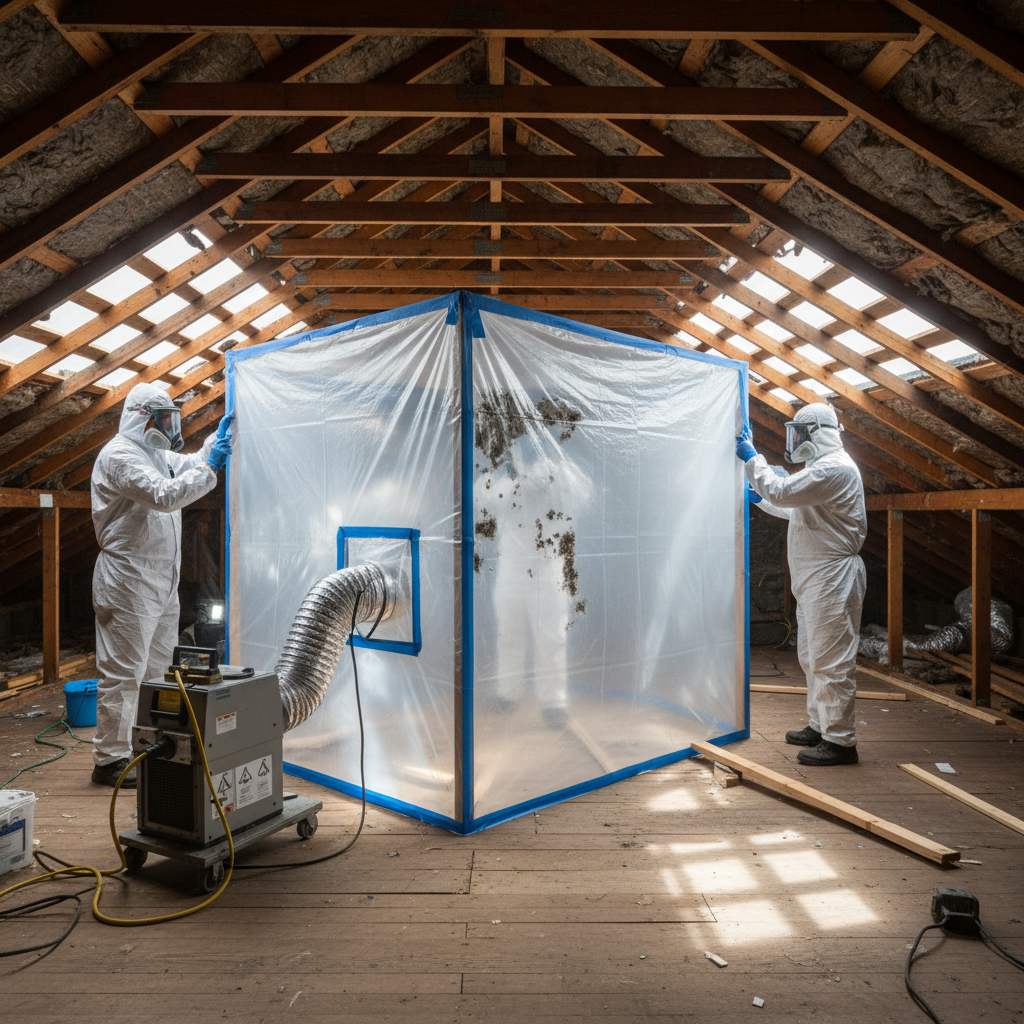
Mold removal service is the professional assessment, containment, and safe elimination of indoor mold to protect health and property. From our hub at 1225 Kennedy Rd in Scarborough, we provide same-day assistance across Ontario. The process combines inspection, HEPA-controlled remediation, and prevention measures that stop regrowth and document a clean, healthy result.
By ASM Mold Removal Inc. — Last updated: 2026-05-25
Your mold removal game plan (above the fold)
If you see or smell mold, act fast: book an inspection, isolate the area, and stop moisture at the source. A certified team will test air and surfaces, build containment with negative pressure, remove growth safely, and prevent recurrence. Expect clear documentation and a warranty-backed outcome.
Here’s the thing—indoor mold multiplies fast after moisture events, often within 24–48 hours. A practical plan keeps your family or staff safe and gets your space back to normal with minimal disruption.
- What you’ll learn:
- What a complete mold removal service includes, start to finish
- Why timing matters for health, insurance, and property value
- How professionals contain, remove, and prevent regrowth
- When to test air, surfaces, and HVAC systems
- What documentation you need for real estate or peace of mind
- Why trust this guide:
- Draws on Ontario-wide same-day response experience
- Explains HEPA, containment, and eco-friendly treatments in plain terms
- Backed by a Mold Remediation Warranty Certificate on completion
Quick navigation
- What is a mold removal service?
- Why mold removal matters
- How mold removal works
- Types, methods, and approaches
- Best practices that actually prevent regrowth
- Tools and resources
- Case studies and real examples
- Frequently Asked Questions
- Conclusion and next steps
What is a mold removal service?
A mold removal service identifies moisture sources, assesses contamination, contains affected areas, removes mold safely, and treats materials to prevent recurrence. It uses HEPA filtration and negative pressure, cleans or replaces damaged building components, and verifies results with inspection and documentation.
In practice, the service moves in stages—assessment, containment, removal, cleaning, and clearance. Each stage is designed to protect occupants and avoid cross‑contamination while restoring indoor air quality.
Quick answer: the scope in one glance
- Inspection and testing: Visual survey, moisture readings, and optional air/surface testing to find hidden growth.
- Containment and safety: Poly sheeting, pressure differentials, and HEPA filtration to protect clean spaces.
- Source control: Fix leaks, improve ventilation, and dry materials to target the root cause.
- Remediation: Remove mold from wood framing, drywall, insulation, and HVAC components as needed.
- Verification and warranty: Post-inspection and a remediation certificate so you can move forward confidently.
For homeowners and property managers, this isn’t just cleaning. It’s a structured, standards-driven response that addresses both spores and moisture. Our team often begins with a free inspection and moisture assessment to map the exact plan before any demolition or treatment.
Why mold removal matters
Mold undermines indoor air quality, damages building materials, and spreads quickly after water intrusion. Fast, professional remediation prevents recurring growth, reduces odors, and safeguards occupants—especially in attics, basements, crawl spaces, and HVAC systems common across Scarborough and the Toronto metro area.
Here’s why this matters now. Spores are microscopic and travel on air currents, clothing, and HVAC returns. Left alone, visible colonies can double in size in days, while porous materials like drywall become reservoirs that repeatedly seed new growth.
- Health and comfort: Cleaner air means fewer odors and less irritation during daily living or work hours.
- Property protection: Drywall, OSB, and framing lose integrity if moisture persists; targeted drying limits that risk.
- Transaction readiness: Real estate deals often require documentation that areas are free from active mold.
- Business continuity: Discreet, staged remediation keeps downtime low for offices, retail, and warehouses.
Local considerations for Scarborough
- Expect higher attic humidity swings seasonally; schedule attic checks near the Lawrence East transit stop windows when commuting makes timing easier.
- After spring thaws and heavy summer storms, book same-day inspections to catch roof or flashing leaks early.
- Libraries and schools near Toronto Public Library - McGregor Park Branch often need after-hours remediation to avoid disruption—plan containment to fit opening hours.
How mold removal works
Effective remediation follows a clear sequence: inspect and diagnose moisture, design containment with negative air, remove contaminated materials, clean and treat surfaces, dry to target levels, and verify with inspection. Each step reduces risk of spread and locks in a durable, documented result.
We organize projects so you always know what’s next. Below is the high-level process we use across Ontario homes and commercial spaces.
Step-by-step process
- Assessment (Day 0): Visual survey, thermal imaging, and moisture readings; optional air/surface testing if needed.
- Stabilize and contain (Day 0): Shut off air movement, isolate areas with poly, and set HEPA-filtered negative air.
- Source repair (Day 0–1): Fix leaks, unclog vents, add baffles, or adjust ventilation; start structural drying.
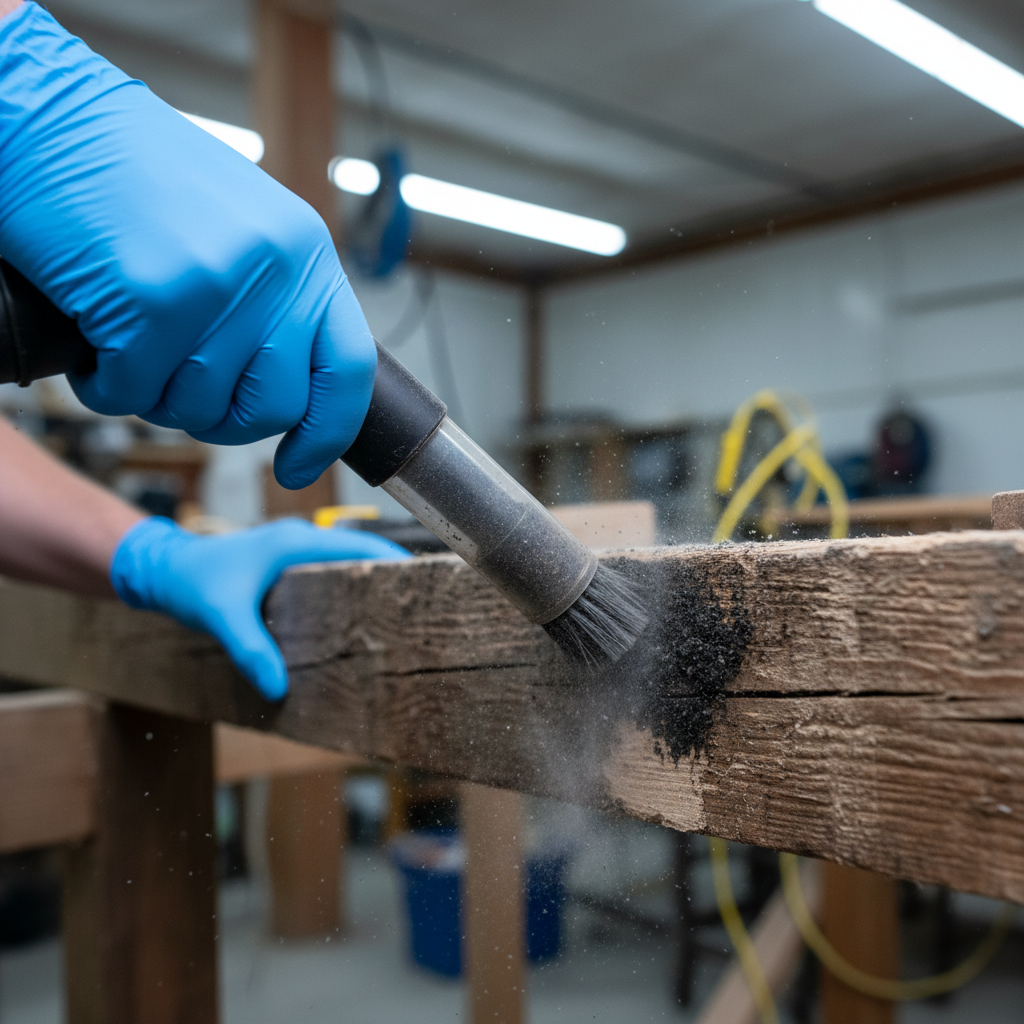
- Removal and cleaning (Day 1–2): HEPA vacuuming, wire-brushing, and damp wiping; selective demolition where materials are deteriorated.
- Treatment (Day 1–2): Apply eco‑friendly, EPA‑approved antimicrobial products to neutralize residual spores.
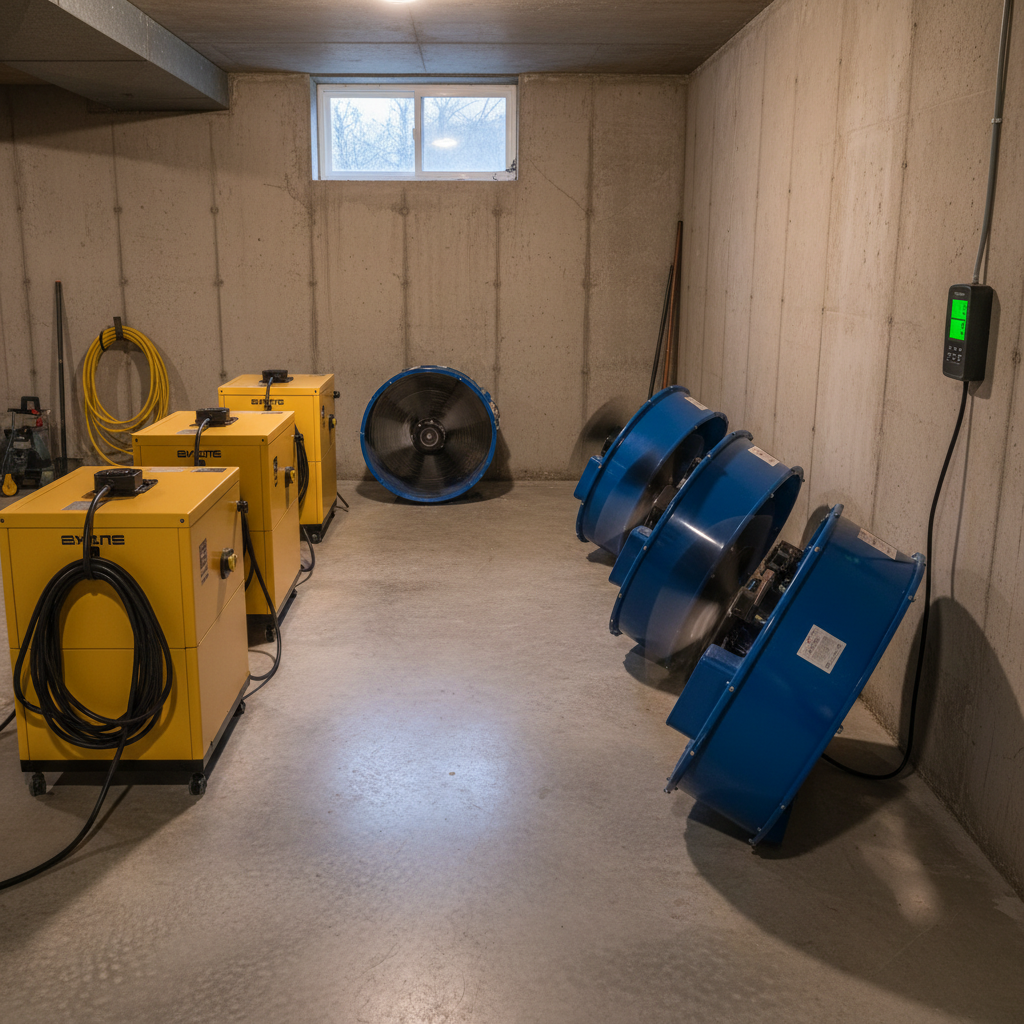
- Drying and verification (Day 2–3): Run dehumidifiers/air movers until materials reach safe moisture targets; conduct post-inspection.
- Documentation (Closeout): Provide photos, readings, and a Mold Remediation Warranty Certificate after inspection.
Process table at a glance
| Stage | Goal | Typical actions | Documentation |
|---|---|---|---|
| Assessment | Find all sources/areas | Thermal imaging, moisture mapping, optional testing | Photos, readings, scope |
| Containment | Stop spread | Poly barriers, negative pressure, HEPA air scrubbers | Containment diagram |
| Removal | Eliminate growth | HEPA vacuum, agitation, selective demolition | Waste logs, photo proof |
| Treatment | Neutralize residues | Eco‑friendly antimicrobial application | Product record |
| Drying | Reach safe levels | Dehumidifiers, air movers, meter checks | Moisture log |
| Verification | Prove clearance | Final inspection, optional testing | Warranty certificate |
In our experience, HEPA systems that capture particles down to 0.3 microns are foundational, and drying targets should be confirmed with calibrated meters, not guesswork.
Types, methods, and approaches
Mold remediation methods vary by material and location: attics focus on ventilation and wood treatment, basements on drying and wall restoration, crawl spaces on vapor barriers, HVAC on coil and duct cleaning, and black mold on strict containment and PPE. The approach matches the source and structure.
Attic mold removal
- Drivers: Roof leaks, poor ventilation, and bathroom exhausts venting into attics.
- Actions: Correct ventilation, repair leaks, remove affected insulation, treat wood framing, and reinstall proper insulation.
- Outcome: Balanced airflow reduces humidity spikes, protecting sheathing and rafters.
Basement and crawl space cleanup
- Drivers: Ground moisture, seepage, or past flooding.
- Actions: Dehumidification, wall restoration, vapor barriers for crawl spaces, and antimicrobial treatment.
- Outcome: Stable moisture levels prevent re-colonization on concrete, studs, and finishes.
HVAC-related mold
- Drivers: Dirty coils, condensate issues, and dusty returns.
- Actions: Clean coils, check drains, replace filters, and treat accessible ductwork; adjust humidity control.
- Outcome: Cleaner recirculated air and fewer spores distributed through the building.
Black mold removal (Stachybotrys chartarum)
- Drivers: Long-term water damage or chronic leaks in drywall and cellulose-rich materials.
- Actions: Higher-grade containment, full PPE, removal of saturated drywall/insulation, and thorough surface treatment.
- Outcome: A safer, cleared environment documented for real estate or insurance files.
Bathroom mold often begins where warm, moist air meets cooler surfaces. For a primer on contributing factors like ventilation and surface habits, see this overview of common bathroom mold causes.
Best practices that actually prevent regrowth
Lasting results depend on fixing moisture, maintaining air changes, and cleaning to a measurable standard. Use HEPA capture, verify drying with meters, correct ventilation, and document each step. Prevention plans lock in gains and reduce callbacks.
Prevention checklist
- Moisture control: Keep indoor relative humidity near 40–50% where feasible.
- Ventilation: Vent bathrooms and kitchens outdoors; confirm attic baffles and soffits are open.
- Drying targets: After water events, run dehumidifiers and air movers for 3–5 days or until readings are normal.
- Cleaning standard: HEPA vacuum, damp wipe, and repeat until wipes show no visible residue.
- Monitoring: Use hygrometers and periodic moisture checks in past-problem zones.
Documentation that stands up
- Before/after photos: Establish scope and prove clearance.
- Moisture logs: Show that materials reached safe levels.
- Product records: Note EPA‑approved antimicrobial treatments used.
- Warranty certificate: Close with a clear remediation warranty and conditions.
Need a walkthrough of our approach and standards? Visit the about page for a concise summary of methods we use in homes, offices, and institutional buildings.
Tools and resources
Professional remediation relies on calibrated meters, HEPA-filtered air scrubbers, dehumidifiers, and safe, eco‑friendly antimicrobial products. Thermal imaging reveals hidden issues, while hygrometers and data logs verify moisture control. The right tools make results predictable and provable.
Below are the tools we deploy daily across Ontario projects, from Scarborough bungalows to warehouse offices.
- Thermal imaging cameras: Find cold spots from wet insulation or leaks behind finished surfaces.
- Moisture meters (pin and pinless): Track drying progress and set targets per material.
- HEPA air scrubbers: Reduce airborne particulates during work; size to room volume changes per hour.
- Negative air machines: Maintain pressure differentials to avoid spread to clean zones.
- Commercial dehumidifiers & air movers: Accelerate evaporation and stabilize RH.
- Eco‑friendly antimicrobials: Neutralize residual spores without harsh residues.
For a general look at cleaning approaches in other regions, here’s a broad primer on mold cleaning methods and a regional example of on-site cleaning scenarios. While climates differ, the core principles—moisture control and safe removal—stay consistent.
Case studies and real examples
Real projects show how scope, structure, and timing shape outcomes. From attic sheathing to basement walls, results hinge on moisture control, containment quality, and method selection. These Ontario scenarios illustrate what to expect—and how documentation supports your next steps.
Scarborough attic: bath fan mis-vented into the attic
- Problem: Dark staining on rafters; musty odor after showers.
- Action: Re-route bathroom exhaust outdoors, remove damp insulation, HEPA clean and treat wood, add baffles, and balance soffit/ridge airflow.
- Result: Odor eliminated; follow-up moisture readings stayed within normal ranges for 60 days.
Brampton basement: post-flood wall restoration
- Problem: Drywall wicking water after a storm; visible spotting behind baseboards.
- Action: Set containment, remove wet drywall and base, HEPA clean studs, run dehumidifiers/air movers, apply eco‑friendly antimicrobial, and reinstall finishes once dry.
- Result: Clearance inspection passed; humidity stabilized near 45–50% with a new dehumidifier.
Commercial office near Toronto:
- Problem: Stale air and dust complaints; growth on coils and around returns.
- Action: After-hours containment, coil cleaning, filter upgrades, condensate maintenance, and selective duct treatment.
- Result: Noticeable air quality improvement; maintenance schedule set for quarterly inspections.
Need help today?
Book a free inspection and moisture assessment to get a clear, same-day plan. We isolate affected areas, fix the source, and remediate safely with HEPA control—backed by documentation and a remediation warranty so you can move forward with confidence.
Ready for a same-day response in Ontario? Contact our team for an inspection window that fits your schedule.
Frequently Asked Questions
These quick answers cover how long remediation takes, what testing you need, how to prepare your home or office, and what to expect from documentation. For project-specific advice, schedule a free inspection to map the exact plan.
How fast should I schedule a mold removal service after a leak?
Within 24–48 hours. Mold can begin colonizing wet materials quickly. Early containment and drying reduce demolition, shorten timelines, and improve clearance. If you can’t reach a pro immediately, shut down air movement, isolate the area with plastic if safe, and start controlled drying.
Do I always need air testing before remediation?
Not always. Visible mold and moisture readings often define the scope. Testing helps when growth is hidden, for post-clearance documentation, or during real estate transactions. We recommend it for sensitive occupants or complex buildings where data improves decisions.
Is attic mold different from basement mold?
The organisms can overlap, but conditions differ. Attics typically suffer from ventilation and condensation issues, while basements struggle with ground moisture and flooding. The remediation plan addresses the environment first, then removes growth and treats surfaces.
Will you treat my HVAC if mold is present?
Yes, when inspection suggests the system contributes to spread. Coil cleaning, drain maintenance, filter upgrades, and selective duct treatment reduce airborne spores. We schedule HVAC work off-hours to limit disruption for homes and commercial tenants.
What documents should I expect after remediation?
You’ll receive before/after photos, moisture logs, notes on antimicrobial products used, and a Mold Remediation Warranty Certificate when clearance conditions are met. These records support real estate, insurance, and facility maintenance files.
Conclusion and next steps
A proven mold removal service controls moisture, contains affected zones, removes growth safely, and verifies results with data. If you act within 24–48 hours, you shorten timelines and preserve materials—especially in attics, basements, crawl spaces, and HVAC systems common in Ontario properties.
Key takeaways
- Moisture drives mold; fix the source or growth returns.
- Containment, HEPA capture, and measured drying anchor successful projects.
- Documentation matters for buyers, sellers, and facility teams.
- Same-day action often means less demolition and faster clearance.
If you’re in Scarborough or anywhere in Ontario, we can help today. Learn more about our standards on the about page, review services on the home page, or book your free inspection now.