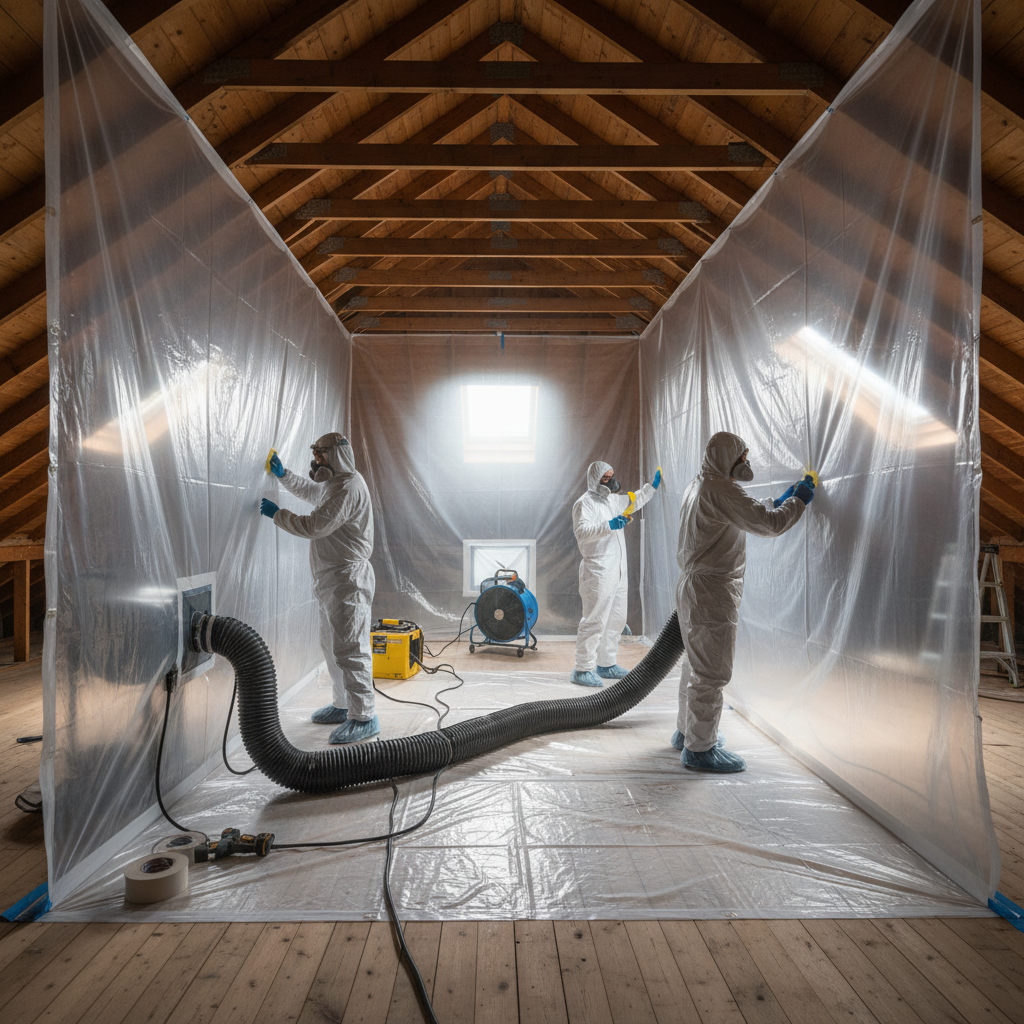
A mold remediation service is the professional containment, removal, and prevention of mold growth from homes and commercial buildings. It restores healthy indoor air by addressing moisture sources and safely removing contaminated materials. From our Scarborough hub at 1225 Kennedy Rd, we provide Ontario same-day response so you can act fast and protect your property.
By Asmmoldremoval • Last updated: 2026-05-22
Overview and Table of Contents
This complete guide explains what a mold remediation service includes, why it matters, how the process works step-by-step, and the methods, tools, and best practices professionals use. You’ll also see Ontario-focused examples, quick checklists, and a speakable FAQ to help you make a safe, confident decision today.
Use this guide to quickly find what you need:
- What a professional mold remediation service actually covers
- Why timely action protects health, structure, and real estate value
- Exactly how remediation works (inspection → containment → removal → prevention)
- Methods for attics, basements, crawl spaces, HVAC, and commercial sites
- Tools, checklists, and Ontario-based case examples you can learn from
What Is a Mold Remediation Service?
A mold remediation service is a structured, standards-based process to locate moisture, contain affected areas, remove mold safely, and verify clean indoor air. It includes inspection and testing, HEPA filtration, negative air containment, material removal or cleaning, and prevention planning with documentation.
When people ask, “What does remediation include beyond basic cleaning?”—the answer is scope and control. True remediation tracks the moisture source, controls spores with negative pressure, and proves results through clearance criteria or post-remediation verification (PRV). Indoor humidity above 60% often supports growth; safe targets are typically 30–50% relative humidity.
- Inspection and testing: Visual survey, moisture mapping, and air or surface sampling when needed.
- Containment: Poly barriers, zipper doors, and pressure differentials to stop cross-contamination.
- Engineering controls: HEPA air scrubbers and negative air machines rated 99.97% capture at 0.3 microns.
- Removal and cleaning: Source removal, HEPA vacuuming, damp wiping, and abrasive methods where necessary.
- Prevention plan: Ventilation upgrades, moisture control, and written guidance to keep areas dry.
At Asmmoldremoval, remediation spans attics, basements, crawl spaces, HVAC systems, and full commercial environments. Our same-day inspections across Ontario help you intervene within hours after leaks, storms, or musty-odor alerts—time matters because wet building materials can allow visible colonies within 24–48 hours.
Why Mold Remediation Matters
Mold remediation matters because it protects occupant health, structural integrity, and property value. Left unchecked, moisture and spores spread fast, complicating repairs and real estate transactions. Professional control limits downtime, documents safety, and prevents repeat growth by fixing the moisture problem.
Health-wise, many people report improved symptoms—less congestion, fewer headaches—after sources are controlled and air is filtered. Buildings also benefit: wet sheathing delaminates, insulation loses R-value, and metal can corrode. Timely action reduces these risks. In real estate, clean documentation and a clear prevention plan speed closings and cut renegotiation delays.
- Occupant well-being: Airborne spores and fragments disperse widely; HEPA containment and filtration reduce particle counts during work.
- Structure and systems: Persistent moisture leads to wood rot and odor; dehumidification keeps RH in the safe 30–50% window.
- Documentation: Post-remediation verification criteria and photos provide confidence for homeowners, buyers, sellers, and agents.
We routinely see post-remediation particle counts drop dramatically once negative air and HEPA filtration run for a full work cycle. That performance, combined with moisture correction, is what separates a professional mold remediation service from short-lived “cleanups.”
Mold Risks in Scarborough and Toronto
Scarborough and Greater Toronto homes face seasonal humidity swings, roof-ice melt, and summer storms that drive attic and basement mold. Localized remediation succeeds by sealing containment, running negative air, and correcting moisture—often ventilation and drainage—so spore counts stabilize long term.
Neighborhood context matters. Soffit and roof ventilation issues are common in older Scarborough attics; many need baffle corrections plus insulation improvements. Summer RH can exceed 60% in basements without dehumidification, and fall storm events can saturate sheathing in a single night. We design controls that reflect these local patterns.
- Attics: Warm interior air rises; when trapped, condensation feeds roof-sheathing growth. Airflow baffles and bath-fan terminations help.
- Basements: Cool surfaces + high RH = condensation. Set dehumidifiers to maintain around 45–50% RH.
- Commercial sites: After-hours containment and discreet staging minimize disruption while keeping corridors operational.
For quick local logistics, our crews frequently stage near Lawrence Avenue transit and retail corridors to shorten setup windows and maintain negative pressure cycles through the workday.
Local considerations for Scarborough
- Plan attic remediation crews to arrive outside rush-hour near Lawrence East to streamline equipment delivery and negative-air setup.
- Expect summer peaks: July–August basement RH can exceed 60%; schedule dehumidification and follow-up checks two weeks post-service.
- For discreet commercial work, coordinate evening access and staging near Midland Lawrence Plaza to keep day operations uninterrupted.
How a Mold Remediation Service Works (Step-by-Step)
Professional remediation follows a predictable path: assess moisture, design containment and air control, remove or clean impacted materials, dry the structure, then verify and document. The sequence limits cross-contamination, speeds drying, and provides a defensible record for health and real estate needs.
Below is the process we use across Ontario. Time ranges vary by square footage, access, and material types, but the sequence remains consistent.
| Phase | What Happens | Typical Duration | Key Outcome |
|---|---|---|---|
| 1) Inspection | Visual survey, moisture mapping, optional air/surface sampling | 1–3 hours | Defined scope and moisture source |
| 2) Containment | Poly barriers, zipper access, pressure differential setup | 1–4 hours | Controlled work zone |
| 3) Engineering Controls | HEPA scrubbers and negative air machines commissioned | Continuous | Lower airborne particles |
| 4) Source Removal/Clean | HEPA vacuum, damp wiping, selective demolition or abrasive cleaning | 1–3 days | Contamination removed |
| 5) Drying | Dehumidification and ventilation correction | 1–3 days | Moisture stabilized ~30–50% RH |
| 6) PRV/Finalize | Post-remediation verification criteria, photos, documentation | Same day | Clear, documented results |
Our Ontario teams often stabilize RH in the target range within 48–72 hours when dehumidification is continuous and air changes per hour are optimized by machine placement. We stage equipment to balance noise, airflow, and occupant access throughout the job.
Methods and Approaches We Use
Remediation methods are selected by material, moisture level, and access. We combine HEPA vacuuming, damp wiping with EPA-approved antimicrobials, selective removal, and abrasive cleaning (soda or dry ice) as needed, followed by ventilation and moisture control so remediation lasts.
Choosing the right method matters because not all materials tolerate the same treatment. Unfinished pine framing accepts abrasive cleaning; painted drywall may require removal if paper facers are colonized. In our experience, thorough source removal and air control cut repeat-service calls dramatically in the first 90 days.
- HEPA vacuuming: Removes settled spores and fragments prior to damp wiping; filters are rated 99.97% at 0.3 microns.
- Damp wiping: EPA-approved antimicrobial solutions on non-porous and some semi-porous surfaces after HEPA prep.
- Selective demolition: Remove unsalvageable drywall, insulation, or carpet; bag and exit through contained pathways.
- Abrasive cleaning: Soda or dry ice blasting for roof sheathing and framing in attics or crawl spaces with heavy colonization.
- Dehumidification: Target 30–50% RH; continuous operation during and after work stabilizes materials.
- Ventilation fixes: Correct bath fan terminations and attic baffles; ensure supply/return balance in basements.
We use moisture meters, hygrometers, and thermal imaging to track conditions. For HVAC systems, coil and duct cleaning with antimicrobial application is paired with filter upgrades and drain-pan checks to prevent regrowth.
Attic, Basement, Crawl Space, HVAC, and Commercial Scenarios
Attics need ventilation fixes and sheathing cleaning; basements require dehumidification and drain solutions; crawl spaces benefit from vapor control; HVAC needs coil/duct hygiene; and commercial sites demand discreet, after-hours containment. Matching method to setting delivers lasting results.
Attic mold removal
We specialize in attic mold removal. Typical drivers include bath fans venting into the attic, blocked soffits, or roof leaks. Air changes per hour rise when we position negative-air outlets near the ridge, and baffles plus insulation reset the environment. Many attics reach safe RH within 24–48 hours after ventilation corrections.
- Air seal bypasses around lights and hatches to cut warm-air exfiltration.
- Dry ice or soda blasting on sheathing when visual growth is widespread.
- Attic insulation removal and replacement when contaminated or matted.
Basement mold cleanup
Basements run cool; when summer RH rises, condensation forms on walls and joists. We set dehumidifiers to maintain roughly 45–50% RH, re-route downspouts to extend 6–10 feet from the foundation, and verify slope. Many musty basements stabilize within two weeks with continuous drying and improved airflow.
- Install continuous dehumidification with condensate pumps or floor drains.
- Seal rim joist gaps; treat framing with antimicrobial solutions.
- Evaluate sump operation and backup systems to reduce flood risk.
Crawl space mold cleanup
Unconditioned crawl spaces see seasonal swings. We often combine vapor barriers with targeted framing cleaning and dehumidification. Air exchanges through access doors are controlled to keep RH steady. Where groundwater is present, perimeter drainage and vapor control reduce seasonal spikes by double digits.
- Install continuous vapor barriers and seal penetrations.
- Dry ice/soda blast framing; follow with HEPA and antimicrobial wipes.
- Conditioned air supplies or dehumidifiers maintain sub-50% RH.
HVAC mold treatment
HVAC systems can recirculate particulates unless serviced. We clean coils and drain pans, sanitize supply trunks where accessible, upgrade to high-MERV filters, and confirm condensate flow. Systems with chronic condensate issues often benefit from float-switch protection to prevent pan overflows.
- Change filters on schedule; verify cabinet seals and insulation integrity.
- Inspect for microbial growth on insulation and treat or replace as needed.
- Balance supply and return to avoid negative pressure in finished basements.
Commercial mold remediation
For offices, retail, warehouses, schools, and healthcare spaces, uptime rules. We stage work after hours, hang clear signage on containment, and run negative air with low-noise routing. Many corridors and lobbies can remain open by carving clean egress paths and placing scrubbers to manage particle counts.
- Discreet staging and flexible scheduling to minimize disruption.
- Clear communication plans for tenant and staff coordination.
- Documentation packets for facility, safety, and real estate teams.
Best Practices and Practical Checklists
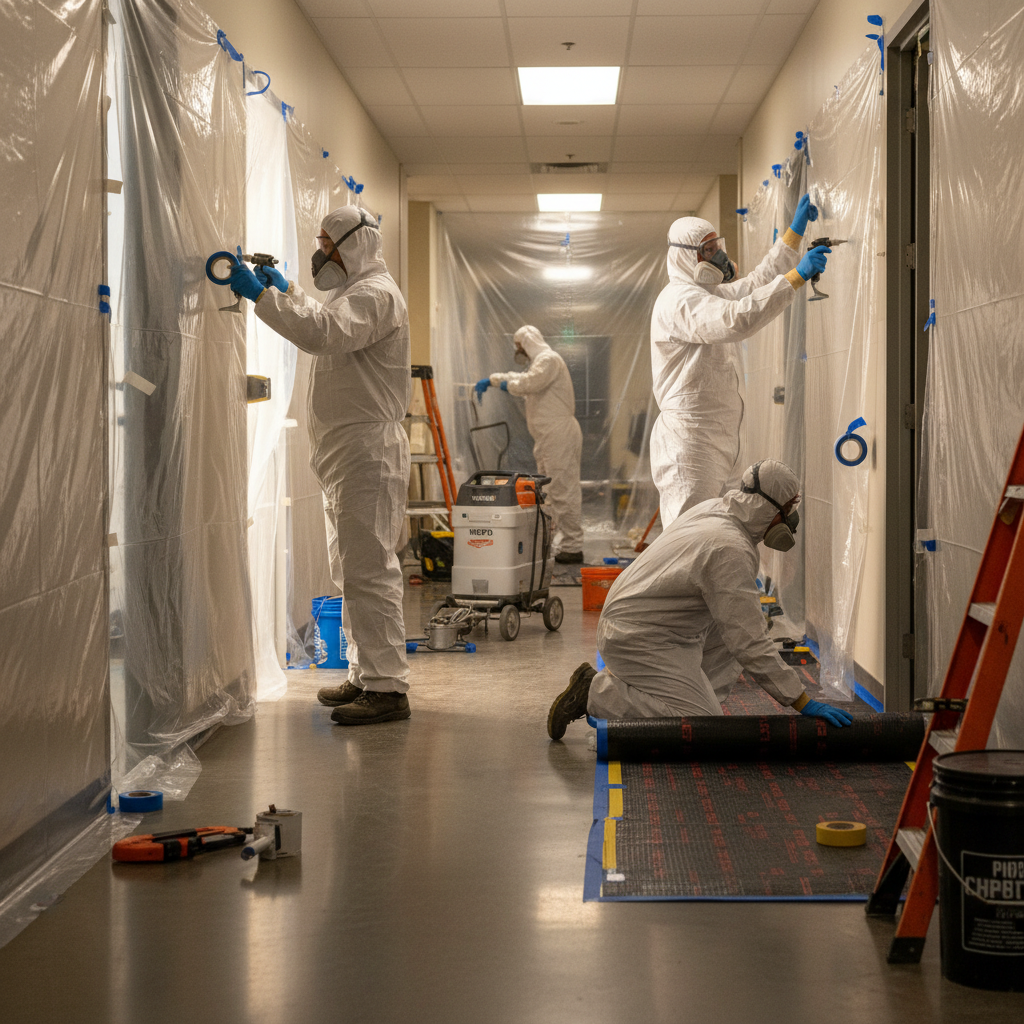
The best remediation outcomes come from disciplined containment, air control, and moisture correction—paired with clear documentation. Use checklists to verify each phase, from negative-pressure readings and filter changes to photo documentation and post-remediation prevention steps.
Project readiness checklist
- Define scope: areas, materials, moisture readings, and access routes.
- Containment plan: wall locations, zipper doors, and egress signage.
- Air control: calculate air changes per hour and machine placement.
- PPE planning: respirators, coveralls, gloves, eye/hand protection.
- Neighbor/tenant notices if multi-unit or commercial space.
Quality-control checklist
- Record negative-pressure measurements at start, midpoint, and end.
- Replace pre-filters daily in heavy load conditions; log serials.
- Photo document “before,” “during,” and “after” for each room/zone.
- Verify RH near 45–50% for 48 hours before demobilization.
- Confirm bath fans terminate outdoors; verify attic baffles are clear.
Homeowner prevention checklist
- Maintain indoor RH in the 30–50% range year-round.
- Extend downspouts 6–10 feet; fix grading to slope away from foundation.
- Run bath fans for 20–30 minutes after showers; vent outside, not into attics.
- Change HVAC filters on schedule; inspect condensate pans and drains.
- Schedule seasonal roof and attic checks before freeze–thaw cycles.
Want a professional set of eyes? Book a free inspection and moisture assessment. Our team explains which steps matter most for your layout and climate. Start at our homepage or contact us now for Ontario same-day support.
Tools and Resources Used in Remediation
Pros rely on calibrated meters, HEPA filtration, negative air machines, thermal imaging, dehumidifiers, and EPA-approved antimicrobials. Together, they locate hidden moisture, control particles, dry structures fast, and leave a documented trail that supports health and real estate needs.
- Moisture meters and hygrometers: Pin and pinless meters map wet materials; hygrometers confirm RH trends.
- Thermal imaging: Non-invasive scans reveal cold/wet anomalies behind finishes.
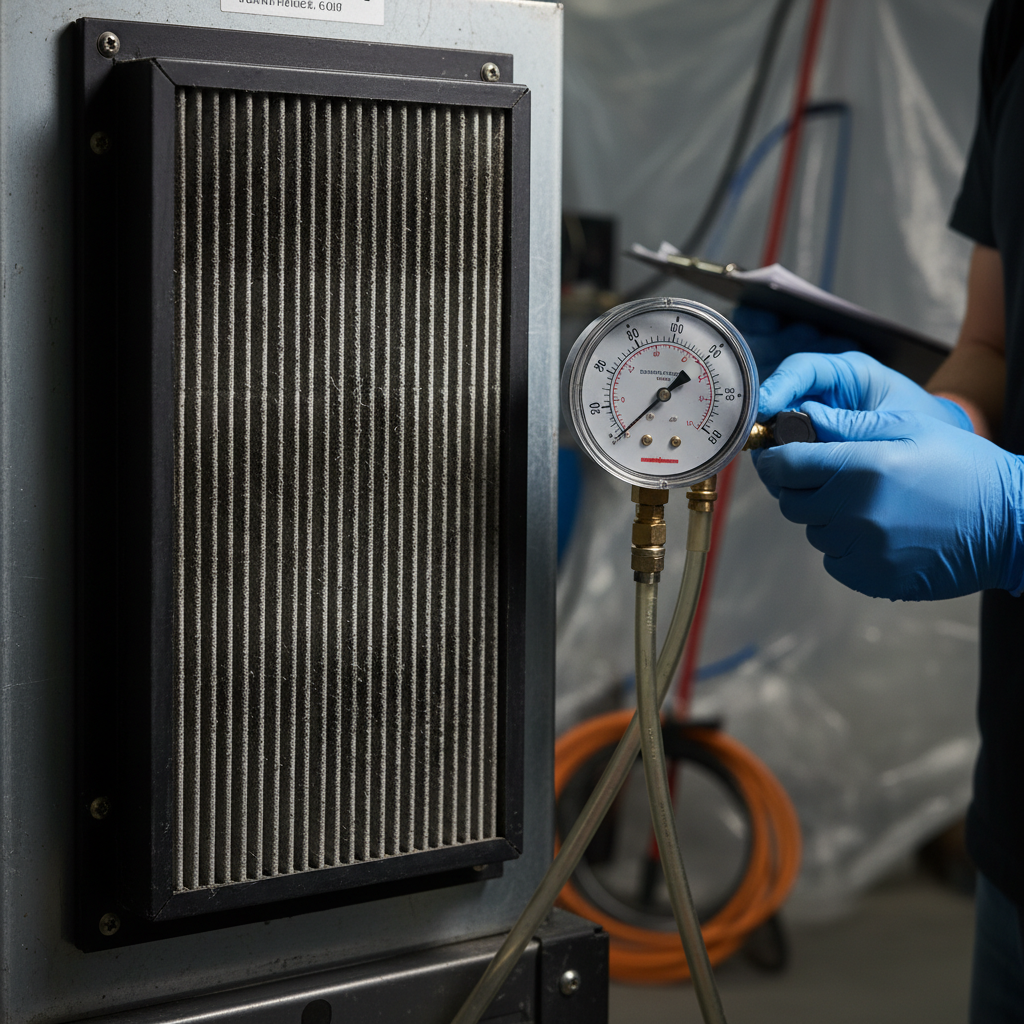
- HEPA air scrubbers: Capture 99.97% at 0.3 microns; pre-filters protect the main HEPA stage.
- Negative air machines: Ducted outdoors to keep air moving one way—out of the workspace.
- Dehumidifiers: Refrigerant or desiccant units dial indoor RH into the 30–50% band.
- Antimicrobial agents: EPA-approved formulations supplement physical removal on non-porous surfaces.
Bathrooms and basements are common hotspots because poor ventilation and humidity let moisture linger. Learn more about bathroom moisture patterns from this practical overview of common bathroom mold causes. For flood-prone basements, see this context on basement flooding protection programs to reduce future incidents in urban homes.
Technicians monitor negative pressure continuously during active work. Manometers confirm differential pressure, and filter logs document swaps so performance remains steady even in heavy dust loads.
Ontario Case Studies and Examples
Real-world Ontario projects show how targeted method + moisture control deliver lasting outcomes. These brief examples cover attics, basements, crawl spaces, HVAC, and discreet commercial work—each documented with photos and a prevention plan to keep RH stable.
Scarborough attic with winter condensation
Challenge: Dark staining across roof sheathing from winter condensation. Bath fan vented to attic; soffit baffles blocked. Action: Dry ice blasting, HEPA controls, bath fan re-termination, baffle install, insulation top-up. Result: RH held near 45–50% after two-week monitoring; no odor on recheck at 30 days.
Brampton basement after summer storms
Challenge: Musty odor and visible growth on bottom drywall edges after repeated storms. Action: Selective removal of lower drywall, continuous dehumidification, gutter and downspout extensions to 10 feet, slope corrections. Result: Materials dried to safe meter readings; RH stabilized at 45–48% within 10 days.
Durham crawl space with high groundwater
Challenge: Seasonal RH spikes exceeding 65% drove framing growth. Action: Vapor barrier install, perimeter drainage, targeted blasting and HEPA clean, dehumidifier set to 45% RH. Result: Seasonal spikes reduced by double digits; annual recheck remained clear.
Toronto office corridor containment (after hours)
Challenge: Water leak behind a demising wall affecting a corridor. Action: Night shift containment, negative air ducted to exterior, discreet signage, coordinated egress. Result: Day operations continued; PRV documentation delivered to property management the same week.
Need help documenting a property for sale? Our Mold Remediation Warranty Certificate and photo set provide clarity. Learn more about our approach on the About page and schedule your free inspection.
When to Call and What to Expect
Call immediately if you see visible growth, smell persistent musty odors, or record RH above ~60%. Expect a same-day inspection, moisture assessment, and a clear, written plan covering containment, engineering controls, source removal or cleaning, and documentation with prevention steps.
- Triggers to act now: Roof leaks, burst pipes, backed-up drains, or humidity spikes.
- What we bring: Calibrated meters, HEPA/negative-air gear, and EPA-approved solutions.
- What you receive: A defined scope, progress photos, and PRV criteria aligned to the space.
Quick response matters. Many building materials begin to show visible growth within 24–48 hours after saturation. Early dehumidification and airflow control reduce removal scope and protect finishes.
Preventing Repeat Growth (Moisture and Ventilation)
Lasting results come from moisture control and ventilation, not chemicals alone. Keep indoor RH near 30–50%, vent baths and dryers outdoors, fix grading and gutters, and maintain HVAC filters. Prevention cuts callbacks and preserves clean post-remediation conditions.
- Maintain bath-fan runtime 20–30 minutes after showers; confirm outdoor terminations.
- Set dehumidifiers to ~45–50% RH in summer; monitor with a reliable hygrometer.
- Extend downspouts 6–10 feet; regrade soil to slope away 1 inch per foot for several feet.
- Verify dryer vents discharge outside; remove lint buildup that traps moisture.
- Replace HVAC filters on schedule; seal cabinet leaks that bypass filtration.
For visual cleaning guidance that complements professional work, see this practical outline of mould cleaning basics. For full remediation, rely on controls and moisture correction so particles don’t rebound after crews leave.
Service Credentials and Warranty Documentation
Certified, insured technicians, documented methods, and a formal warranty certificate create trust. We provide free inspections, clear plans, progress photos, and a Mold Remediation Warranty Certificate after completion and verification—supporting homeowners and real estate transactions.
Our team follows current remediation standards and best practices with HEPA filtration, negative air containment, and EPA-approved products. We combine remediation with optional repair/restoration so you have one accountable provider from first call to final verification.
- Free inspection and assessment for Ontario properties.
- Warranty documentation and prevention guidance tailored to your layout.
- Same-day response for urgent issues across Ontario’s urban and suburban areas.
Thinking of booking a same-day inspection?
Start with a free inspection and moisture assessment. We’ll map the issue, design containment, and outline prevention so work is done once and done right. Same-day Ontario response is available.
Talk to our certified team today. Visit the contact page or call the number listed on our site. We’ll coordinate timing, entry, and any after-hours needs for your home or business.
Frequently Asked Questions
These quick answers explain timing, testing, safety, and how professional containment differs from basic cleaning. Each response is concise and speakable for voice assistants.
How fast should I schedule a mold remediation service after a leak?
Immediately. Many building materials show visible growth within 24–48 hours after water exposure. Quick containment, drying, and filtration limit spread. Call as soon as you notice musty odors, staining, or humidity above 60% RH.
Do I always need air testing before starting?
Not always. If the source is obvious and moisture is confirmed, remediation can proceed based on a well-defined scope. Testing adds value for hidden sources, clearance documentation, or when stakeholders need baseline and post-remediation comparisons.
What makes professional remediation safer than DIY cleaning?
Containment and air control. Pros create negative pressure, use HEPA filtration, and remove contaminated materials methodically. That reduces particle spread to clean rooms and speeds drying—results DIY often cannot replicate without the right equipment and planning.
Will remediation disrupt my business or tenants?
It can be scheduled to minimize disruption. We often run after-hours or weekend shifts, maintain clear egress paths, and stage equipment discreetly. Many corridors and lobbies remain open with proper containment and airflow planning.
Key Takeaways and Next Steps
Act fast, control air, remove sources, and fix moisture—then verify. Those four moves deliver clean results that last. If you’re in Ontario, our same-day mold remediation service guides you from free inspection to warranty-backed completion.
- Professional remediation = containment + filtration + source removal + prevention.
- Target indoor RH in the 30–50% range to discourage growth.
- Match methods to materials: sheathing vs drywall vs carpet vs ductwork.
- Document before/during/after with photos and PRV criteria.
- Book a free inspection to prioritize actions for your space.
Ready to move? Visit our contact page to schedule a same-day inspection in Scarborough, Toronto, or anywhere in Ontario.