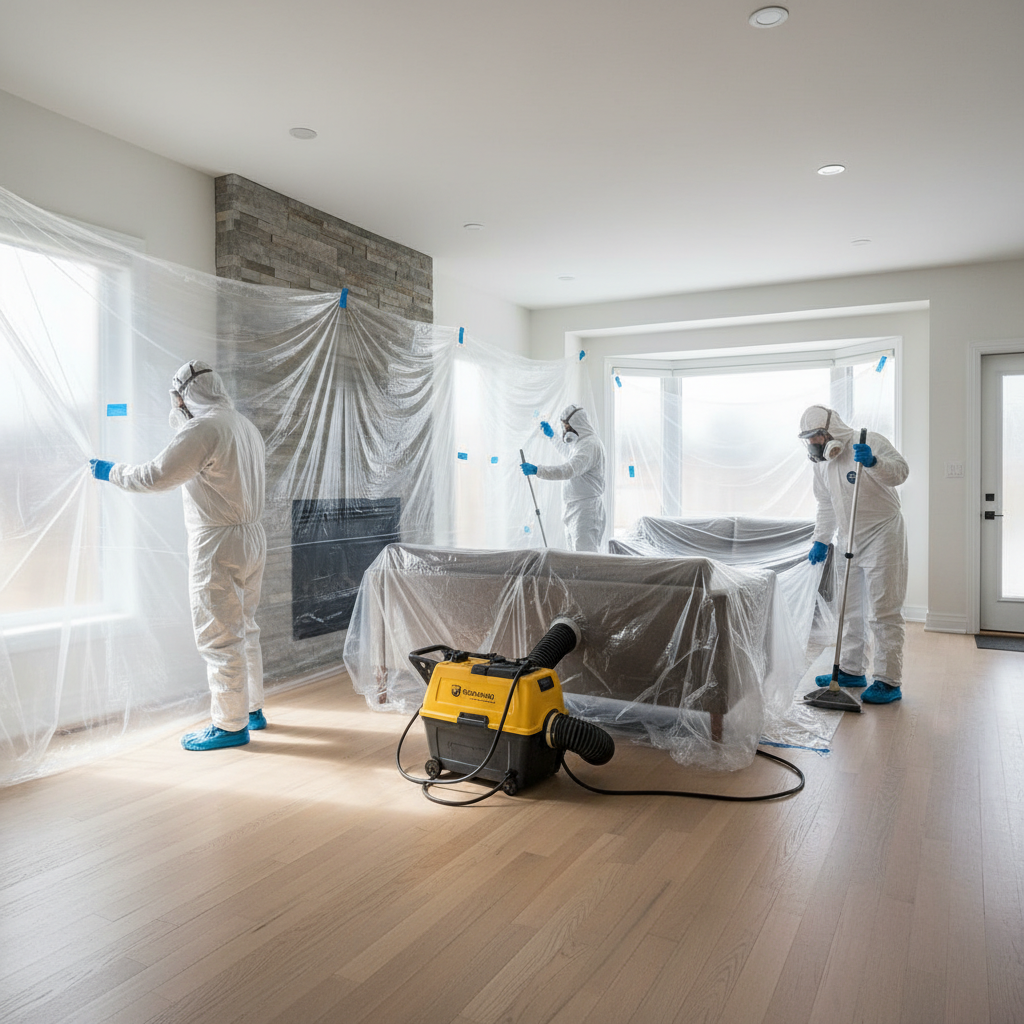
Mold remediation in Ontario is the certified process of finding moisture sources, containing growth, removing contaminated materials, and restoring healthy indoor air. In Scarborough and across ON, ASM Mold Removal Inc. delivers same-day inspections, attic mold remediation, basement and crawl space cleanup, and a post-project Mold Remediation Warranty Certificate.
By Asmmoldremoval • Last updated: June 11, 2026
At a Glance
Mold remediation restores a safe indoor environment by removing active mold and fixing the moisture that drives it. In Ontario, the fastest path is a certified inspection, proper containment with negative air, HEPA-filtered cleaning, and verified clearance—often paired with attic ventilation or basement drying to stop regrowth.
- What you’ll learn: definitions, health/property risks, exact steps, tools, case studies, and prevention checklists.
- Who this helps: Ontario homeowners, buyers, sellers, real estate agents, and commercial facility managers.
- Why ASM: Ontario-wide same-day response, free inspection and moisture assessment, eco-friendly EPA-approved treatments, and a Warranty Certificate at completion.
- Primary services covered: Mold Inspection & Testing, Mold Removal & Remediation, Attic Mold Removal, Basement & Crawl Space Cleanup, Commercial Remediation, and Water Damage Restoration.
What Is Mold Remediation in Ontario?
Mold remediation in Ontario is the professional, standards-based removal of mold and correction of moisture problems. It includes inspection, containment under negative pressure, HEPA filtration, physical removal or cleanup, antimicrobial treatment, and verification that indoor air returns to a healthy baseline.
Mold remediation is more than “cleaning visible spots.” It’s a defined method that controls spores, protects occupants, and prevents regrowth. The end goal is a healthy, dry structure with airflow and humidity brought back into safe ranges.
- Core components: source-of-moisture identification, engineering controls (containment), HEPA air filtration, removal/cleaning, and verification.
- Target conditions: relative humidity 30–50%, interior surfaces kept dry (no condensation), and stable ventilation pathways.
- Performance markers: negative pressure in containment (about 5–10 Pa), 4–6 air changes per hour during remediation, and HEPA filters capturing 99.97% of 0.3-micron particles.
ASM Mold Removal Inc. performs full-stack remediation across Ontario—from attics and roofs to basements, crawl spaces, and HVAC systems—ending with documentation many buyers, sellers, and agents require during real estate transactions.
Why Mold Remediation Matters (Health, Property, Compliance)
Mold remediation protects health, preserves property value, and supports insurance and compliance needs. Unchecked moisture can allow mold to amplify within 24–48 hours, reduce indoor air quality, and damage wood, drywall, and insulation—often spreading spores through attics, basements, and ductwork.
Health and comfort are usually the first signs something is wrong. Elevated humidity (often above 60% RH) and stale air correlate with odors and irritation. Structurally, repeated wetting cycles weaken drywall in weeks and can stain roof sheathing season after season.
- Health signals: musty odor, persistent dampness, visible staining, or frequent condensation on windows during cold snaps.
- Property risk: roof leaks that go unchecked for a single heating season can discolor large attic sections; wet basements may take 3–5 days of dehumidification to stabilize after heavy rain.
- Documentation: for buyers and sellers, a Mold Remediation Warranty Certificate paired with a clean post-remediation inspection helps keep closings on track.
In our experience, early intervention prevents multi-area contamination. A same-day inspection often trims the scope from multi-room to single-zone remediation by addressing moisture within the first 24 hours of discovery.
How Professional Mold Remediation Works (Step-by-Step)
Professional remediation follows a repeatable sequence: free inspection and moisture mapping, contain and depressurize, remove or clean contaminated materials, HEPA-vacuum and antimicrobial treat, dry to targets, verify with inspection or air sampling, then restore finishes and ventilation so mold doesn’t return.
- Free inspection and assessment: visual survey, moisture readings, optional thermal imaging, and, when appropriate, air or surface sampling.
- Containment and negative air: isolate work areas with poly sheeting; maintain 5–10 Pa negative pressure; add 4–6 ACH with HEPA air scrubbers.
- Source control: fix leaks, redirect downspouts, or improve attic/bath fan ventilation. Drying targets are typically 30–50% RH.
- Removal and cleaning: cut out unsalvageable drywall or insulation; HEPA vacuum, damp-wipe, and apply antimicrobial to framing and sheathing.
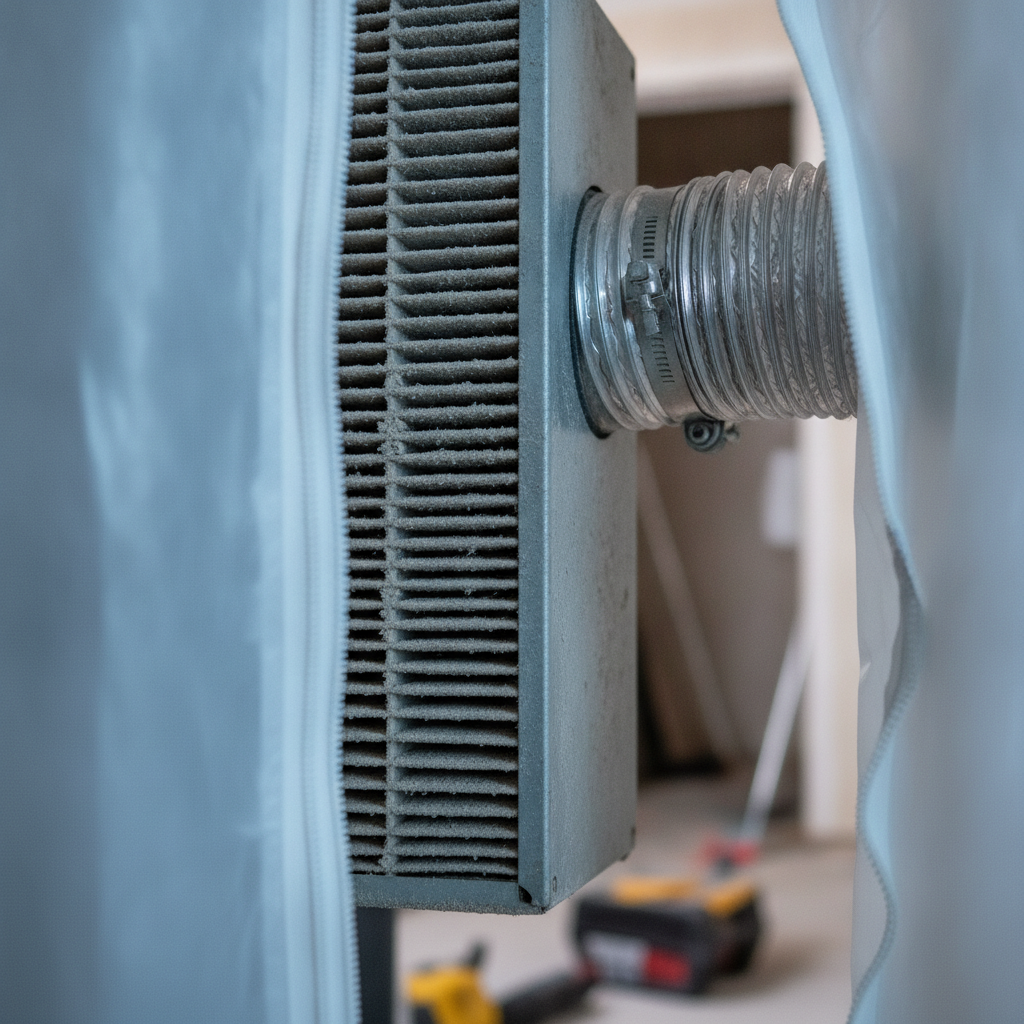
- HEPA filtration: run continuously during work and often 24 hours after, then reassess particle counts or air quality.
- Verification: a post-remediation inspection confirms visual cleanliness and dryness; optional clearance sampling is performed when needed.
- Restoration and prevention: reinstall insulation, seal penetrations, balance ventilation, and provide a prevention plan.
Typical project timing: light attic projects can be stabilized within 1–2 days; complex basement floods can require staged drying (3–5 days), followed by cleaning and verification.
Process control targets you can trust
- Negative pressure: 5–10 Pa to keep spores from migrating into clean zones.
- Air changes per hour: 4–6 ACH inside containment to reduce airborne particles quickly.
- Drying targets: bring RH to 30–50% and keep structural moisture below meter-specific thresholds.
- HEPA capture: 99.97% at 0.3 microns, supporting cleaner air during work.
Types, Methods, and Where They Apply
Different areas need different approaches: attics benefit from ventilation fixes and sheathing treatment; basements demand drainage and dehumidification; crawl spaces require vapor barriers; HVAC needs coil and duct cleaning. Matching the method to the space is what prevents recurrence.
Attic mold remediation
- Common drivers: roof leaks, blocked soffits, underpowered bath fans, and cold-weather condensation.
- Typical steps: remove wet insulation, treat sheathing and rafters, air seal bypasses, restore balanced intake/exhaust (often 1:300 net free area rule of thumb for ventilation).
- Prevention: vent bath and kitchen fans outdoors; keep insulation dry; monitor for ice dam staining after thaws.
Basement mold cleanup
- Common drivers: perimeter seepage, foundation cracks, and appliance leaks.
- Typical steps: pump-out if flooded, remove saturated drywall/trim, dehumidify to 30–50% RH for 3–5 days, clean and treat structural members.
- Prevention: extend downspouts 6–10 feet, re-grade soil to slope away, add a dehumidifier sized to the square footage.
Crawl space mold cleanup
- Common drivers: exposed soil and seasonal humidity swings.
- Typical steps: install a vapor barrier, treat joists and subfloor, improve perimeter drainage, and consider conditioned or sealed-crawl strategies.
- Prevention: keep RH below 60% with dehumidification; seal vents that admit wet summer air when using a sealed-crawl design.
HVAC and black mold scenarios
- HVAC treatment: clean coils, drain pans, and nearby duct runs; replace filters; confirm condensate lines are clear.
- Black mold removal: treat as any mold—control moisture and use full containment and HEPA—while following heightened PPE and disposal practices.
- Verification: optional air sampling compares indoor readings against outdoor references to ensure normal fungal ecology.
Best Practices to Prevent Mold from Coming Back
The best prevention is moisture control: keep humidity at 30–50%, ventilate bathrooms and kitchens outdoors, fix leaks within 24 hours, and ensure attics and basements stay dry year-round. Combine air sealing, insulation care, and steady dehumidification for durable results.
Moisture and airflow checklist
- Maintain 30–50% RH with a right-sized dehumidifier.
- Vent bath and kitchen fans outdoors for at least 20 minutes after use.
- Repair roof and plumbing leaks within 24 hours of discovery.
- Keep attic intake (soffits) open and exhaust balanced.
- Use downspout extensions and grade soil away from the foundation.
- Insulate cold surfaces (ducts, pipes) to minimize condensation.
When to schedule inspections
- After a major rain event or thaw, especially if you notice musty odors.
- Before listing or buying a property; documentation helps closings stay on schedule.
- Following renovations that alter ventilation or add new bathrooms/kitchens.
We recommend a quick seasonal check in spring and late fall. In our Ontario projects, two brief walk-throughs per year often catch minor issues before they become multi-room remediations.
Tools and Resources Used in Ontario Remediation
Effective remediation uses meters, imaging, and HEPA engineering controls: moisture meters, thermal cameras, negative air machines, air movers, dehumidifiers, and EPA-approved antimicrobials. Combined with a formal plan, these tools bring structures back to target dryness and normal fungal ecology.
- Moisture detection: pin/pinless meters, hygrometers, and thermal imaging to map wet areas accurately.
- Engineering controls: poly containment, zipper doors, and negative air machines to maintain 5–10 Pa pressure differentials.
- Air quality testing: optional air cassettes and spore traps to document pre/post conditions when required.
- Filtration and drying: HEPA scrubbers for particles; air movers and dehumidifiers to speed drying cycles (often 3–5 days).
- Treatments: eco-friendly, EPA-approved antimicrobials, plus targeted stain removal when appropriate.
Want specifics for your property? Start with our free inspection and moisture assessment—we’ll document moisture readings, ventilation gaps, and a prevention plan you can act on.
Case Studies and Real-World Examples from Ontario
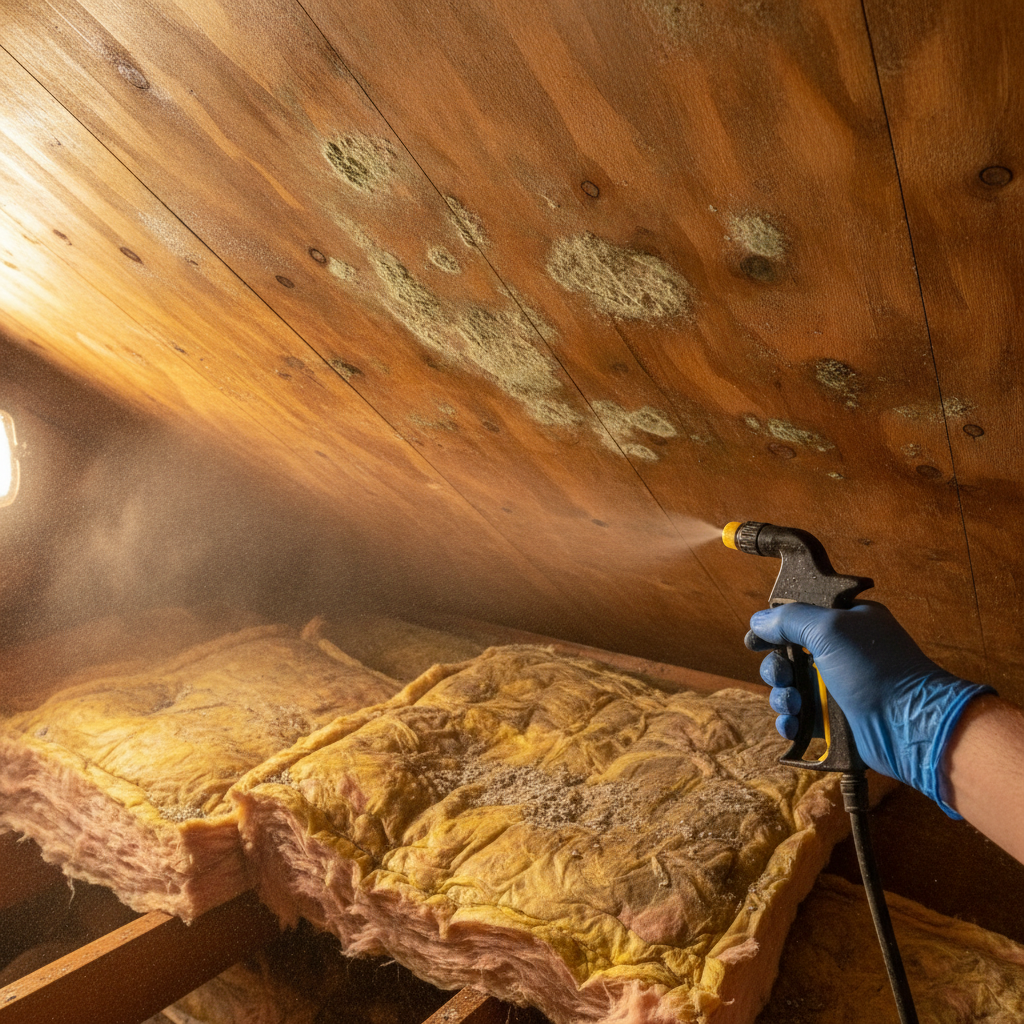
Ontario projects show patterns: attics struggle with winter condensation, basements with storm runoff, and commercial sites with process humidity. Addressing the moisture first, then cleaning and verifying, consistently returns spaces to normal conditions with fewer callbacks.
Scarborough attic leak — winter to spring
- Symptoms: sheathing discoloration across 120 sq. ft.; bath fan vented into the attic; soffits partly blocked.
- Actions: containment, HEPA, targeted sheathing treatment, insulation removal/reinstall, and routing the bath fan outside.
- Outcome: RH stabilized to 40–45%; no new staining after a thaw cycle; Warranty Certificate issued.
GTA basement seepage after heavy rain
- Symptoms: musty odor, 18 linear feet of baseboard swelling, visible drywall spotting.
- Actions: perimeter drying with air movers, dehumidification (3–5 days), removal of lower drywall, HEPA cleaning, antimicrobial treatment.
- Outcome: moisture content normalized; indoor RH held at 45–50%; no returns at the 60-day check.
Commercial warehouse — forklift charging area
- Symptoms: localized humidity from equipment, dust accumulation, and staining at lower wall sections.
- Actions: set up zoned containment to avoid downtime, HEPA filtration during off-hours, targeted surface cleaning and treatment.
- Outcome: operations continued; particle counts dropped markedly within 24 hours; prevention plan implemented.
Choosing a Certified Mold Remediation Provider in Ontario
Select a provider that offers same-day inspections, certified containment and HEPA protocols, eco-friendly treatments, and written documentation. Look for end-to-end service—assessment through restoration—and a warranty certificate that confirms treated areas are free from active mold after inspection.
- Ask about containment: negative air targets, air changes per hour, and how clean/dirty pathways are managed.
- Confirm documentation: written scope, photos, moisture maps, and an official completion certificate.
- Expect prevention: ventilation improvements, dehumidification sizing, and leak control in the plan.
- Assess disruption: commercial clients often prefer after-hours containment to maintain productivity.
We detail all of the above in our remediation plans and back projects with a Mold Remediation Warranty Certificate after inspection—critical when timing matters for real estate closings.
Local Remediation Insights for Scarborough and ON
Scarborough and ON homes face cold winters and humid summers. That means attic condensation and summer basement humidity are common. Focus on balanced attic ventilation, sealed bath fan ducts, and basement dehumidification set to 30–50% RH to prevent seasonal regrowth.
Local considerations for Scarborough
- Schedule attic checks in late winter when condensation rings and frost melt patterns are most visible.
- Set dehumidifiers ahead of summer humidity spikes; keep indoor RH near 45% to limit musty odors.
- For high-rises and commercial sites, coordinate remediation windows around HVAC changeovers to reduce downtime.
When we work in Scarborough neighborhoods, we prioritize ventilation fixes first. A one-hour vent reroute can reduce attic RH by double digits, which often prevents future staining even in volatile shoulder seasons.
Remediation Scope Levels: From Contained Cleanups to Full Restoration
Match response to scope: small, contained cleanups focus on source control and targeted cleaning; larger or flooded areas add removal, multi-day drying, and restoration. Verification—visual and, when needed, air sampling—confirms a return to normal conditions before finishes go back.
| Scope Level | Typical Triggers | Key Controls | Drying Targets | Verification |
|---|---|---|---|---|
| Contained cleanup | <10 sq. ft. visible growth; no active leaks | Local containment, HEPA vacuum, antimicrobial wipe | RH 30–50% | Visual inspection |
| Room-scale remediation | 10–100 sq. ft. growth; minor leak corrected | Full containment, negative air (5–10 Pa), material removal | 3–5 days to stabilize | Visual + optional air sample |
| Multi-room/flood | Widespread wetting or sump failure | Zoned containments, elevated ACH, staged drying and restoration | Monitor daily; moisture map | Visual + sampling as needed |
Common Mistakes to Avoid in Ontario Homes
Avoid bleach-only wipe-downs, running fans without containment, and ignoring attic ventilation. These shortcuts spread spores, miss hidden moisture, and fail to correct the cause—guaranteeing the problem returns within weeks or the next season.
- Bleach on porous surfaces: leaves moisture behind and doesn’t address root leaks or ventilation gaps.
- Box fans without controls: can force spores into clean rooms; use negative air and HEPA instead.
- Skipping prevention: without ventilation and drainage fixes, the same area often recolonizes in one season.
- Delaying action: after 24–48 hours of wetting, materials and air quality degrade rapidly.
If you’re unsure, start with a free inspection and moisture assessment. We’ll confirm what’s wet, what’s growing, and the fastest path to stability.
Request Your Free Ontario Inspection
If you see staining, smell must, or had a leak, book a same-day inspection. We identify moisture sources, document readings, and provide a clear remediation and prevention plan tailored to your Ontario property.
Ready to act today? Reach our team at ASM Mold Removal Inc. — Contact. We prioritize health, low disruption, and fast verification—then back your project with a Mold Remediation Warranty Certificate.
Helpful External Guidance for Homeowners
To complement a professional plan, read practical guidance on basement flooding, renovation readiness, and local building practices. These resources help you prepare, prevent future issues, and understand the steps your remediation team will take.
For basement water prevention scenarios in Ontario homes, see this overview on preventing basement flooding. If you’re planning renovations in multi-unit or rental settings, review a landlord-oriented guide to legal basement requirements. Exploring service options? Here’s a public listing that outlines a certified mold removal service in Ontario to compare terminology and scope descriptions.
Frequently Asked Questions
Most Ontario homeowners ask about timing, safety, and verification. The essentials: act within 24–48 hours of wetting, insist on containment with HEPA filtration, and confirm the fix with post-remediation inspection and moisture targets before putting finishes back.
How quickly should I start remediation after a leak?
Begin stabilization immediately. Materials that stay wet for 24–48 hours can allow mold to grow. A same-day inspection lets you isolate the area, start drying, and prevent spores from spreading into adjacent rooms.
Do I need air testing to prove the problem is gone?
Not always. A clean post-remediation inspection with normal moisture readings and no visible dust or staining is often sufficient. When documentation is required—such as real estate—optional air sampling can confirm a return to normal fungal ecology.
What’s the safest way to clean mold on drywall?
Contain the area, correct the leak, and remove affected drywall rather than trying to scrub porous material. HEPA vacuum surrounding surfaces, apply antimicrobial to framing, dry to 30–50% RH, and restore with new finishes after verification.
Will attic mold come back after treatment?
Not if the moisture driver is fixed. Once ventilation is balanced, bath fans vent outside, and bypasses are sealed, treated sheathing typically stays clean across seasons. We recommend a late-winter check when condensation patterns are easiest to spot.
Conclusion and Next Steps
Successful mold remediation in Ontario pairs fast containment and cleaning with moisture correction. Keep RH at 30–50%, verify visual cleanliness, and document results. A free, same-day inspection gets you from uncertainty to a clear, warranty-backed plan.
- Key takeaways:
- Act within 24–48 hours of wetting; isolate the area.
- Use negative air and HEPA filtration (4–6 ACH inside containment).
- Dry to 30–50% RH; restore balanced ventilation and drainage.
- Verify with a clean inspection and moisture targets before finishing.
- Action steps:
- Book a free Ontario inspection today.
- Walk your attic and basement for visible staining or dampness.
- Set dehumidifiers to 45% RH and test bath/kitchen fan airflow.
Have questions about a property in Scarborough or anywhere in Ontario? We’re ready to help. Book a discovery call and on-site inspection—then breathe easier with a documented, warranty-backed result.