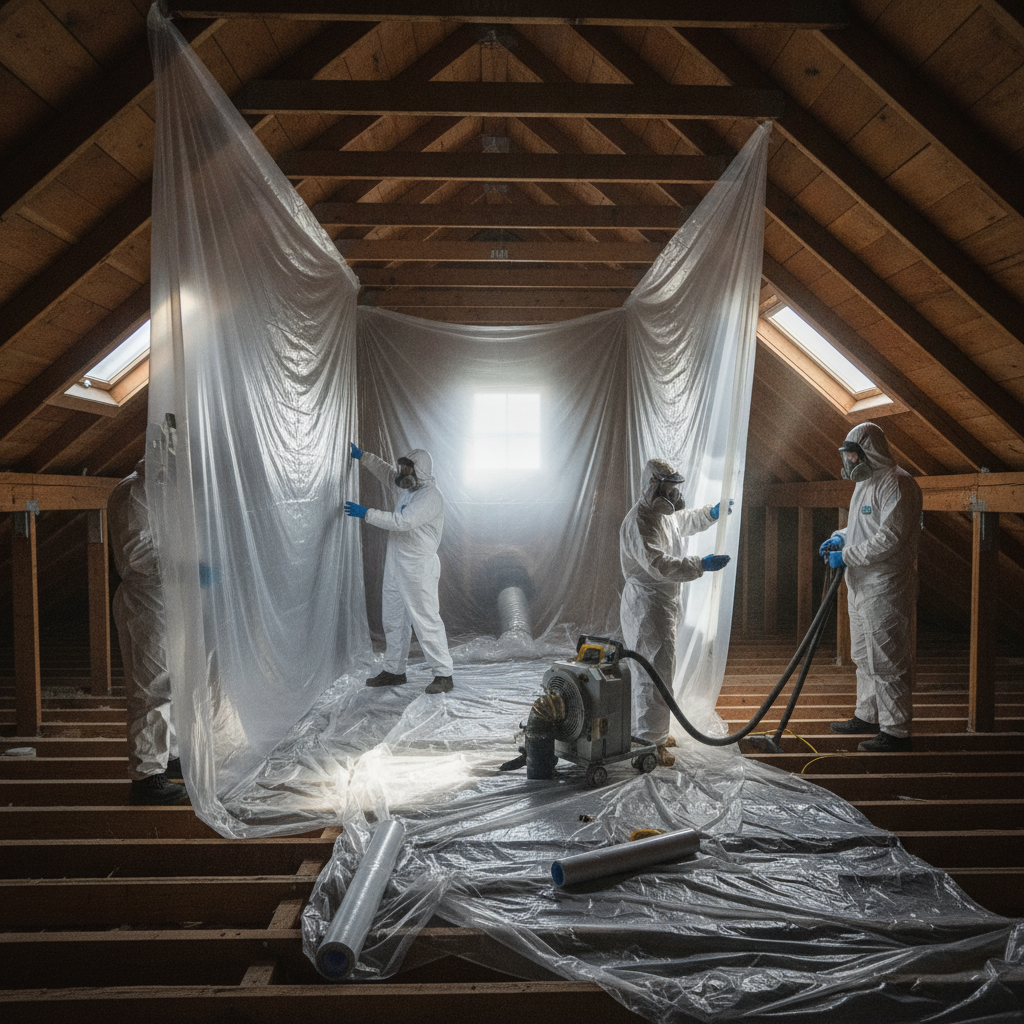
Mold mitigation is the set of actions that prevent, limit, and control mold growth by removing moisture, isolating affected areas, and treating contaminated materials. It breaks the moisture–mold cycle before damage spreads. For Scarborough homeowners and property managers near 1225 Kennedy Rd, ASM Mold Removal Inc. delivers same-day inspections and remediation aligned to these prevention-first steps.
By ASM Mold Removal Inc. • Last updated: 2026-06-08
Summary
Mold mitigation prevents mold from taking hold by controlling moisture, establishing containment, filtering air with HEPA, and treating or removing impacted materials. The goal is simple: stop growth fast, protect occupants, and keep damage from spreading while the root cause—water or humidity—is corrected.
- What you’ll learn: clear definition, why mitigation matters, step-by-step process, tools, and best practices.
- Who this helps: Ontario homeowners, buyers/sellers, facility managers, and real estate pros needing documented, safe outcomes.
- How ASM helps: free inspection and moisture assessment, same-day response, certified containment, HEPA filtration, eco-friendly treatments, and a Mold Remediation Warranty Certificate.
- Where problems appear: attics, basements, crawl spaces, bathrooms, HVAC, and after leaks or flooding.
- Quick results: isolate the source, dry materials, clean with HEPA methods, treat framing, improve ventilation, and verify with inspection/testing as appropriate.

What is mold mitigation?
Mold mitigation is the prevention-first approach to mold problems: control moisture, isolate affected areas, filter the air, and treat or remove impacted materials to stop spread. It differs from remediation by emphasizing immediate stabilization and root-cause correction so mold doesn’t return.
Mold mitigation focuses on breaking the moisture–mold cycle in the fastest, safest way possible. Think of it as the “stop the bleeding” phase that protects occupants and property while a full remediation plan is carried out. Remediation may involve larger-scale removal, restoration, and verification steps; mitigation ensures conditions are safe and controlled right away.
- Core actions: source isolation, ventilation and drying, HEPA filtration, surface cleaning, and targeted antimicrobial treatments.
- Targets: visible colonies, settled spores, contaminated dust, and the moisture conditions that feed growth.
- Outcome: stabilized indoor air, halted spread, and a clear path to long-term prevention.
At ASM Mold Removal Inc., mitigation is built into every project—attics, basements, crawl spaces, and commercial sites—so we can act the same day, prevent escalation, and move quickly to verified remediation.
Why mold mitigation matters
Mitigation matters because mold can begin growing within 24–48 hours of water exposure, and once airborne, spores spread quickly. Early action protects health, preserves building materials, and reduces disruption. Stabilizing moisture and air quality often prevents secondary damage and recurring growth.
Here’s the thing: mold doesn’t wait. Leaks, attic condensation, or a wet basement can shift conditions from normal to risky in a day or two. While every home is different, the patterns are consistent—where moisture lingers, mold follows. Quick mitigation protects occupants and buys time for full remediation.
- Health protection: cleaner indoor air and reduced allergen exposure with HEPA filtration and thorough cleaning.
- Property preservation: protecting framing, insulation, finishes, and HVAC equipment by stopping moisture and spore spread.
- Disruption control: targeted containment allows much of a home or business to remain usable during work.
- Documentation: inspection notes, photos, and (when required) testing provide confidence for buyers, sellers, and facility stakeholders.
Local considerations for Scarborough
- Seasonal swings: Winters push warm, moist air into cold attics; summers bring basement humidity. Plan mitigation with ventilation checks and dehumidification.
- Storm events: Heavy rain and wind-driven leaks call for same-day containment and drying to prevent spread into attics and wall cavities.
- Real estate timelines: Buyers and agents often need rapid inspection, documentation, and mitigation to keep closings on schedule.
We’ve found that aligning mitigation to Scarborough’s seasonal patterns—attic ventilation in colder months, basement humidity in warmer months—helps prevent repeat issues.
How mold mitigation works (step-by-step)
Effective mold mitigation follows a sequence: assess moisture, isolate the area, establish negative pressure, capture particles with HEPA, remove or clean affected materials, dry to baseline, treat surfaces, and verify. Each step reduces risk while addressing the root cause.
- Rapid assessment: Free inspection, moisture mapping, and thermal imaging to locate sources and hidden damp zones.
- Containment: Poly sheeting, zipper doors, and negative air machines prevent cross-contamination.
- HEPA filtration: Air scrubbers capture fine particles and spores as work proceeds.
- Source control: Stop leaks, correct ventilation, and reduce humidity.
- Removal/cleaning: HEPA vacuuming, damp wiping, selective material removal, and bag-out protocols.
- Drying: Dehumidifiers and directed airflow bring materials back toward normal moisture levels.
- Treatment: Eco-friendly, EPA-approved antimicrobials; wood framing wash and protectants in attics, basements, and crawl spaces.
- Verification: Visual checks, moisture readings, and, when appropriate, air or surface testing.
| Step | Purpose | What success looks like |
|---|---|---|
| Assessment | Find moisture and contamination | Documented sources and scope |
| Containment | Stop cross-contamination | Stable negative pressure, sealed barriers |
| Filtration | Clean the air during work | Continuous HEPA operation |
| Source control | Eliminate moisture drivers | Leak stopped, ventilation corrected |
| Removal/Cleaning | Eliminate affected dust and materials | HEPA-clean surfaces; debris bagged and removed |
| Drying | Normalize material moisture | Stable readings vs. unaffected areas |
| Treatment | Protect cleaned substrates | Even coverage; proper dwell time |
| Verification | Prove results | Clear visuals; documented readings and, as needed, testing |
Because HEPA filtration captures fine particulate down to sub-micron sizes, it’s central to safe mitigation during active work. Pair that with methodical containment and you reduce upheaval for families and businesses.
Types, methods, and approaches
Mitigation methods vary by location and building system. Attics need ventilation fixes and wood treatment; basements rely on dehumidification and selective removal; crawl spaces benefit from ground vapor control; HVAC requires deep cleaning and filtration resets.
Attics
- Common drivers: roof leaks, bathroom fan exhausts venting into attics, insufficient soffit/ridge ventilation, or insulation blocking airflow.
- Mitigation actions: containment at access points, HEPA filtration, insulation removal if contaminated, wood framing cleaning and treatment, and ventilation corrections.
- ASM example: In Scarborough, we often remove affected insulation, treat sheathing and trusses, and restore ventilation pathways to prevent recurrence.
Basements
- Common drivers: seepage after storms, foundation cracks, high summer humidity, or plumbing leaks.
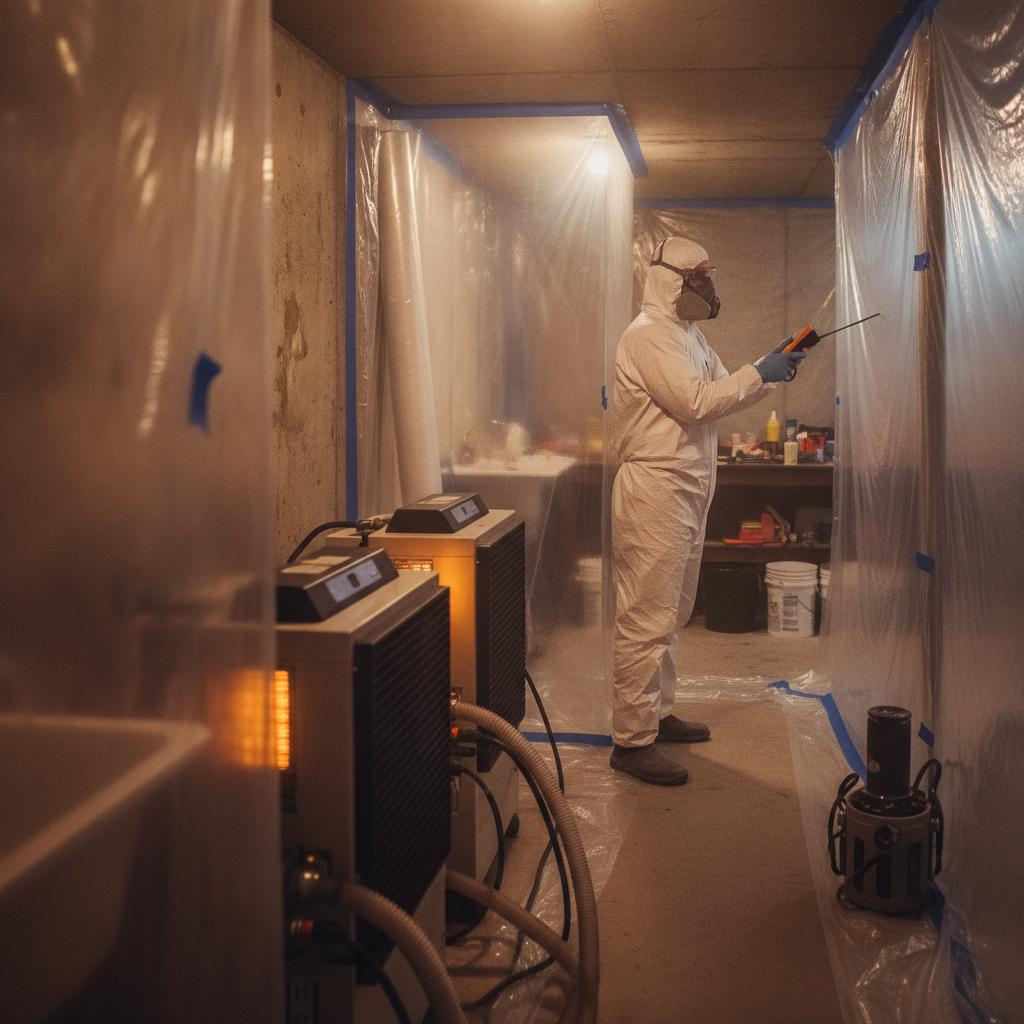
- Mitigation actions: dehumidifiers, directed airflow, HEPA cleaning, selective drywall removal, and antimicrobial treatment on studs and floors.
- External perspective: Basement build-outs benefit from moisture-aware framing practices; see these basement framing rules for context on vapor control in finished spaces.
Crawl spaces
- Common drivers: ground moisture, inadequate ventilation, and unsealed penetrations.
- Mitigation actions: ground vapor barriers, controlled ventilation, HEPA cleaning, and treatment of wood framing.
- ASM example: We’ve stabilized Ontario crawl spaces by installing vapor control, improving vents, and treating joists to stop recurring growth.
HVAC systems
- Common drivers: clogged filters, dirty coils, and condensate issues that spread spores through ducts.
- Mitigation actions: HEPA-grade filtration changes, cleaning coils and pans, disinfecting ducts, and correcting condensate drainage.
- Outcome: cleaner recirculated air and reduced redistribution of particles.
Commercial properties
- Common drivers: roof penetrations, mechanical room leaks, and humid zones.
- Mitigation actions: off-hours containment, negative pressure, HEPA filtration, and staged floor-by-floor cleaning to keep operations running.
- Documentation: detailed logs and post-mitigation reporting for safety and continuity records.
When buildings are occupied, mitigation design balances safety and continuity. For property teams coordinating emergencies, see this discussion of emergency stabilization to appreciate the value of controlled, staged work.
Best practices for mold mitigation
The best mitigation plans control moisture first, then contain, filter, clean, and treat. Use HEPA-only capture methods, verify drying with readings, and prevent recontamination with disciplined bag-out and clearance checks.
- Start with moisture: fix leaks, correct attic ventilation, and run dehumidifiers to bring indoor humidity into a normal range.
- Engineer containment: seal doorways, use zipper access, and maintain negative pressure to protect clean areas.
- Prioritize HEPA: vacuum and air scrub with true HEPA filtration to capture fine particles during work.
- Clean methodically: top-down HEPA vacuuming, damp wipe, then repeat vacuuming after drying.
- Treat substrates: wood framing wash and eco-friendly, EPA-approved antimicrobial treatments on cleaned surfaces.
- Prove progress: photo documentation, moisture readings, and targeted testing when needed.
- Prevent recurrence: improve ventilation, insulate properly, and address exterior drainage and grading.
Disciplined workflow shortens disruption and increases the odds that the problem won’t return once normal conditions are restored.
Tools, equipment, and resources
Successful mitigation relies on the right tools: thermal imaging, moisture meters, negative air machines, HEPA air scrubbers and vacuums, dehumidifiers, and eco-friendly antimicrobial solutions. Checklists and documentation keep teams aligned and accountable.
- Diagnostics: thermal imaging cameras, pin and pinless moisture meters, and borescopes for voids.
- Containment: poly sheeting, poles, tape, zipper doors, and pressure monitors.
- Air management: negative air machines with ducting, HEPA air scrubbers, manometers.
- Drying: LGR dehumidifiers, air movers, and targeted heat when appropriate.
- Cleaning: HEPA vacuums, microfiber systems, pump sprayers, and brush kits.
- Treatments: non-toxic, EPA-approved antimicrobials and wood framing protectants.
- Documentation: photo logs, moisture maps, and, when required, air/surface testing reports.
For homeowners researching service providers, outside directories can be a starting point—see this Ontario service listing—but always verify containment, HEPA, and warranty practices directly with the contractor.
Case studies and real-world examples
Across Ontario, we see repeat patterns: attics with poor ventilation, basements with summer humidity, and crawl spaces with ground moisture. Fast mitigation—containment, HEPA, drying, and treatment—stabilizes conditions and prevents repeat growth while permanent fixes are made.
Scarborough attic: winter condensation loop
- Scenario: Staining and musty odor after a cold snap; bath fan terminated in attic; soffit vents partially blocked by insulation.
- Mitigation: Containment at hatch, negative air, insulation removal in affected bays, HEPA cleaning, wood treatment on sheathing/trusses, restore clear ventilation path.
- Outcome: Odor eliminated; ventilation corrected to prevent recurrence; documentation provided for the homeowner’s records.
GTA basement: post-storm seepage
- Scenario: Wet carpet and baseboards after heavy rain; elevated humidity across the level.
- Mitigation: Dehumidifiers and airflow, selective baseboard/drywall removal, HEPA vacuuming and damp wipe, antimicrobial treatment on studs and slab.
- Outcome: Stable readings vs. unaffected areas; work staged so living areas remained usable.
Commercial office: mechanical room leak
- Scenario: Overnight pipe issue spread moisture into an adjacent corridor; need to maintain operations.
- Mitigation: After-hours containment and negative pressure, HEPA filtration, targeted drywall removal, coil/pan cleaning, and duct sanitation in the affected zone.
- Outcome: Next-day occupancy in unaffected suites; post-mitigation reporting for facility records.
In our experience, documenting moisture readings and containment pressures day by day accelerates decision-making and supports stakeholders who need evidence-based signoff.
Plan your mitigation the smart way
A free inspection and moisture assessment clarifies scope, priorities, and timeline. Book a same-day visit so mitigation starts fast, with clear documentation and a prevention plan that sticks.
Get a free inspection today. Our certified team isolates the source, stabilizes the environment, and prepares a prevention plan for long-term results. Request your visit or call 647-451-0493.
Frequently Asked Questions
Homeowners ask about timing, safety, testing, and what to do first. Here are direct answers you can act on right now.
What should I do in the first 24 hours after a leak?
Shut off water if applicable, protect electrical safety, and start drying with fans and dehumidifiers. Keep traffic out of wet areas, and avoid disturbing visible mold. Call ASM for a same-day inspection so containment and HEPA filtration can begin quickly.
Do I need mold testing before mitigation?
Not always. If mold is visible and the moisture source is known, mitigation can proceed without delay. Testing is useful for hidden issues, clearance documentation, or when occupants have health concerns. We’ll recommend testing only when it adds value.
How long does mitigation take?
Simple mitigations can stabilize conditions in a day or two. Projects with wet materials or ventilation fixes may take several days. Our goal is to isolate, dry, and treat efficiently so you can return to normal routines with documented results.
What’s the difference between mitigation and remediation?
Mitigation stabilizes conditions fast—containment, HEPA air cleaning, drying, and targeted treatment. Remediation is the full removal and restoration process, including selective demolition and post-work verification. At ASM, mitigation and remediation are integrated so issues don’t return.
Will mitigation disrupt my home or business?
Containment and negative pressure keep work zones isolated so most areas remain usable. We schedule work to reduce downtime and provide clear daily updates, so you know what to expect and when areas reopen.
Conclusion and next steps
Mitigation is your fastest path to safety and stability: control moisture, isolate the zone, HEPA-clean the air, treat materials, and verify. Pair this with permanent fixes to prevent recurrence—and document every step.
- Key takeaways:
- Control moisture first; mold follows dampness.
- Containment and HEPA filtration protect clean areas.
- Methodical cleaning and treatment reduce recurrence.
- Verification and documentation build confidence for owners and buyers.
- Next steps:
- Explore our services to see how we approach attics, basements, crawl spaces, HVAC, and commercial sites.
- Book a free inspection for a same-day plan in Scarborough and across Ontario.
- Learn more about our certified team and warranty-backed results.
Ready to move? Schedule a same-day visit in Scarborough and the Greater Ontario area—our team will stabilize conditions and map out a long-term prevention plan.
Related reading on this topic
If you’re evaluating mitigation vs. full remediation, focus on containment, HEPA, and moisture control. These foundational practices consistently deliver safer, cleaner outcomes across attics, basements, crawl spaces, and commercial spaces.
- Understand attic-specific prevention strategies on our main services page.
- Get to know our credentials on the About page and what “warranty-backed” truly means.
- Have a time-sensitive situation? Use the Contact page to request a same-day inspection.