
Mold in homes is the growth of microscopic fungi on damp building materials indoors. It develops when moisture, organic matter, and time align—often within 24–48 hours after leaks or humidity spikes. In Scarborough, ASM Mold Removal Inc. identifies the source, contains spread, removes colonies safely, and helps prevent recurrence with moisture control and ventilation improvements.
By ASM Mold Removal Inc. • Last updated: June 28, 2026
Hero Section: Fast, Certified Help for Mold in Homes
Get same-day, certified help for mold in homes across Scarborough. We combine free inspections, moisture diagnostics, and safe HEPA-filtered containment to remove active mold and stop it from returning. Our team documents every step and issues a Mold Remediation Warranty Certificate after final clearance.
You shouldn’t have to choose between safety and speed. We deliver both. Our Scarborough team responds the same day, isolates affected rooms under negative pressure (typically −5 to −15 Pascals), and captures spores with HEPA filtration rated at 99.97% efficiency at 0.3 microns.
- Free inspection and moisture assessment the day you call
- Containment and HEPA air scrubbing to protect occupants
- Eco-friendly, EPA-approved antimicrobials for treated surfaces
- Repair and restoration available when building materials are damaged
- Mold Remediation Warranty Certificate after verification
Summary: What This Guide Covers
This guide explains what causes mold in homes, how to spot it, and the exact steps our Scarborough team follows to remove it safely. You’ll learn where mold hides, what tools work, when DIY falls short, and how prevention locks in long-term results.
- What mold needs to grow (humidity above ~60%, organic dust, 24–48 hours)
- Top hotspots: attics, basements, crawl spaces, bathrooms, HVAC
- Our certified process: inspect → contain → remove → restore → prevent
- DIY vs professional comparison with clear roles
- Tools and resources you can use today
Local considerations for Scarborough
- Freeze–thaw and spring rains can push attic humidity up; watch for roof and flashing leaks after storms.
- Lake-influenced humidity means summer indoor RH often creeps over 60%; run dehumidifiers to maintain 30–50%.
- Older homes may have minimal soffit ventilation; adding baffles and continuous airflow helps prevent attic mold.
Introduction: Why Mold in Homes Demands a System Approach
Mold isn’t only a stain—it’s a symptom of moisture problems. Lasting results come from fixing moisture sources, removing contaminated materials, and verifying air quality. Our Scarborough process addresses all three, so cleaned spaces stay clean after we leave.
Here’s the thing: visible spots are just the start. Spores hitchhike on air currents and dust, settling on cellulose-rich surfaces like drywall paper and wood. Indications such as musty odors, humidity spikes above 60%, or condensation on windows often precede visible growth by weeks.
We’ve found that attics with blocked soffits, basements with slab wicking, and bathrooms without proper exhaust account for most residential cases in the GTA. When we fix the moisture pathways and improve ventilation to code, recurrences drop dramatically.
Services Offered: End-to-End Remediation and Prevention
We offer complete solutions for mold in homes—inspection and testing, safe removal, and long-term prevention. Attics, basements, crawl spaces, bathrooms, and HVAC systems are handled by certified, insured technicians who follow current industry standards.
Every property is different. Our Scarborough team scopes each project on-site, measuring moisture with pin and pinless meters (typical dry framing reads ~12–15% MC) and mapping anomalies with thermal imaging to locate hidden condensation or leaks.
- Mold Inspection & Testing: Moisture mapping, thermal imaging, air sampling (when indicated), and detailed photo reports. Indoor RH target: 30–50%.
- Mold Removal & Remediation: Source isolation, HEPA-filtered negative air, selective demolition, HEPA vacuuming, and antimicrobial treatment.
- Black Mold Removal: Enhanced PPE, stricter containment, and meticulous cleaning of porous and semi-porous materials.
- Attic Mold Removal: Baffle installation, soffit/ridge ventilation checks, sheathing cleaning, and insulation removal/replacement as needed.
- Basement & Crawl Space Cleanup: Dehumidification to ~45–50% RH, vapor barriers, and drainage improvements where warranted.
- HVAC Mold Cleaning: Coil, pan, and duct cleaning; MERV 11–13 filtration recommendations to capture fine particulates.
- Water Damage Restoration: Rapid extraction and drying, often 48–72 hours of dehumidification and air movement to stabilize materials.
- Preventative Treatments: Antimicrobial applications and moisture control plans to lock in results.
- Commercial Mold Remediation: Discreet scheduling for offices, retail, warehouses, schools, and healthcare facilities.

We close projects with documentation and, after inspection, a Mold Remediation Warranty Certificate—useful for buyers, sellers, and agents who need confidence that treated areas are free from active mold.
The Process: How We Safely Remove Mold in Homes
Our five-step process isolates, removes, and verifies. We inspect sources, build tight containment, remove contaminated materials, deep clean, and restore normal moisture. A final verification confirms the space is safe to reoccupy.
- Inspect and Diagnose: Trace moisture (roof leaks, plumbing, condensation). Thermal cameras reveal cold bridges, while hygrometers track RH.
- Containment and Negative Pressure: Seal work zones with plastic and create −5 to −15 Pa negative pressure; run HEPA scrubbers at 4–6 air changes per hour.
- Selective Removal: Remove unsalvageable porous materials (e.g., moldy drywall), clean remaining framing with HEPA vacuuming and damp wiping.
- Treat and Clean: Apply eco-friendly, EPA-approved antimicrobials; detail-clean adjacent dust reservoirs where spores settle.
- Drying and Prevention: Dehumidify to 30–50% RH, correct ventilation, and address drainage/insulation gaps to prevent recurrence.
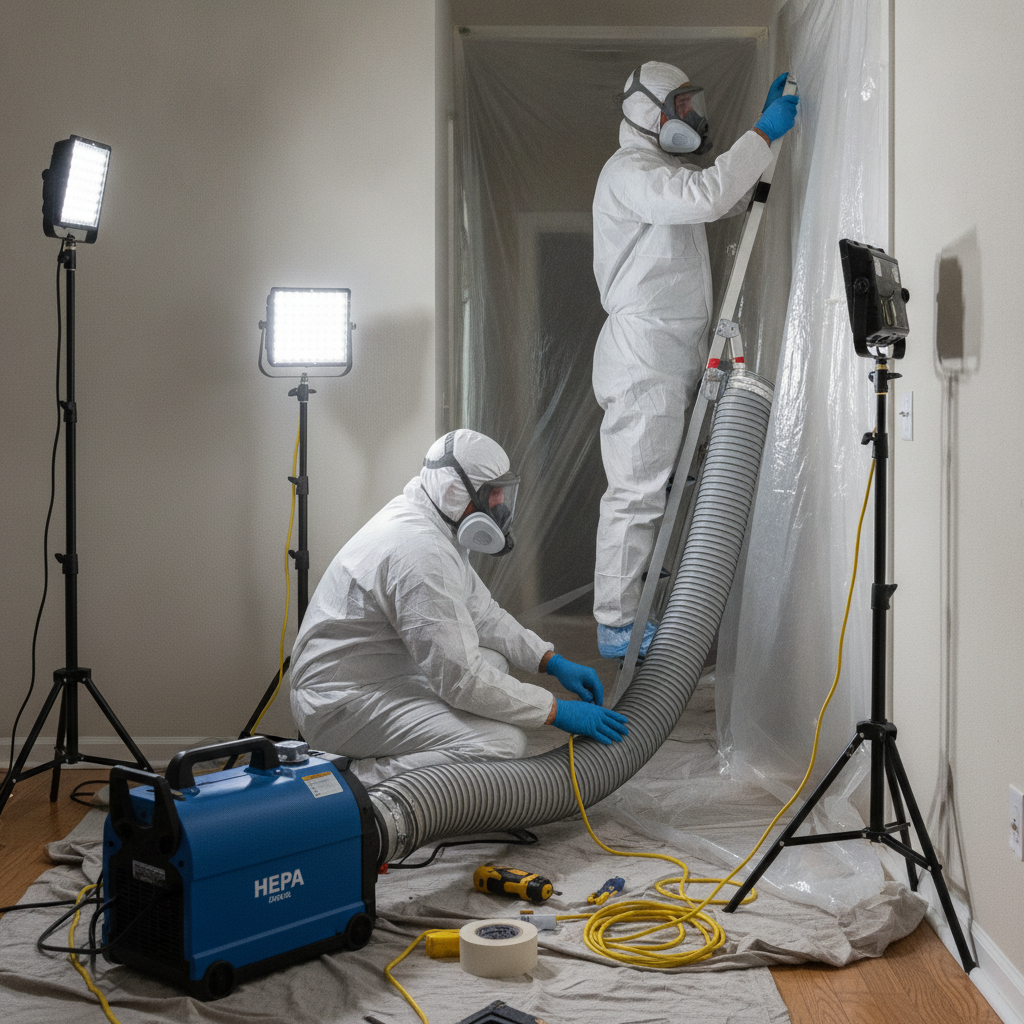
In our experience, the best results come when prevention measures (ventilation, insulation, drainage) are implemented alongside cleaning. Otherwise, humidity rebounds and spores can recolonize the same surfaces within weeks.
DIY vs Professional: What You Can Do—And When to Call
DIY suits small, non-porous areas with clear moisture fixes. Professional remediation is essential for widespread growth, mold inside walls or insulation, HVAC contamination, or health-sensitive settings. When in doubt, get a free inspection first.
| Scenario | DIY Actions | Professional Needed |
|---|---|---|
| Small patch on tile grout | Fix humidity; clean with detergent; improve ventilation | No, if growth is superficial and non-porous |
| Stained drywall or ceiling | Stop the leak immediately | Yes—drywall paper feeds mold; removal and containment required |
| Attic sheathing discoloration | Check baffles and exhaust venting | Yes—work at height, insulation handling, and containment needed |
| Musty air from vents | Replace filters; verify condensate drain | Yes—HVAC cleaning and coil/pan treatment recommended |
Tip: Track indoor RH with a simple digital meter; maintain 30–50% year-round. Bedrooms and basements often run higher; a 35–45 pint/day dehumidifier usually stabilizes typical rooms, while larger basements benefit from higher-capacity units.
Tools and Resources Homeowners Can Use
A few affordable tools help you prevent mold in homes: humidity monitors, leak alarms, and targeted ventilation upgrades. Combined with seasonal checks, these keep moisture below mold-friendly thresholds and alert you before problems spread.
- Digital hygrometer: Keep indoor RH between 30% and 50%.
- Smart leak detectors: Place under sinks and near water heaters for instant alerts.
- Dehumidifier: Size to room volume; aim for 35–50 pints/day for average spaces.
- Bathroom exhaust fans: Target 50–100 CFM; vent outdoors, never into attics.
- Attic baffles: Ensure unobstructed soffit intake; verify ridge/roof exhaust is balanced.
- MERV 11–13 filters: Capture finer particulates and spores in HVAC.
If you’re optimizing air quality more broadly, see these practical indoor air tips for ideas on seasonal maintenance and filtration upgrades.
Mini Case Studies: Scarborough Homes
Real homes prove the point: when moisture is fixed and ventilation balanced, mold remediation holds. These brief Scarborough examples show how our process stops growth and restores clean indoor air.
- Attic sheathing mold after winter: Blocked soffits and a disconnected bathroom duct drove RH high. We opened airflow with baffles, reconnected exhaust, HEPA-cleaned sheathing, and topped insulation. Post-fix RH stayed ~40–45% even during spring rains.
- Basement odor and wall staining: Foundation wicking and low airflow kept RH ~65%. We added a continuous dehumidifier, sealed rim joists, and remediated affected drywall. Follow-up checks held at 45–50% RH with no odor.
- Musty vents in a townhome: Condensate pan overflow seeded growth. We cleaned the coil/pan, sanitized ducts, and recommended MERV 13 filters. Airborne particulates dropped noticeably after two filter cycles.
How We Scope “Pricing” Without Surprises
We don’t publish flat rates because scope varies widely. Instead, we perform a free inspection, define the work precisely, and explain containment, removal, and prevention steps so you know exactly what’s included before we begin.
No surprises. You’ll receive a clear plan covering containment method (poly gauge, zipper doors), air changes per hour for scrubbers, materials marked for removal or cleaning, prevention measures (ventilation, drainage, insulation), and estimated project duration based on square footage and complexity.
Why Choose ASM Mold Removal Inc.
We specialize in attic mold remediation and whole-home solutions across Ontario. Scarborough homeowners get same-day response, certified technicians, eco-friendly products, and documentation—including our Mold Remediation Warranty Certificate.
- Same-day Scarborough response: Rapid containment reduces cross-contamination risks.
- Certified and insured: Work aligns with current remediation standards and best practices.
- Eco-friendly, EPA-approved treatments: Effective on surfaces while mindful of occupants.
- Full repair and restoration: One provider from inspection to rebuild.
- Warranty-backed outcomes: Final inspection leads to a Mold Remediation Warranty Certificate.
Want a second opinion or a fast inspection window? Reach our team through our contact page and we’ll line up the next available slot.
Service Area: Scarborough and Ontario-Wide
We serve Scarborough and the wider Ontario region with same-day response for urgent moisture and mold issues. Residential and commercial properties receive discreet, efficient remediation with minimal disruption.
From single-family homes and townhouses to multifamily buildings, schools, and clinics, we tailor containment for each space. After remediation, we recommend maintenance targets—30–50% indoor RH, adequate attic exhaust, and sealed penetrations around baths and kitchens—to prevent recurrence.
Testimonials
Homeowners across Scarborough highlight fast response, clear plans, and lasting results. Our most common feedback: “We can finally breathe easy again.” Here are paraphrased sentiments from recent projects.
- “Same-day inspection found the roof leak and explained the fix. The attic looks brand new.”
- “Basement no longer smells musty. Humidity stays under 50% with the new setup.”
- “The team worked cleanly with containment and provided photos at each stage.”
Frequently Asked Questions (FAQ)
Quick answers to the most common mold-in-homes questions for Scarborough residents. For anything specific to your home, request a free inspection and moisture assessment.
How fast does mold grow after a leak?
Growth can begin within 24–48 hours when materials stay damp. Control the source quickly, start air movement, and dehumidify to 30–50% RH. If drywall is saturated or smells musty, schedule a professional inspection to determine what can be dried versus removed.
What’s the safest humidity level to prevent mold in homes?
Aim for 30–50% relative humidity. Bedrooms, basements, and bathrooms often run higher, so use dehumidifiers and exhaust fans. Keep shower fans running for 20–30 minutes after use and vent them outdoors, not into attics or soffits.
Can I paint over mold?
No. Paint hides stains but doesn’t solve moisture or remove spores. Mold often returns under coatings. Address moisture, remove or clean affected materials under containment, then use appropriate primers or finishes after surfaces are verified dry and clean.
Do I need testing before remediation?
Not always. If growth is visible and the moisture source is known, we can often proceed with standard protocols. Testing helps in hidden-source cases, legal/real estate situations, or when medical sensitivities require documentation.
Free Inspection and Moisture Assessment
If you suspect mold in your Scarborough home, book a free inspection now. We’ll diagnose moisture sources, outline a clear plan, and explain how we’ll protect your family during remediation.
Prefer reading more about professional cleaning approaches? Here’s an example of a professional mold cleaning guide that echoes many of the prevention-first principles we apply during remediation.
Home Prevention Checklist
Stopping mold in homes long term is about routine. Keep humidity in range, move air, and block leaks before they spread. A monthly 10-minute walk-through can save walls, insulation, and flooring.
- Maintain 30–50% RH; check hygrometers on each floor.
- Test bathroom fans (tissue test) and run 20–30 minutes post-shower.
- Inspect attic after storms; confirm baffles and clear soffits.
- Replace HVAC filters every 60–90 days; consider MERV 11–13.
- Place leak detectors under sinks and by water heaters.
- Seal penetrations at rim joists; add vapor barriers in crawl spaces.
If you’re browsing local service options, you may encounter community listings for mold services. Always verify certification, insurance, and containment practices before hiring.
Ready to Breathe Easier in Your Home?
Let’s fix moisture at the source and remove mold safely. Book your free inspection in Scarborough today. We’ll handle containment, cleaning, and prevention—and document everything for your records.
Speak with a certified technician now through our contact page. Same-day response is available across Scarborough and the wider Ontario region.