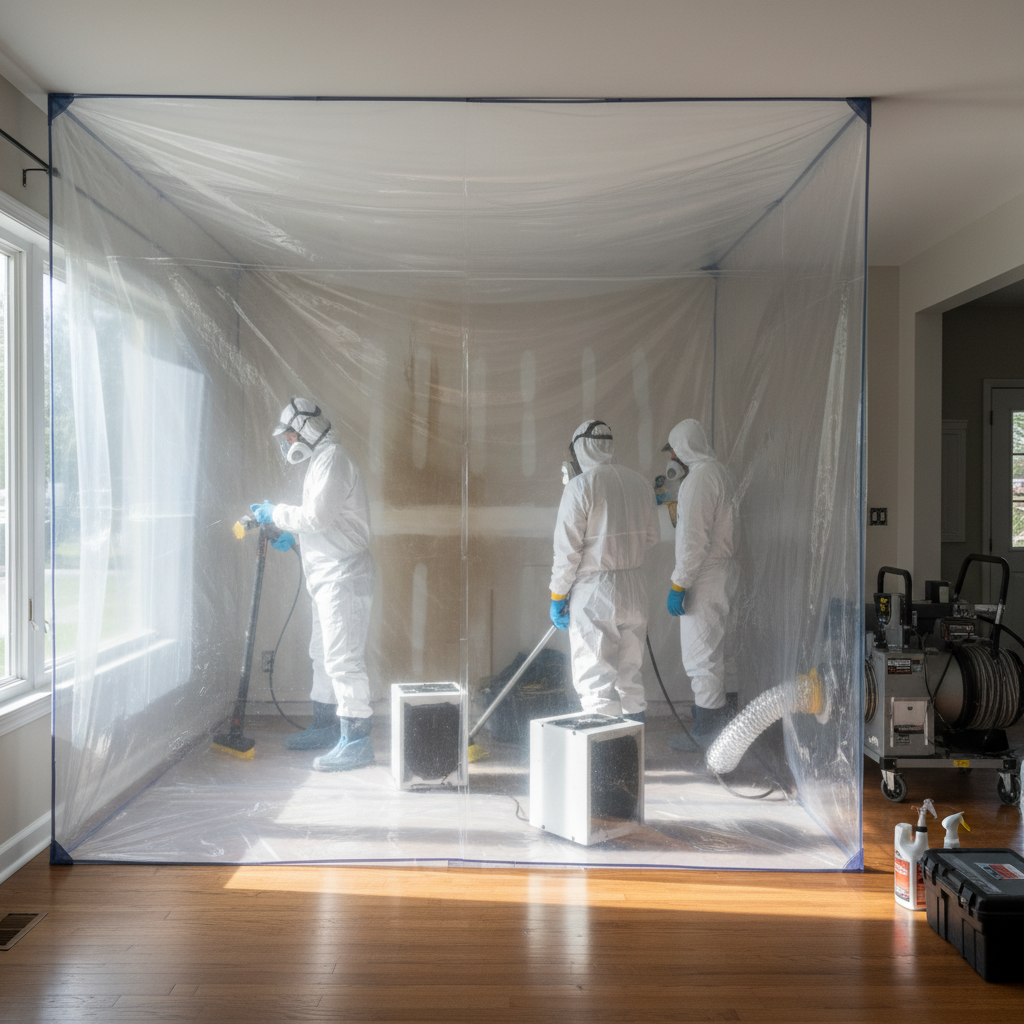
Mold damage restoration is the end-to-end process of finding moisture, removing mold safely, drying structures, and repairing affected materials to pre-loss condition. In Scarborough at 1225 Kennedy Rd, our team provides same-day assessments across Ontario. Effective mold restoration includes inspection, containment, HEPA filtration, targeted removal, structural drying within 24–48 hours, and detailed repairs.
By Asmmoldremoval • Last updated: June 2, 2026
Overview & Table of Contents
This guide explains mold damage restoration from first inspection to final repairs. You’ll learn how professionals contain spores, remove colonies, dry structures fast, and rebuild safely. Use the table of contents to jump to definitions, process steps, best practices, tools, local tips, and real Ontario case studies.
Use this quick outline to navigate:
- What Is Mold Damage Restoration?
- Why It Matters
- Serving Scarborough, ON
- How Mold Damage Restoration Works
- Types, Methods, and Approaches
- Best Practices
- Tools and Resources
- Case Studies and Examples
- Frequently Asked Questions
- Key Takeaways
- Conclusion & Next Steps
What Is Mold Damage Restoration?
Mold damage restoration is a structured workflow to diagnose moisture, contain and remove mold, clean the air, dry the building, and repair or replace damaged materials. The outcome is a safe, documented space returned to normal moisture and indoor air conditions with clear prevention steps.
At its core, mold restoration connects three disciplines: investigation, remediation, and repair. Investigation finds moisture drivers (leaks, high humidity, vapor intrusion). Remediation removes growth and spores using containment and HEPA engineering controls. Restoration repairs materials and finishes to leave spaces clean, dry, and functional.
- Investigation: Moisture mapping, thermal imaging, and air/surface sampling when indicated.
- Remediation: Source removal, HEPA vacuuming, antimicrobial application, and negative air pressure.
- Restoration: Replace drywall/insulation, seal and paint, reinstall finishes, verify dryness.
For homeowners, buyers, sellers, and real estate agents, proper restoration means clear documentation and confidence that treated areas are free from active mold. That’s why our projects conclude with a Mold Remediation Warranty Certificate after inspection.
Why Mold Damage Restoration Matters
Restoration protects health, structure, and resale value. It stops spore spread, prevents recurring growth by fixing moisture, and repairs materials to pre-loss condition. Fast action within 24–48 hours of water intrusion reduces damage, odors, and disruption to daily life or business operations.
Mold is a symptom of moisture. Left unchecked, it discolors finishes, weakens porous building materials, and can spread through HVAC systems. Pro treatments rely on controls that capture 99.97% of 0.3‑micron particles via HEPA filtration, cutting cross‑contamination while work is underway.
- Health and comfort: Cleaner air, fewer odors, and reduced allergen exposure after proper containment and cleanup.
- Structural integrity: Dry framing typically targets below ~16% wood moisture content; gypsum must return near ambient equilibrium.
- Resale confidence: Documentation, photos, and a warranty certificate help transactions move forward without delays.
For commercial spaces, organized phasing keeps operations running. Night or weekend work windows, dust control, and noise limits reduce downtime while still achieving negative pressure and adequate air changes in containment.
Serving Scarborough, ON — Same‑Day Mold Restoration
We mobilize from Scarborough, ON for same‑day mold damage restoration across Ontario. Local crews know seasonal humidity swings and typical attic ventilation issues. Fast response limits spread, enables drying within 24–48 hours, and gets homes and workplaces safely back on track.
Based in Scarborough, our team understands common regional triggers: summer humidity spikes, ice‑dam impacts to attics, and basement seepage after storms. We pair local knowledge with precise moisture diagnostics and clear repair plans tailored to Ontario construction.
Local considerations for Scarborough
- Plan attic work around temperature swings. In warmer months, schedule early starts to manage heat load and maintain safe PPE use during remediation.
- Expect faster mold growth after summer storms. Prioritize drying basements and crawl spaces the same day to stay within the 24–48 hour window.
- Balance energy efficiency with ventilation. Air sealing is important, but keep proper attic and bath fan venting to control humidity year‑round.
How Mold Damage Restoration Works (Step‑by‑Step)
The restoration sequence is: assess moisture, set containment and negative pressure, remove mold‑impacted materials, HEPA clean, dry to target moisture levels, apply protective treatments, and perform repairs. Document each step with photos, readings, and a final clearance inspection.
Here’s the practical workflow we follow on Ontario projects. Each step includes what you’ll see on site and why it matters.
- Free inspection and moisture assessment
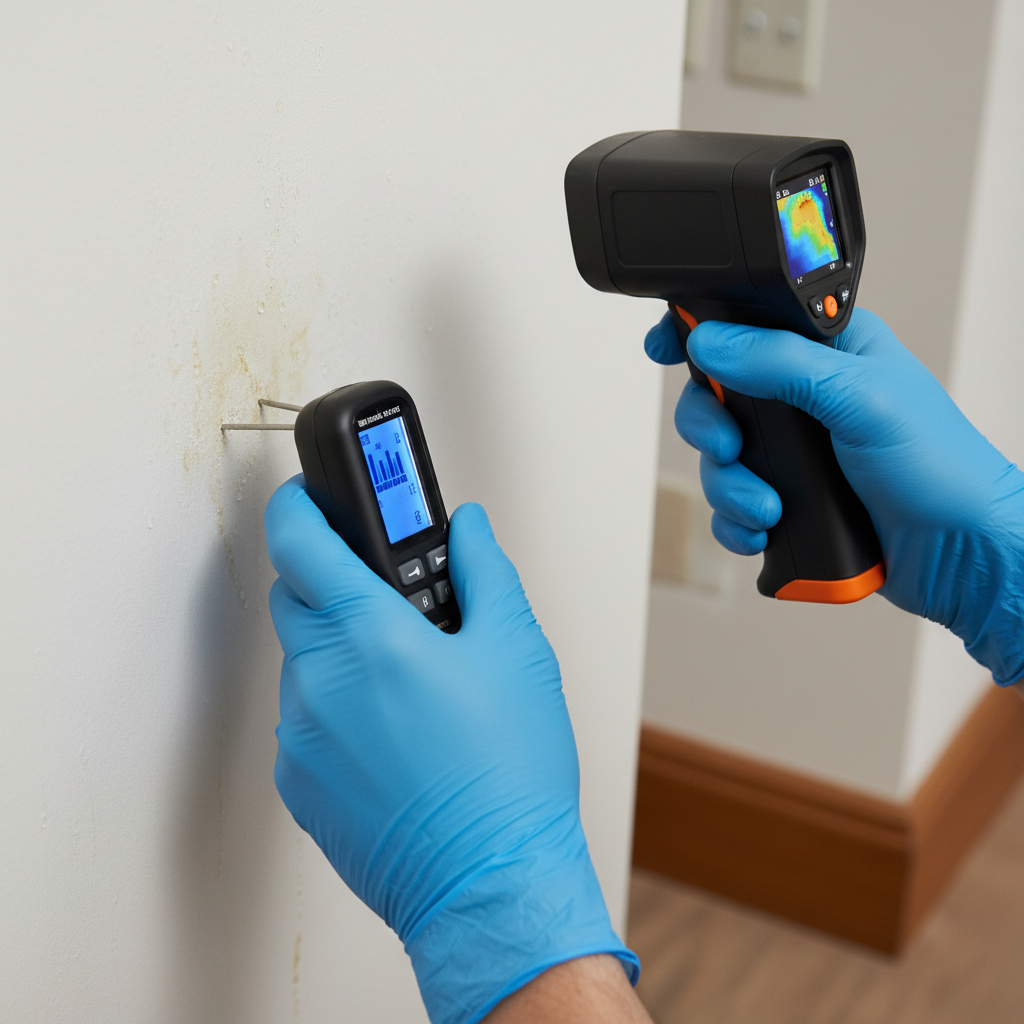
- Moisture meters and thermal imaging map wet areas. Elevated readings guide containment lines.
- Sample collection (air or surface) is used when needed to confirm scope or clearance criteria.
- Engineering controls
- Poly sheeting creates containments with zipper access; manometers help verify negative pressure.
- Negative air machines with HEPA filters target pressure differentials around −0.02 to −0.03 in. w.c. for typical rooms.
- Source removal
- Remove porous materials that can’t be salvaged (e.g., mold‑damaged drywall and insulation).
- HEPA vacuum and damp‑wipe semi‑porous and non‑porous surfaces before antimicrobial application.
- Drying and dehumidification
- Desiccant or refrigerant dehumidifiers reduce RH under 60%. Air movers increase surface evaporation.
- Track daily: temperature, RH, and moisture content to verify progress toward equilibrium.
- Treatments and sealing
- Apply EPA‑registered antimicrobial on cleaned substrates; encapsulate stained wood as specified.
- Reinspect with bright lighting and agitation to confirm no visible dust or residue remains.
- Repairs and restoration
- Replace insulation, drywall, trim, and finishes; prime and paint with low‑VOC coatings.
- Address root causes: fix leaks, add ventilation, or improve drainage grading.
- Verification and warranty
- Optional post‑remediation verification testing can validate air quality improvements.
- We issue a Mold Remediation Warranty Certificate upon completion and final inspection.
Measured results beat guesswork. Daily logs with photos, RH, temperature, and moisture readings create a clear timeline and support real estate or insurance documentation needs.
Types, Methods, and Approaches
Approaches vary by area: attics need ventilation fixes and sheathing treatment; basements focus on drainage and vapor control; crawl spaces require ground moisture barriers; HVAC needs coil and duct cleaning; commercial sites demand phased containment and night work.
Spaces and materials dictate the exact plan. Below are common Ontario scenarios with the methods we use to remove mold, dry safely, and prevent recurrence.
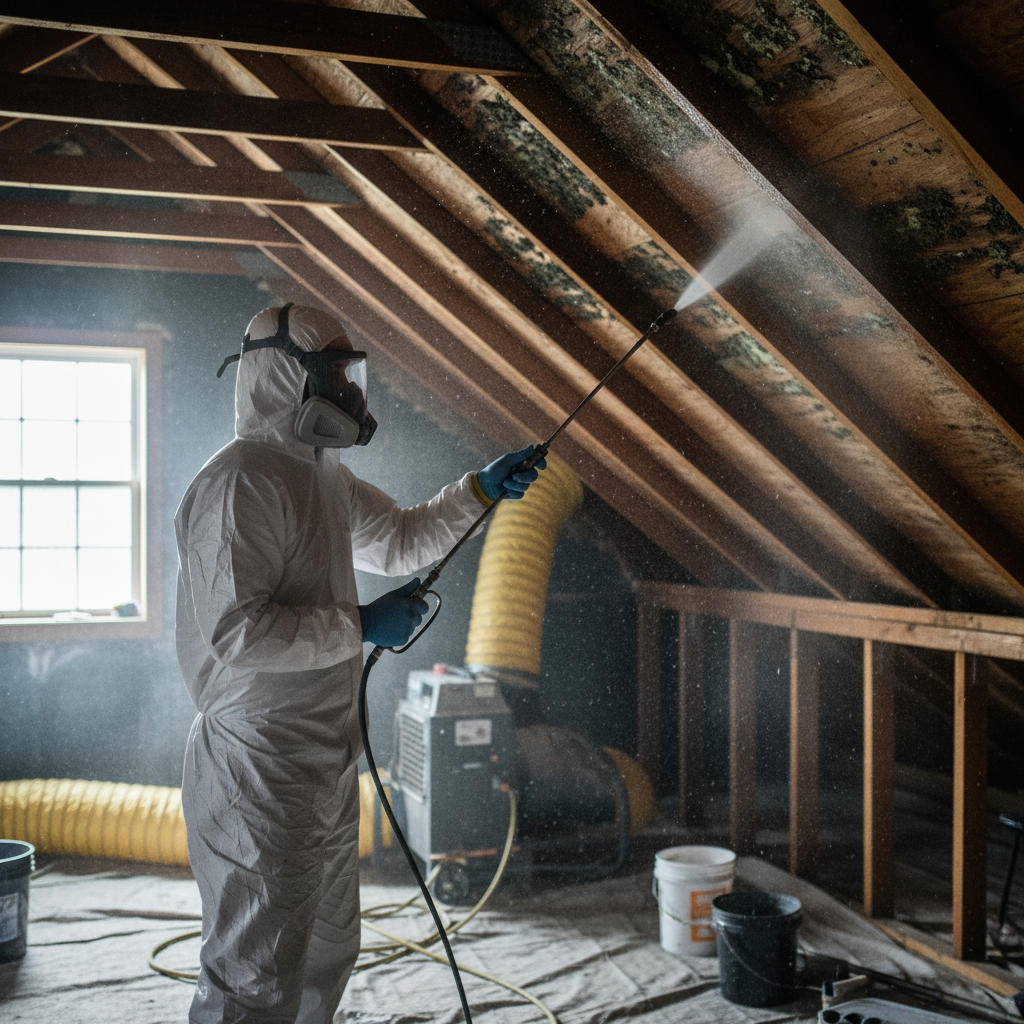
Attic mold restoration
- Causes: roof leaks, ice dams, bathroom fans venting into attics, inadequate soffit/ridge airflow.
- Remediation: sheathing cleaning, antimicrobial application, optional encapsulation on stained wood.
- Prevention: correct venting, seal bypasses, balance intake/exhaust, verify insulation depth and coverage.
Basement mold cleanup
- Causes: hydrostatic pressure, perimeter drainage issues, foundation cracks, plumbing leaks.
- Remediation: remove impacted drywall/trim, HEPA clean masonry, dry under 60% RH, treat wood framing.
- Prevention: manage downspouts/grade, add dehumidification, seal penetrations, consider vapor barriers.
Crawl space mold removal
- Causes: exposed soil vapor, poor ventilation, seasonal condensation on cool surfaces.
- Remediation: install 6–12 mil ground vapor barrier, treat joists, improve ventilation or encapsulate.
- Prevention: maintain RH under 60%, insulate ducts/pipes to reduce condensation risk.
HVAC and duct system considerations
- Focus: keep coils, pans, and ducts clean; replace filters regularly; address condensation at supply diffusers.
- Containment: isolate returns during work; use negative air scrubbers with HEPA while source‑removing dust.
- Prevention: maintain filters at MERV ratings appropriate for equipment; manage indoor RH.
Commercial mold remediation
- Phasing: create work zones that allow adjacent operations to continue; schedule off‑hours where needed.
- Controls: dust suppression, noise management, and clear pedestrian detours for occupant safety.
- Documentation: daily reports, SDS on site, and final verification supporting facility compliance files.
| Scope | Main Goal | Primary Actions | Typical Metrics |
|---|---|---|---|
| Remediation | Remove mold and spores | Containment, HEPA, source removal, antimicrobial | HEPA capture 99.97% @ 0.3µm; negative pressure ~−0.02 in. w.c. |
| Drying | Stabilize materials | Dehumidifiers, air movers, daily monitoring | RH < 60%; wood MC < ~16%; reach ambient equilibrium |
| Restoration | Return to pre‑loss | Repairs, painting, finish reinstallation | Post‑work inspection and optional clearance samples |
Best Practices That Cut Risk and Disruption
Use tight containment, maintain negative pressure, and stage clean/dirty zones. Dry within 24–48 hours, track daily readings, keep RH under 60%, and verify clean surfaces with bright light. Fix the moisture source so remediation is a one‑time event.
Best practices reduce risk, shorten timelines, and protect occupants. Here’s what consistently works on Ontario projects in homes, offices, warehouses, schools, and healthcare spaces.
- Containment discipline: Two‑zone setup (work area and decon). Seal HVAC registers inside containment and bag debris before exit.
- Air control: Position HEPA scrubbers to pull air across work, not past clean areas. Aim for multiple air changes per hour inside containment.
- Drying targets: Stabilize RH < 60% and drive materials to equilibrium with the rest of the building.
- Surface verification: White‑glove checks under bright lighting; no visible dust after HEPA vacuuming and damp wiping.
- Root‑cause fixes: Correct venting, leaks, drainage, and insulation gaps; otherwise mold returns even after cleaning.
- Documentation: Log meter readings, capture photos, and store SDS for products used. These records support real estate and facility compliance.
In our experience, a disciplined sequence and clear communication with occupants dramatically lowers disruption. Night or weekend phases are often used in active businesses to maintain operations.
Tools and Resources We Use
Professional restoration relies on precise diagnostics and engineered controls: moisture meters, thermal cameras, HEPA scrubbers, negative air machines, dehumidifiers, and EPA‑registered antimicrobials. Documentation tools—photo logs and moisture charts—prove progress and support clearances.
Our toolkit pairs measurement with mitigation so we can prove what we did and why it worked. Below are common tools you’ll see on site and how they help.
- Diagnostics: pinless and pin‑type moisture meters; thermal imaging for hidden wet zones; hygrometers for RH/temperature.
- Air management: HEPA air scrubbers (99.97% @ 0.3µm); negative air machines with ducting; differential pressure monitors.
- Drying: refrigerant or desiccant dehumidifiers; axial and centrifugal air movers; heat‑assist where appropriate.
- Cleaning and treatment: HEPA vacuums, microfiber wipes, and EPA‑registered antimicrobials appropriate for building materials.
- Safety: PPE matched to task, including respirators fit‑tested for staff, eye/skin protection, and safe work procedures.
Want background on moisture sources in bathrooms? This plain‑language overview of common bathroom mold causes adds helpful context. If you’re navigating condo water‑damage responsibilities, this condo water damage explainer outlines typical claim considerations. For a general look at local service listings, see this Ontario mold service directory entry.
Explore our services and approach on the Asmmoldremoval home page, learn our standards on the About page, or contact us for a same‑day inspection anywhere in Ontario.
Case Studies and Ontario Examples
Real projects show the process in action: attic sheathing treatment with new ventilation, basement drywall removal and drying, crawl space vapor barrier installation, and a phased office remediation completed overnight. Each ends with moisture targets met and documented results.
Every building is unique, but patterns repeat. Here are representative scenarios from our Ontario work, including Scarborough and nearby communities.
Attic mold after ice‑dam season
- Finding: Staining on north‑facing sheathing; bath fan vented into attic; insulation gaps at top plates.
- Action: Sheathing cleaned and treated; fan re‑routed outdoors; air sealing and insulation top‑ups; ridge/soffit balance verified.
- Result: Moisture readings stabilized; no visible growth; warranty certificate issued with photo log.
Basement leak from laundry line
- Finding: Wet drywall behind laundry with elevated moisture mapping beyond visible stain.
- Action: Containment, selective demolition, HEPA cleaning, dehumidification to RH under 60%.
- Result: Framing dried below ~16% MC; repairs completed; odor eliminated.
Crawl space with seasonal condensation
- Finding: Musty odor, sweating ducts, and patchy mold on joists after humid weather.
- Action: 10‑mil ground vapor barrier installed; joists treated; ducts insulated; passive vents improved.
- Result: Humidity stabilized; no new growth through the season; follow‑up inspection clear.
Commercial office phase‑by‑phase
- Finding: Localized drywall mold from a window leak; tenant needed daytime continuity.
- Action: Night work with contained zones; negative pressure maintained; daily progress notes sent to facilities.
- Result: Work completed in three nights; final walk‑through and documentation delivered for records.
Request a free inspection
Need fast help? Our certified team provides Ontario‑wide, same‑day assessments and clear remediation plans.
Book your inspection now.
Frequently Asked Questions
Most questions focus on timelines, safety, and what to expect during work. In brief: projects are contained, air is filtered, wet materials are removed, and structures are dried and repaired. Documentation and prevention guidance are included.
What does mold damage restoration include?
It includes inspection and moisture mapping, containment and negative pressure, HEPA air cleaning, source removal of affected materials, structural drying, antimicrobial treatment, and repairs. You’ll also get documentation and prevention recommendations.
How long does a typical project take?
Small, contained areas can be addressed in a few days, while multi‑room or commercial projects may take longer due to drying and repair phases. The biggest variable is how quickly materials reach their target moisture content.
Is it safe to stay in the building during remediation?
Yes, when work zones are properly contained and under negative pressure with HEPA filtration. For sensitive occupants or large scopes, temporary relocation from the immediate work area may be recommended to reduce disruption.
How do you prevent mold from returning?
Fix the moisture source, keep indoor relative humidity under 60%, and ensure ventilation in attics and bathrooms is correctly routed outdoors. After remediation, monitor areas prone to condensation and maintain filters and dehumidifiers as needed.
Key Takeaways
Mold damage restoration succeeds when moisture drivers are fixed, air is controlled with HEPA and negative pressure, and materials are dried and repaired. Document each step, and use prevention to make remediation a one‑time event.
- Act within 24–48 hours after water intrusion to limit damage and odors.
- Use engineered controls—containment, HEPA filtration, and negative pressure—to stop spread.
- Track RH, temperature, and moisture content daily until equilibrium is reached.
- Repair and rebuild with prevention in mind: ventilation, drainage, and insulation matter.
- Ask for documentation and a warranty certificate for peace of mind.
Conclusion & Next Steps
Effective mold damage restoration pairs moisture diagnostics with disciplined remediation and quality repairs. If you see staining, musty odors, or past water issues, schedule a same‑day inspection so drying and containment can start immediately and safely.
We serve homeowners, buyers, sellers, real estate agents, and commercial property managers across Ontario with certified, insured technicians and eco‑friendly, EPA‑registered treatments. Our end‑to‑end approach—inspection, remediation, and repairs—finishes with clear documentation and a Mold Remediation Warranty Certificate.
Ready to move forward? Explore our service overview, read more about our standards, or book your same‑day inspection from Scarborough today.
Related Articles & Topics
Learn more about attic, basement, crawl space, and commercial remediation methods, plus prevention through ventilation and moisture control. These topics deepen your understanding of inspection, drying, and long‑term mold prevention.
For deeper dives, explore how attic ventilation balances intake and exhaust, why basements benefit from dehumidification and vapor barriers, and how crawl space encapsulation reduces seasonal humidity swings. Commercial readers should consider phased night work to protect productivity while achieving containment and verification.