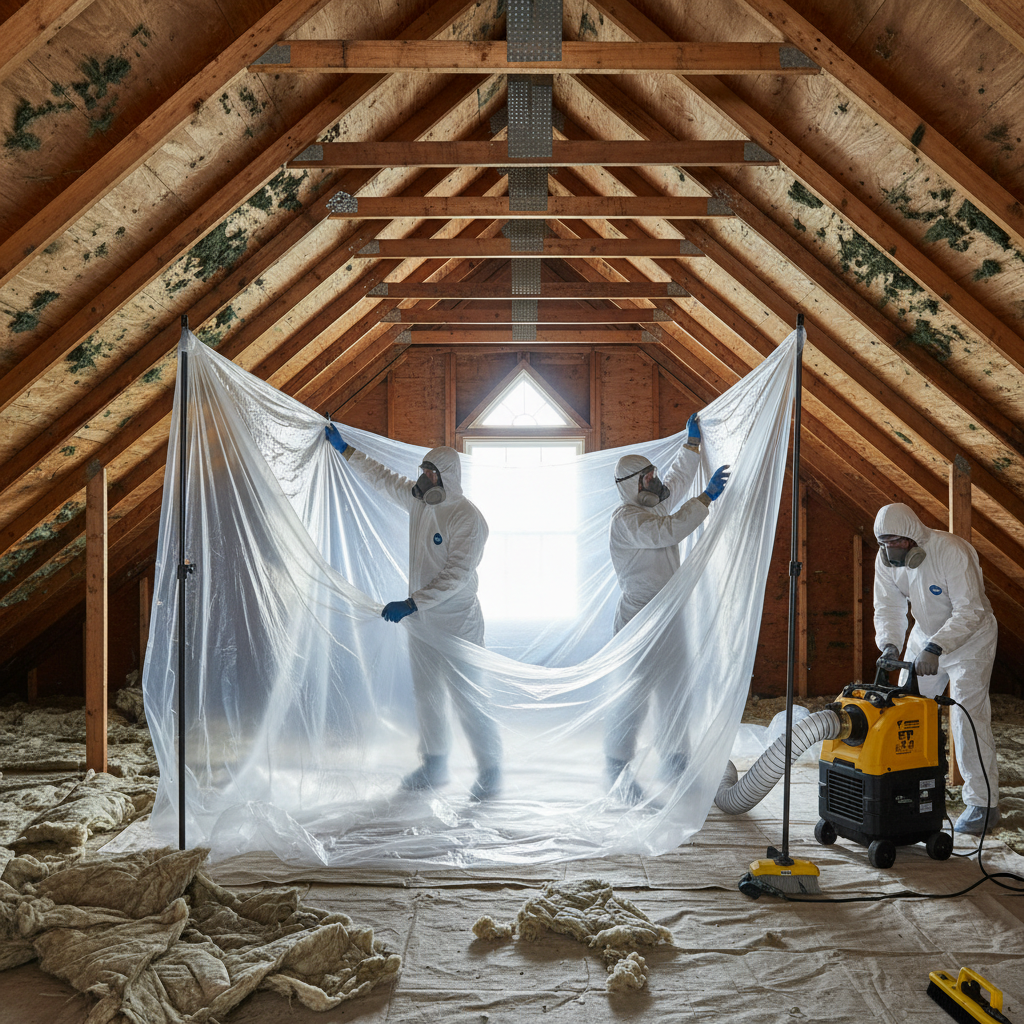
Mold damage is the structural, cosmetic, and indoor air-quality harm caused when mold colonizes wet building materials. Growth can begin within 24–48 hours after water exposure, spreading through spores and moisture. At Asmmoldremoval in Scarborough, we contain, remove, and prevent mold with same-day, Ontario-wide service—starting with a free inspection and moisture assessment.
By Asmmoldremoval • Last updated: 2026-06-07
Overview and Table of Contents
This guide explains what mold damage is, why it accelerates after water events, and how to stop it safely. You’ll learn clear steps for inspection, remediation, and prevention—plus Ontario-specific tips and real case examples from homes and businesses.
Use this complete guide to understand risks and take action with confidence:
- What Is Mold Damage?
- Why It Matters in Ontario
- How Mold Spreads
- Signs and Types
- Professional Remediation Process
- DIY vs Professional
- Tools and Resources
- Case Studies and Examples
- Prevention Best Practices
- Frequently Asked Questions
- Conclusion and Next Steps
What Is Mold Damage?
Mold damage refers to the deterioration of surfaces and indoor air quality when fungal growth colonizes damp materials like wood, drywall, and insulation. It weakens structures, stains finishes, and releases spores that can aggravate allergies and asthma until moisture is controlled and colonies are removed.
Mold needs three things: moisture, a food source, and time. Cellulose-based materials—drywall paper, attic sheathing, framing, and carpet backing—feed mold easily when wet. The fastest path to limiting mold damage is to dry materials quickly and reduce indoor humidity to under 50%.
Core facts that guide every decision
- Timeline: Visible growth can appear within 48 hours after a leak or flood.
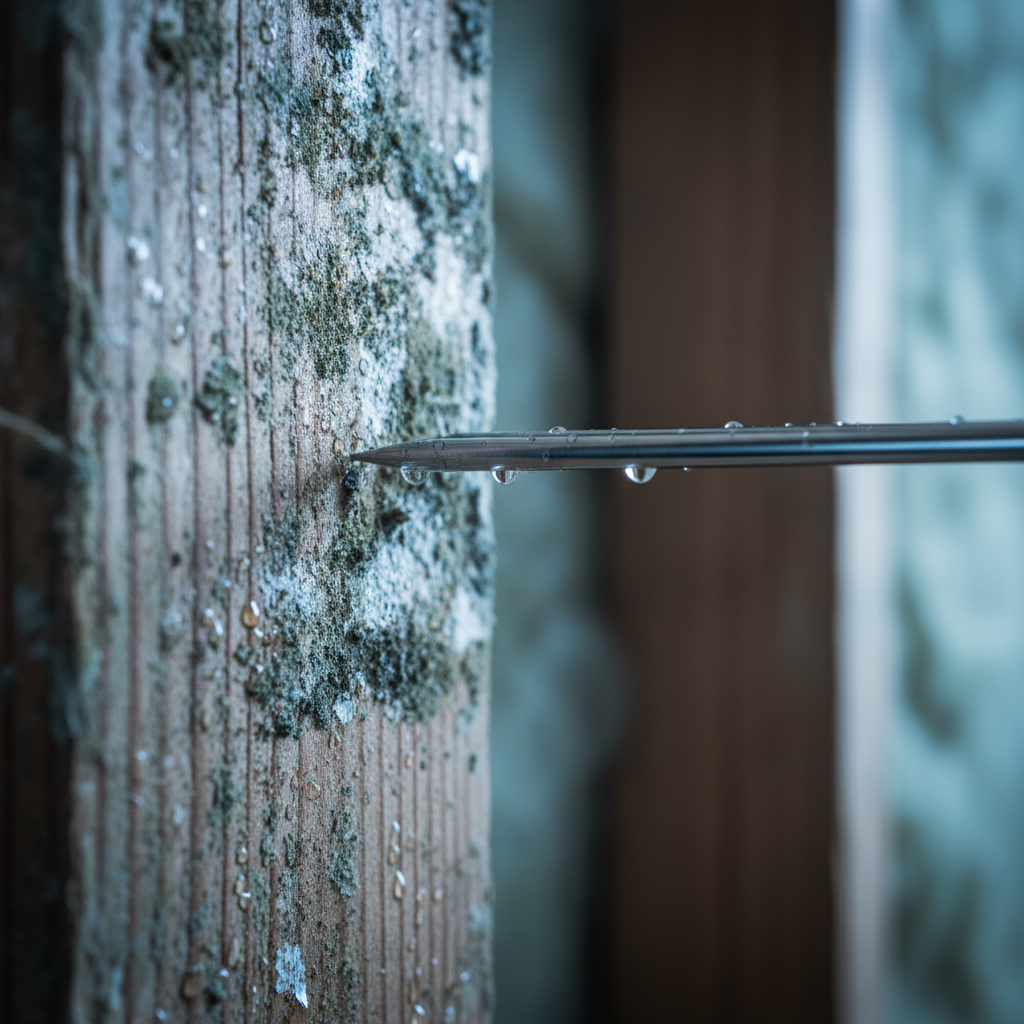
- Moisture threshold: Persistent humidity above 60% or wood moisture above ~16% promotes ongoing growth.
- Containment need: Disturbing colonies without containment can aerosolize millions of spores in minutes.
- Verification: Post-remediation inspection should confirm surfaces are clean and dry and air is normal.
At Asmmoldremoval, projects begin with a free inspection and moisture mapping. Our technicians check suspect areas, document readings, and explain where moisture is entering so the remediation plan actually solves the root cause.
Why Mold Damage Matters in Ontario (Scarborough, ON)
In Scarborough, ON and across Ontario, weather swings and roof-to-basement condensation patterns make moisture control challenging. Attic mold from winter humidity, spring leaks, and summer storms accelerates damage, making prompt inspection, controlled remediation, and prevention essential for long-term safety and property value.
Ontario homes see seasonal drivers of moisture. Cold winters push warm indoor air into attics where it condenses on sheathing. Spring freeze–thaw cycles reveal minor roof gaps. Summer humidity pushes basements and crawl spaces above safe ranges unless ventilation and dehumidification are tuned.
Local considerations for Scarborough
- Schedule attic checks late winter and early spring to catch condensation staining before it spreads through the sheathing.
- Expect higher basement humidity during humid summer weeks; use continuous dehumidification to keep RH under 50%.
- Plan roof, soffit, and bathroom fan improvements in shoulder seasons to minimize disruption and stabilize ventilation.
If you need fast help, Asmmoldremoval offers Ontario-wide same-day response. We also provide documentation homeowners, buyers, sellers, and agents can use during transactions, including a Mold Remediation Warranty Certificate after completion and inspection.
How Mold Damage Spreads Inside a Building
Mold spreads when spores released from active colonies land on damp surfaces. HVAC currents, stack effect, and foot traffic move spores between rooms. Without drying and containment, spores reseed new growth, turning a small patch into whole-room staining within weeks.
Here’s the basic mechanism: colonies mature, release spores, and ride air currents. Moisture wicks through porous materials; capillary action pulls water across drywall seams and into insulation. Unbalanced HVAC can redistribute spores through return air, especially if filters are loaded or ducts are dusty.
Common spread paths we see
- Attic-to-bedroom: Warm air leaks from bathrooms or kitchens into attics and returns through penetrations and gaps.
- Basement-to-main floor: Stack effect draws air upward; spores follow, especially when doors are frequently opened.
- HVAC loop: Dirty returns and coils trap spores; they re-release when the system cycles, repeating the pattern.
- During cleanup: Uncontrolled demolition aerosolizes growth if there’s no negative air or HEPA capture.
Interrupting this cycle requires coordinated steps: isolate the work zone, filter the air with true HEPA (99.97% capture at 0.3 microns), gently remove or clean growth, and address moisture entry so you don’t re-seed the space.
Signs and Types of Mold Damage (Rooms and Materials)
Typical signs include musty odors, staining on wood sheathing or drywall, flaking paint, warped trim, and recurring humidity readings above 60%. Attic, basement, crawl space, bathroom, and HVAC growth look different but share one driver—ongoing moisture that must be located and fixed.
Attic mold (our specialty)
- Dark streaks or spotty growth on the north-side sheathing or around nail lines.
- Frost or drip marks in winter; rusted nails that indicate chronic condensation.
- Undervented soffits, blocked baffles, or bath fans venting into the attic.
Our attic projects combine gentle surface removal with air scrubbing and ventilation upgrades. When insulation is saturated or contaminated, we perform attic insulation removal and replacement as part of remediation and prevention.
Basements and crawl spaces
- Efflorescence on walls, musty odors, and soft or swollen baseboards.
- Seasonal RH above 60% and standing water after storms or snowmelt.
- Visible growth on joists, beams, and the back of drywall or paneling.
Basements often need drainage improvements, sealed sump lids, and continuous dehumidification. We map moisture with meters and thermal imaging, then remediate with containment and HEPA filtration before refinishing.
Bathrooms and kitchens
- Recurring ceiling spots above showers and around fan housings.
- Grout discoloration, peeling caulk, and swollen vanity kickplates.
- Condensation lines around poorly insulated exterior walls.
If you’re troubleshooting bathroom sources and habits, this primer on common bathroom mold causes outlines ventilation and routine fixes that reduce moisture and staining over time.
HVAC-related mold
- Dusty returns, wet drip pans, or biofilm on coils that re-release spores.
- Low MERV filtration and long filter-change intervals.
- Duct leaks in humid zones that pull damp air into the system.
Our team performs HVAC system cleaning for mold when duct contamination is part of the overall issue. Upgrades to MERV-13 filtration and regular service intervals keep re-contamination risks low.
Black mold questions (Stachybotrys)
- Stachybotrys often grows on chronically wet cellulose; it’s sticky and not easily airborne until disturbed.
- Regardless of species, handle growth with the same containment, PPE, and HEPA capture.
- Species ID is less important than fixing moisture and removing the colony safely.
Step-by-Step: The Professional Mold Remediation Process
Effective remediation follows a controlled sequence—assess moisture, isolate the space, create negative air, remove or clean growth, and verify the result. Skipping containment or drying steps risks immediate re-growth and cross-contamination.
Here’s how our certified technicians handle projects from start to finish:
- Free inspection and mapping: We measure humidity, surface moisture, and temperature differentials to locate the source and affected materials.
- Plan and staging: We explain the scope, set expectations, and stage equipment and supplies for safe entry and exit.
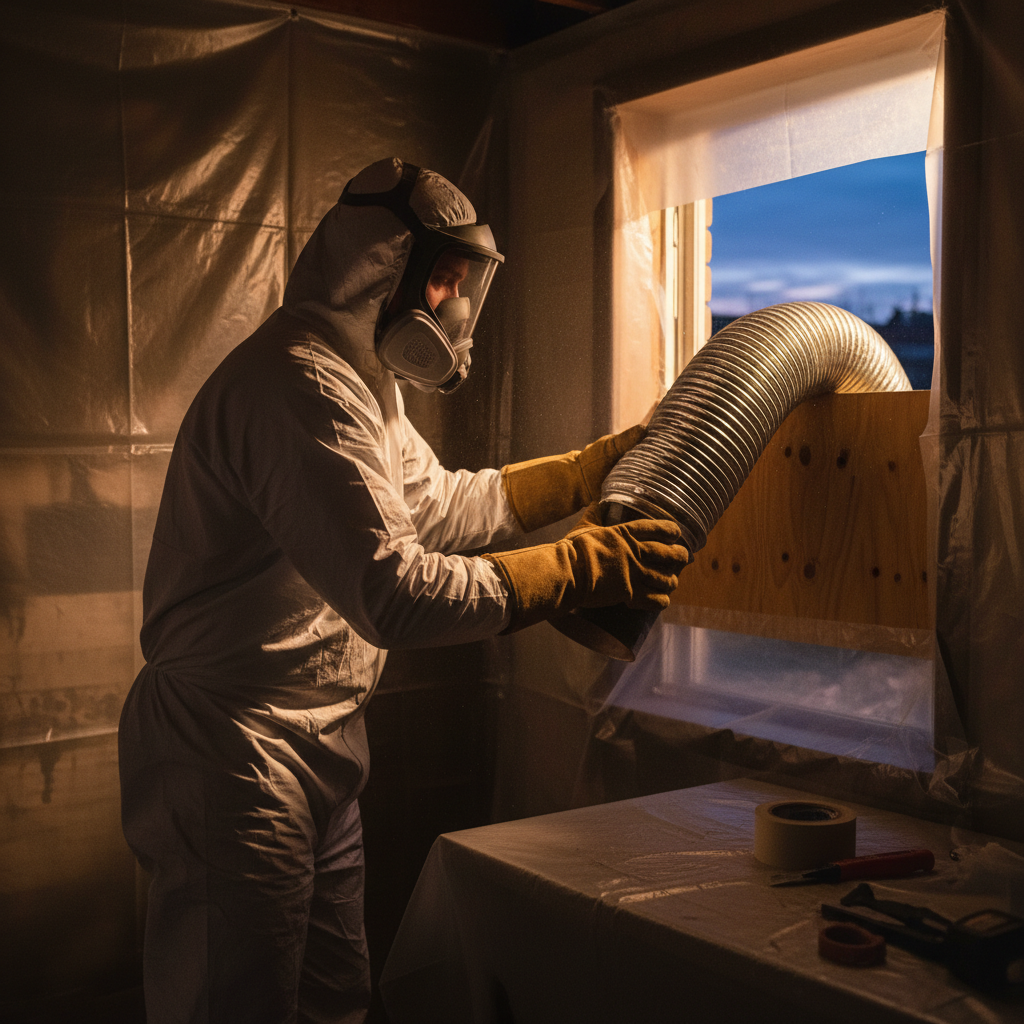
- Containment and negative air: We build polyethylene barriers, install zipper doors, and run HEPA air scrubbers in negative pressure (aiming for ~4–6 air changes per hour).
- PPE and safety: Our crew uses respirators, gloves, and Tyvek suits to prevent exposure and tracking.
- Removal and cleaning: We remove unsalvageable materials and clean salvageable ones using HEPA vacuuming and damp-wipe methods with EPA-approved solutions.
- Root-cause repair: We coordinate leak fixes, ventilation upgrades, drainage corrections, or insulation replacement where needed.
- Drying and dehumidification: We run targeted drying equipment until wood reaches safe moisture levels and RH is under 50%.
- Verification: We complete a final white-glove check and, when requested, provide air sampling and a Mold Remediation Warranty Certificate after completion and inspection.
In our experience, the best results happen when moisture control improvements are completed during the same window as remediation. That prevents a relapse and protects new finishes.
DIY vs Professional: When to Call Asmmoldremoval
Small surface spots on non-porous materials can be handled with careful cleaning and humidity control. Call professionals for growth over ~10 square feet, recurring leaks, porous materials like drywall or insulation, or if occupants are sensitive to allergens.
Quick decision guide
- DIY candidates: Hard, non-porous surfaces, isolated spotting, no musty odor beyond the room, and humidity already under 50%.
- Call us now: Attic sheathing growth, basement or crawl moisture, HVAC involvement, recurring stains, or any area larger than a patch.
- Urgent response: Post-flood or roof leak events—growth can start within 48 hours; rapid drying limits damage.
Comparison at a glance
| Factor | DIY Approach | Professional Remediation |
|---|---|---|
| Containment | Often missing or minimal | Full barriers and negative air |
| Air filtration | Household purifiers | HEPA scrubbers (99.97% at 0.3 µm) |
| Material handling | Surface wipe-downs | Remove unsalvageable; clean salvageable to clearance |
| Moisture control | Portable dehumidifier | Moisture mapping, structural drying, ventilation fixes |
| Verification | Visual only | Visual + readings; optional air sampling |
Not sure where yours falls? Book a free inspection with our certified team. We’ll show you moisture readings, photos, and a clear plan so you can decide confidently.
Free same-day inspection (Ontario)
Get an on-site moisture assessment and practical plan to stop mold damage at the source. Request your inspection or call our team today.
Tools and Resources We Use to Stop Mold Damage
Stopping mold damage requires instruments that find hidden moisture and equipment that removes contamination safely. We combine meters, thermal imaging, HEPA filtration, and targeted drying with documented checklists so remediation is effective and verifiable.
Inspection instruments
- Pin/pinless moisture meters: Measure surface and in-depth moisture in wood, drywall, and subfloors.
- Thermal imaging cameras: Reveal cold, damp areas behind finishes to trace leaks and condensation lines.
- Hygrometers and data loggers: Track ambient RH and temperature to confirm conditions are safe.
Containment and air quality
- Poly barriers and zipper doors: Isolate the work zone to prevent dust and spores from spreading.
- HEPA air scrubbers: Provide continuous filtration; we size units for ~4–6 ACH in the containment.
- Negative air setup: Ducts exhaust filtered air outdoors to keep particles from migrating.
Removal, cleaning, and drying
- HEPA vacuums and damp-wipe protocols: Capture settled spores and clean surfaces without abrasion when possible.
- Selective demolition tools: Remove only what can’t be cleaned to minimize disruption.
- Dehumidifiers and air movers: Drive moisture down to safe levels before closing walls.
We document each step with photos and readings. For more about our approach and credentials, see our company background and Ontario service coverage.
Case Studies and Real-World Examples
Every property is different, but patterns repeat: attic condensation in winter, basement seepage after storms, and HVAC cross-contamination. These brief cases show how fast action, containment, and moisture fixes prevent repeat mold damage.
Scarborough attic: winter condensation pattern
- Problem: Dark streaks along nail lines; bath fan vented into attic; RH spiked to 65% after showers.
- Actions: Built containment, HEPA-scrubbed the attic, cleaned sheathing, added baffles, extended fan ducting outdoors.
- Outcome: Post-work RH stabilized under 50%; no staining returned after the next winter.
Brampton basement: storm-driven seepage
- Problem: Wet baseboards and musty odor after heavy rain; visible growth on the back of drywall.
- Actions: Containment, selective demo, HEPA cleaning, structural drying; exterior grading and downspout corrections.
- Outcome: Dry readings and clean surfaces; homeowners installed continuous dehumidification to prevent relapse.
Office HVAC loop: recurring dust and odors
- Problem: Complaints in several rooms; dusty returns and damp drip pans.
- Actions: Coil and pan cleaning, duct inspection, MERV-13 filters, and schedule for filter changes.
- Outcome: Odors resolved; dust levels dropped; periodic checks kept conditions stable.
Real estate clearance: fast documentation
- Problem: Buyers requested assurance on attic staining during a tight closing timeline.
- Actions: Same-day inspection, documented remediation with photos, and post-inspection verification.
- Outcome: Sale proceeded with confidence supported by our Mold Remediation Warranty Certificate.
Have a similar scenario? Our Ontario-wide team can stage equipment and start containment the same day in most cases. Learn more on our service overview.
Prevention Best Practices That Actually Work
Prevention starts with moisture control: keep indoor RH under 50%, vent bathrooms and kitchens outdoors, and fix leaks immediately. Add seasonal attic checks, basement dehumidification, and routine HVAC maintenance to keep mold damage from returning.
Moisture and ventilation
- Run bath fans for 20–30 minutes after showers; vent to the outdoors, not the attic.
- Maintain indoor RH at 40–50% using smart dehumidifiers; log weekly readings.
- Seal and insulate attic bypasses around lights, chases, and hatches.
Exterior defenses
- Keep gutters clean and downspouts discharging well away from the foundation.
- Grade soil to slope away from the house; check for low spots after heavy rain.
- Inspect roof and flashing during shoulder seasons to catch small leaks early.
Basement and crawl space routines
- Use continuous dehumidification in summer; aim for RH under 50%.
- Seal sump lids and check pumps monthly during rainy periods.
- Consider vapor barriers in crawl spaces to block ground moisture.
For deeper guidance on water control, see this overview of basement flood prevention and drainage planning. Keep in mind: controlling water outside makes every indoor fix more durable.
Water Events: Timeline and Response Priorities
Act within the first 24–48 hours after leaks or flooding. Remove standing water, start aggressive drying, and schedule inspection. Early action dramatically reduces material loss and the scope of mold damage.
Rapid response checklist
- Stop the source: shut off water supply or tarp the roof.
- Remove standing water and wet materials that can’t be dried quickly.
- Start dehumidification and airflow; increase fresh air if conditions allow.
- Document readings and photos; this helps planning and insurance discussions.
Basement seepage and plumbing leaks are common triggers. For background on why basements leak and how to stabilize them, review this primer on leaky basements and fixes. When in doubt, we can be on-site the same day across Ontario.
Frequently Asked Questions
These brief answers address the questions Ontario homeowners, buyers, sellers, and facility managers ask most about mold damage, remediation timelines, and safety. For project-specific advice, request our free inspection.
How quickly does mold damage develop after a leak?
Mold can begin colonizing damp materials within 24–48 hours. Drying fast limits growth. If materials stay wet or humidity remains above 60%, staining and odors can appear within days and spread to adjacent areas.
Do I need testing before remediation?
Testing is useful in specific scenarios—when results will change the plan, when occupants have sensitivities, or for documentation. Often, visible growth plus moisture confirms the need for remediation. We discuss the pros and cons during your free inspection.
What areas are highest risk for recurring mold?
Attics with poor ventilation, basements and crawl spaces with seasonal humidity, and bathrooms without proper exhaust. HVAC systems with dirty coils or leaks can also spread spores unless maintained.
How do you verify mold removal worked?
We combine visual confirmation with moisture and humidity readings to ensure conditions are normal. Upon request, we provide air sampling. After completion and inspection, we issue a Mold Remediation Warranty Certificate for assurance.
Key Takeaways
Control moisture, contain the work, clean to a verifiable standard, and fix root causes. These four actions stop mold damage from recurring and protect indoor air quality and structure long term.
- Growth can start in 24–48 hours; the first days matter most.
- Keep indoor RH under 50%; repair leaks and improve ventilation.
- Use true HEPA filtration and negative air during remediation.
- Verify with readings and photos; consider post-work air sampling.
- Document results—helpful for homeowners, buyers, sellers, and agents.
Conclusion and Next Steps
Mold damage stops when moisture is controlled and contamination is removed under containment with HEPA capture. A structured plan—inspection, isolation, removal, drying, and verification—delivers lasting results and cleaner indoor air.
Ready to act? Here’s a simple path forward:
- Request a free, same-day inspection anywhere in Ontario to map moisture and scope the work.
- Decide on moisture fixes (roof, drainage, ventilation) alongside remediation to prevent relapse.
- Use our documentation and Mold Remediation Warranty Certificate for peace of mind and transactions.
If you’re in Scarborough or nearby, our team can set up containment the same day. Contact Asmmoldremoval to get started.