Crawl space mold remediation is the professional process of inspecting, containing, removing, and preventing mold under a home. Based in Scarborough at 1225 Kennedy Rd, ASM Mold Removal Inc. delivers Ontario same-day response, free inspections, and warranty-backed prevention so your crawl space stays dry, safe, and documented for future real estate or insurance needs.
By Asmmoldremoval • Last updated: 2026-06-01
Above the Fold: Your Plan and Table of Contents
This guide compares quick cleanups with long-lasting crawl space solutions, then walks you through a proven remediation workflow. You’ll learn when to use HEPA cleaning, antimicrobial treatment, drainage, dehumidification, and full encapsulation—and how ASM Mold Removal Inc. in Scarborough coordinates each step for durable, moisture-controlled results.
Many homeowners see musty odors, cold floors, and damp insulation before they ever spot discoloration. Here’s how we turn that around—fast and for the long haul.
- What crawl space mold remediation is—and why it starts with moisture
- Health, structure, and resale benefits you can measure
- Step-by-step remediation, from intake to warranty
- Methods compared: cleaning vs. drainage vs. encapsulation
- Best practices, tools, and local insights for Scarborough, ON
- Mini case studies you can benchmark
- FAQ plus next steps
What Is Crawl Space Mold Remediation?
Crawl space mold remediation removes existing mold and fixes the moisture that caused it. Certified crews inspect, isolate the area, filter air with HEPA, physically remove growth, treat surfaces with EPA-registered products, dry the structure to safe levels, and verify results with photos, readings, and documentation.
In our experience, mold flourishes when three things align: moisture, organic material, and time. Crawl spaces often supply all three. Wood framing becomes vulnerable when relative humidity lingers above about 60%, and wood moisture content rises beyond roughly 15%.
- Inspection first: We start with a free inspection, moisture mapping, and thermal imaging to find leaks, cold spots, and hidden condensation patterns.
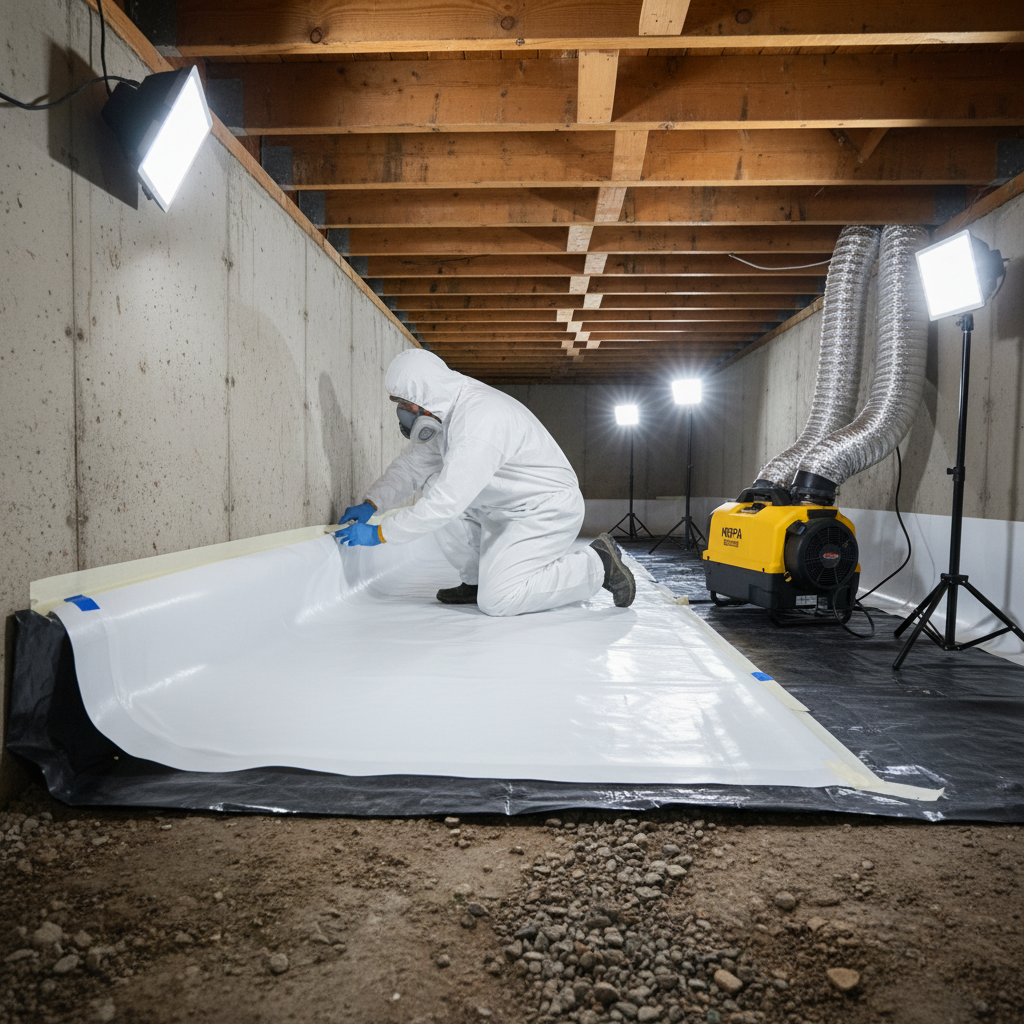
- Containment and HEPA: Poly containment and negative air prevent cross-contamination; HEPA air scrubbers increase air changes per hour during active work.
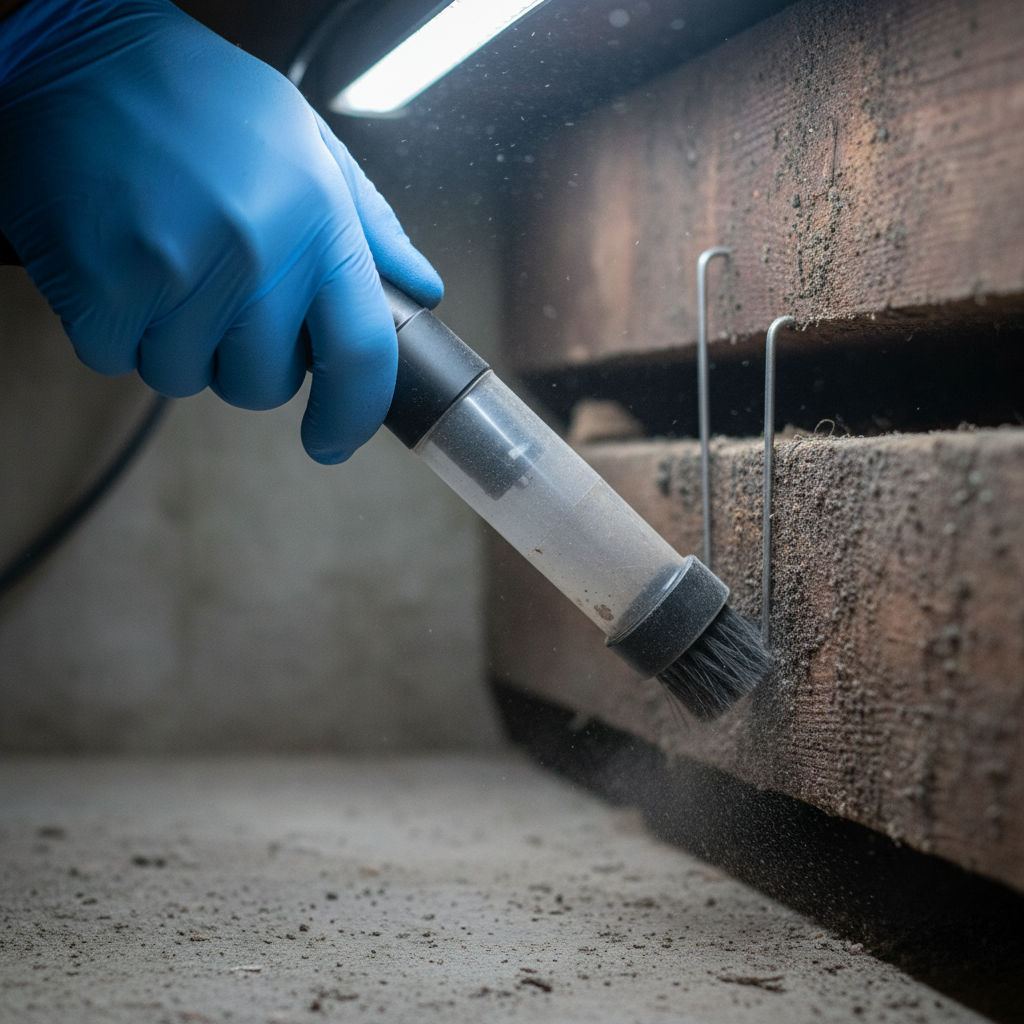
- Physical removal: HEPA vacuuming, hand scraping, and mechanical agitation remove visible colonies and settled spores from surfaces.
- Treatment and drying: EPA-registered antimicrobials address residuals; structural drying keeps RH under 50% and wood at or below ~12–15% moisture.
- Prevention plan: Encapsulation, drainage, and dehumidification stop the conditions mold needs to return.
When necessary, we include air or surface sampling and follow up with a Mold Remediation Warranty Certificate upon inspection—important for buyers, sellers, and real estate agents.
Why Crawl Space Mold Remediation Matters
Crawl space mold remediation protects indoor air, wood framing, and home value. In Scarborough and across ON, damp summers and freeze–thaw cycles drive humidity swings. Fixing moisture at the source—and proving it with readings—prevents regrowth, supports smooth real estate transactions, and reduces disruption later.
Here’s the thing: air moves upward. That “stack effect” carries crawl space air into living areas. If the crawl is musty, the main floor often is too.
- Health and comfort: Keeping indoor RH around 40–50% curbs mold-friendly conditions and helps occupants breathe easier.
- Structure: Repeated wetting/drying cycles can degrade sheathing and joists. Stabilizing wood near ~12–15% moisture preserves strength.
- Resale: Documentation—before/after photos, moisture logs, and a warranty certificate—reduces buyer objections and speeds closings.
We’ve found that homes with controlled crawl humidity report fewer odor complaints and less seasonal cupping in hardwood floors. That’s not a coincidence—it’s building science at work.
How Crawl Space Remediation Works (Step-by-Step)
A nine-step workflow ensures safety, completeness, and prevention: free inspection; diagnostics; containment with negative air; source fixes; physical removal; antimicrobial treatment; structural drying; encapsulation/insulation upgrades; and final verification with documentation and warranty.
- Intake and free inspection: We gather history (leaks, floods, odors) and measure RH and temperature.
- Diagnostics: Moisture mapping, thermal imaging, and when needed, air/surface sampling to confirm scope.
- Containment and negative air: Poly barriers and HEPA scrubbers to protect living areas and increase air changes during work.
- Source control: Address drainage, sump performance, gutter discharge patterns, and plumbing leaks.
- Removal: HEPA vacuuming followed by mechanical agitation and detail cleaning of wood and masonry.
- Treatment: Apply EPA-registered antimicrobials to neutralize residual growth on prepared surfaces.
- Drying: Dehumidifiers target 40–50% RH; wood dries to ~12–15% moisture content.
- Encapsulation and insulation: 10–20 mil reinforced vapor barrier, seams taped, walls sealed; insulate and air-seal rim joists.
- Verification: Visual clearance plus moisture/RH readings; issue documentation and a warranty certificate.
| Phase | Primary Goal | Key Metric | Typical Duration |
|---|---|---|---|
| Diagnostics | Define scope | Moisture map complete | 1–2 hours |
| Containment/HEPA | Protect occupants | Negative pressure achieved | 1–3 hours |
| Removal/Treatment | Eliminate growth | Surfaces clean/treated | 4–10 hours |
| Drying | Stabilize materials | RH 40–50%, wood ≤15% | 12–48 hours |
| Encapsulation | Block vapor | Seams taped, sealed | 6–12 hours |
Want a walkthrough from a certified team? Our About page explains training, containment protocols, and HEPA setups we deploy across Ontario.
Types, Methods, and Approaches
Effective crawl space strategies combine immediate cleanup with lasting moisture control. HEPA cleaning reduces spores fast, antimicrobials treat residuals, drainage handles liquid water, encapsulation blocks ground vapor, and dehumidifiers keep RH steady—together preventing regrowth.
Short-term cleaning options
- HEPA vacuuming: Removes settled spores from surfaces and insulation; ideal before deeper prep.
- Mechanical agitation: Brushes and sanding pads lift adherent growth from wood and masonry.
- Antimicrobial application: EPA-registered products neutralize residuals after physical removal.
Moisture and building-science fixes
- Drainage upgrades: Interior trench to sump, perimeter drains, and discharge extensions to manage storm events.
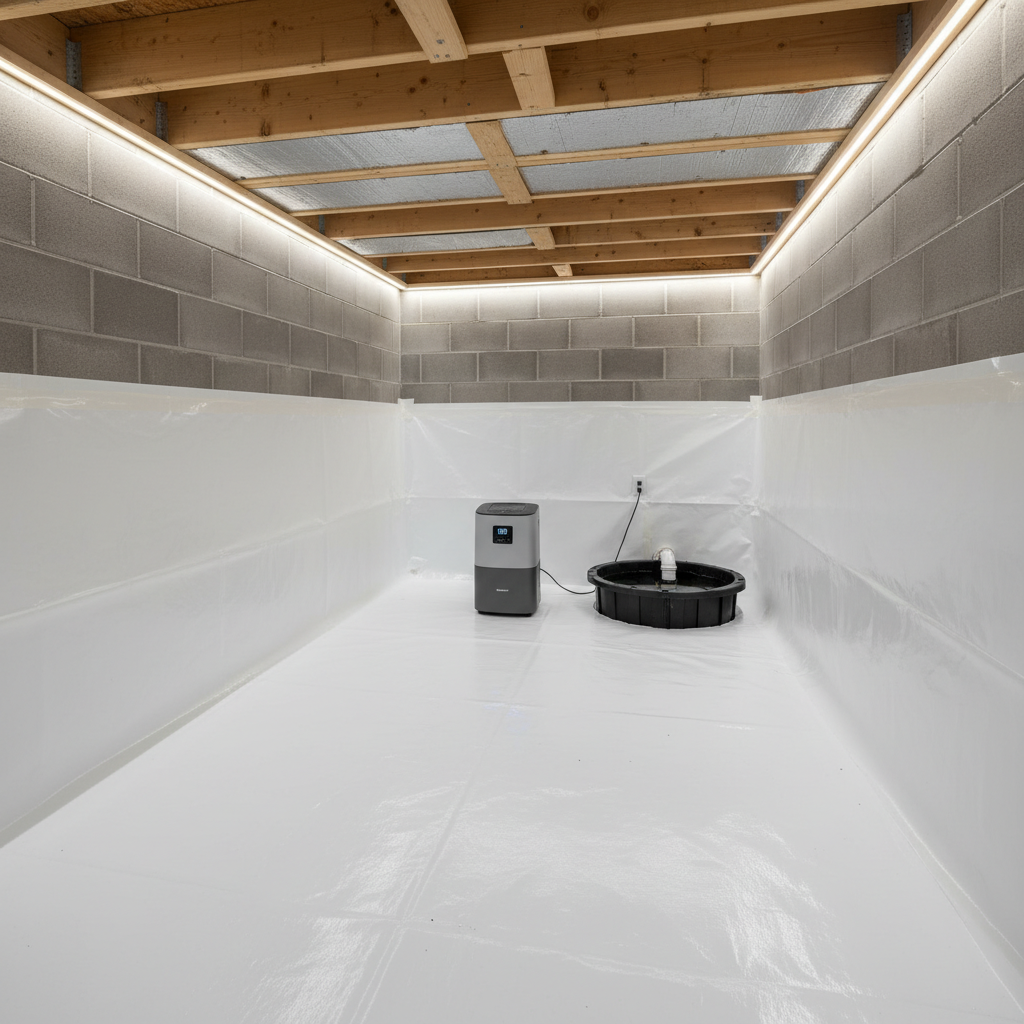
- Encapsulation: 10–20 mil reinforced vapor barrier on floor and walls, seams taped, posts wrapped, and airtight sealing.
- Dehumidification: Crawl-rated units sized to the cubic footage with continuous drain; target 40–50% RH.
- Insulation and air sealing: Focus on rim joists, ducts, and penetrations to stop condensation cycles.
One more point: ventilation isn’t one-size-fits-all. Unconditioned, vented crawls often pull in humid summer air that condenses on cool framing. Encapsulation with dedicated dehumidification breaks that cycle.
Comparing Fixes That Last Longer (2026)
For durability, pair encapsulation with dehumidification and proper drainage. Cleaning alone reduces spores quickly but won’t outlast moisture. Long-term control comes from blocking ground vapor, removing standing water, and keeping RH near 40–50% year-round.
| Solution | Primary Goal | Longevity | Ongoing Care | Best For |
|---|---|---|---|---|
| HEPA clean + antimicrobial | Remove growth/spores | Weeks–months if moisture remains | Monitor RH, follow-up checks | Immediate cleanup before repairs |
| Drainage upgrades | Eliminate liquid water | Years with maintenance | Test sump, clear lines | High water tables/leaks |
| Encapsulation (10–20 mil) | Block ground vapor | 10+ years with inspections | Inspect seams annually | Vented, damp crawl spaces |
| Dehumidifier (crawl-rated) | Hold RH 40–50% | 5–10 years typical | Filters, condensate line | Seasonal humidity swings |
| Insulation/air sealing | Stop condensation | 10+ years | Periodic checks | Cold rims/ducts |
We routinely log RH and wood moisture during follow-ups. Projects that combine drainage, encapsulation, and RH control maintain stable readings across seasons—exactly what you want for long-term property health.
Best Practices for Lasting Results
Lasting crawl space results hinge on moisture control. Keep RH under 50%, use a reinforced vapor barrier with sealed seams, size dehumidifiers correctly, and verify with moisture readings. Document your baseline and results so you can prove success later.
- Target metrics: Indoor RH 40–50%; wood framing moisture ~12–15%.
- Barrier spec: 10–20 mil reinforced liner, posts wrapped, seams taped; seal to walls and piers.
- Air management: Maintain negative pressure during active work; aim for multiple air changes per hour with HEPA.
- Drainage readiness: Test sump pumps, check backflow, and confirm discharge away from the foundation.
- Verification: Photo documentation and moisture logs for your records and real estate files.
We build prevention plans that fit each crawl’s size, layout, and seasonal loads. Prevention beats repeat cleanups—every time.
Tools and Resources Pros Use
Professionals rely on moisture meters, thermal imaging, HEPA air scrubbers, crawl-rated dehumidifiers, and EPA-registered antimicrobials. The right tools help find hidden leaks, remove spores safely, and hold humidity at safe levels year-round.
- Moisture meters: Spot-check wood and concrete to confirm drying progress and long-term stability. See a primer on moisture content analysis for context.
- Thermal imaging: Reveals cold rims, duct sweat, and leak paths you can’t see with the naked eye.
- HEPA air scrubbers: Capture fine particulates while increasing air changes during cleaning.
- Dehumidifiers: Crawl-rated units with continuous drains hold RH to 40–50%.
- EPA-registered antimicrobials: Applied after physical removal for comprehensive treatment.
Crawl Space Mold Remediation in Scarborough, ON
Scarborough’s humid summers and periodic thaws make moisture spikes common. Combining drainage checks, encapsulation, and steady 40–50% RH control prevents seasonal mold cycles. ASM Mold Removal Inc. provides Ontario same-day response, certified crews, and a post-project Mold Remediation Warranty Certificate.
Neighborhood homes often share similar soil conditions and storm patterns. That’s why we pair diagnostics with practical fixes that survive both July humidity and April snowmelt.
Local considerations for Scarborough
- Time inspections before peak summer humidity to prevent rim joist condensation and duct sweat.
- After spring thaws or heavy rains, retest perimeter drainage, confirm sump operation, and inspect discharge paths.
- For multi-tenant or mixed-use properties, coordinate quiet hours to set containment and negative air with minimal disruption.
Curious how our team coordinates access, containment, and cleanup? Explore our service overview and reach out through the contact page to schedule a free inspection.
Case Studies and Real-World Examples
Moisture control plus thorough cleanup delivers measurable gains. These mini case studies show RH and wood moisture stabilizing after drainage, encapsulation, and dehumidification—evidence that prevention-first plans outperform one-time cleanups.
Scarborough semi-detached (residential)
- Symptoms: Musty odor on main floor, cool floors, discoloration on joists.
- Actions: Interior drain to sump, 12-mil liner with sealed seams, crawl-rated dehumidifier.
- Results: RH stabilized near 45%; wood moisture tracked at ~13–14% during two seasonal checks.
GTA bungalow near ravine (residential)
- Symptoms: Chronic damp soil, periodic standing water after storms.
- Actions: Trench drain to sump with alarm, HEPA clean and antimicrobial, 20-mil reinforced liner, rim air sealing.
- Results: No visible regrowth at 6 and 12 months; RH trend line held 42–48% across summer.
Retail unit with shared crawl (commercial)
- Constraints: Must finish over a weekend without interrupting business hours.
- Actions: Friday containment and negative air; Saturday cleaning and treatment; Sunday encapsulation and dehumidifier setup.
- Results: Monday verification passed; odor complaints dropped to zero; maintenance plan adopted quarterly.
In our experience across Ontario, pairing two or more long-term controls—drainage plus encapsulation or encapsulation plus dehumidification—keeps readings consistent year after year.
Free crawl space inspection: ASM Mold Removal Inc. offers Ontario-wide same-day response, detailed moisture assessments, and a Mold Remediation Warranty Certificate after completion. Request your inspection to get a prevention-first plan.
Frequently Asked Questions
Homeowners ask about signs, timelines, DIY limits, and prevention. The short version: verify with moisture readings, fix sources first, use HEPA containment for cleaning, and hold RH to 40–50% with encapsulation and dehumidification for lasting results.
How do I confirm it’s mold and not dirt?
Pros assess with trained visuals and, when needed, air or surface samples plus moisture readings. Dirt won’t correlate with elevated RH or damp materials, but mold thrives when humidity exceeds about 60% and wood moisture rises past roughly 15%.
Can spraying alone solve crawl space mold?
No. Sprays without moisture control typically fail. Physical removal, EPA-registered treatment, and long-term RH control (around 40–50%) are needed. Encapsulation and drainage prevent the damp conditions that let mold return.
How long does a typical project take?
Most residential crawl jobs complete in 1–3 days depending on size, access, and the scope of moisture repairs. Complex drainage or encapsulation phases can add a day, but they’re what keep results stable season after season.
Do I need encapsulation if I add a dehumidifier?
Dehumidifiers control airborne moisture, but ground vapor can still drive loads. Encapsulation reduces the demand on your unit and evens out seasonal swings. Many durable solutions use both for consistent 40–50% RH.
Conclusion and Next Steps
Fix moisture first, then remove and treat growth, and finally hold steady humidity. Drainage, encapsulation, and a crawl-rated dehumidifier deliver the longest-lasting results—verified by stable RH and wood moisture readings across seasons.
- Key takeaways: Moisture control wins, documentation matters, and RH 40–50% is your friend.
- Action steps: Book a free inspection, review a prevention plan, and schedule follow-up readings at 30, 90, and 180 days.
- Get help fast: ASM offers Ontario same-day response and backs projects with a warranty certificate—learn more on our service overview or contact us now.
For broader property protection, tie crawl space work into attic and basement strategies—what we call tackling “mold damage” at the whole-home level.
For additional context on renovation moisture planning in the GTA, see this Scarborough-focused overview from a local renovator on basement renovation considerations. While not a remediation guide, it reinforces why moisture control decisions should be made early.