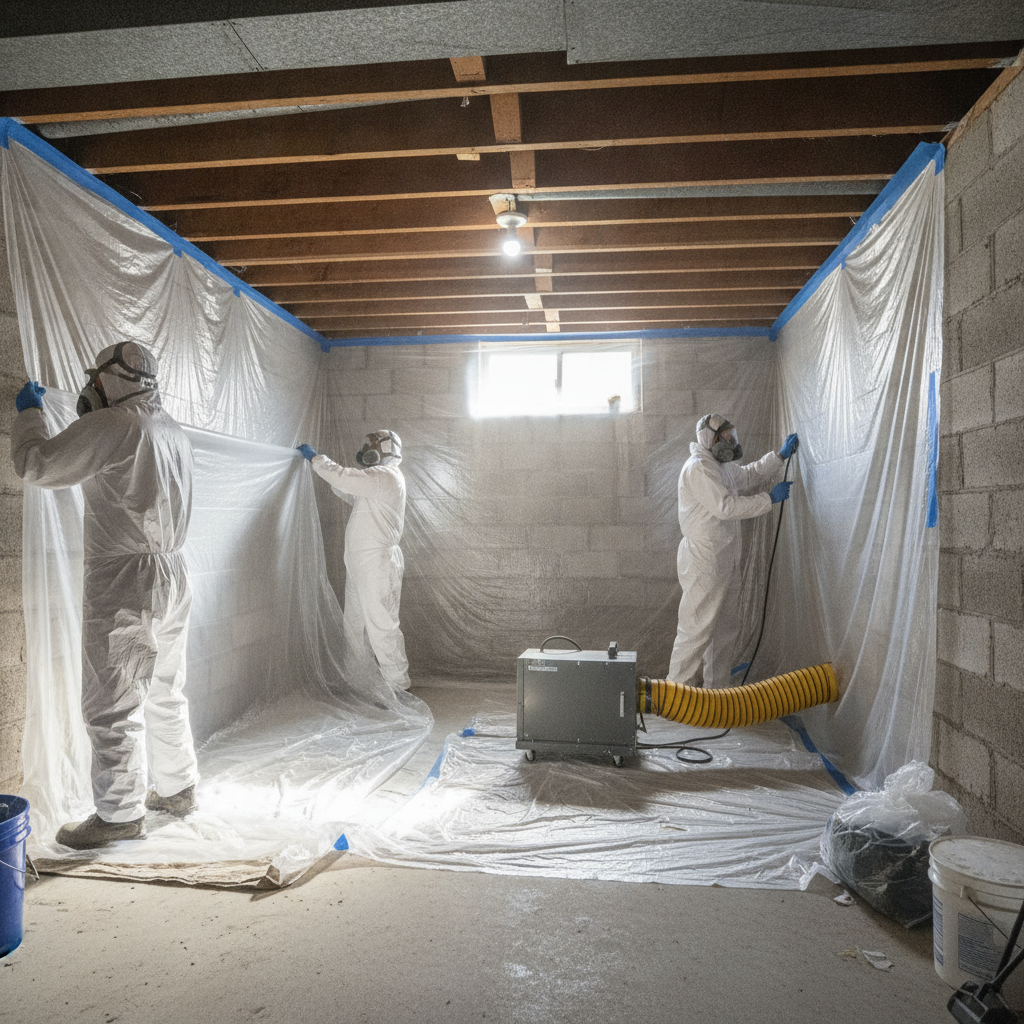
Basement mold cleaning is the professional removal of visible growth and hidden spores from lower-level building materials using containment, HEPA filtration, and antimicrobial treatments. The cost to clean mold in a basement depends on contamination size, materials affected, moisture source, and access. In Scarborough, starting with a certified assessment prevents scope creep and unnecessary spend.
By ASM Mold Removal Inc. • Last updated: 2026-07-05
Basement Mold Cleanup in Scarborough: Fast, Safe, Warranty-Backed
ASM Mold Removal Inc. helps Scarborough homeowners remove basement mold safely and efficiently. We start with a free inspection and moisture assessment, set up clean containment with negative air, and remediate using HEPA filtration and EPA-approved treatments. Our team issues a Mold Remediation Warranty Certificate once your basement is cleared.
We know basements. Concrete, drywall, wood joists, insulation, and HVAC runs all respond differently to moisture. That’s why our crews build an action plan around your materials, history of leaks, and ventilation.
- Same-day response across Ontario to limit spread and odors
- Free visual inspection plus targeted moisture readings
- HEPA air scrubbers and negative pressure containment
- Non-toxic, EPA-approved antimicrobial treatments
- Full repair and restoration available when needed
Ready to talk through options? Use our contact form for a same-day call back.
At a Glance
Expect basement mold cleanup scope to be shaped by four drivers: contamination extent, materials, moisture source, and access. A certified inspection, tight containment, and fast drying reduce time on site and help keep fees low without compromising safety.
- What you’ll learn: Key factors influencing basement cleanup, five proven ways to control fees, our step-by-step process, and when DIY makes sense.
- Who this helps: Scarborough homeowners, buyers, sellers, and real estate agents needing documented, warranty-backed clearance.
- Why it matters: Mold can begin colonizing within 24–48 hours after a water event; fast action limits removal effort.
Introduction: What Really Drives Basement Mold Costs
Basement mold cost is driven by how much area is affected, which materials are wet or colonized, whether the moisture source is active, and how easy the space is to access. A precise scope built from moisture data avoids unnecessary demolition and follow-up visits.
When people ask about the “cost to clean mold in basement,” they’re really asking how to scope responsibly. We focus your dollars on root-cause fixes and targeted removal, not guesswork.
- Extent and square footage: Larger or multi-room contamination requires more containment and air changes per hour (ACH). Typical remediation targets 6–12 ACH inside containment for particle control.
- Material sensitivity: Porous finishes (drywall, fiber insulation) often need removal. Semi-porous wood may be cleaned, sanded, and treated if structurally sound.
- Active leaks vs. past events: Drying to 30–50% relative humidity and getting sub-200 GPP (grains per pound) ambient moisture speeds clearance and reduces revisits.
- Access and obstructions: Finished walls, built-ins, and tight utility rooms increase labor and containment complexity.
Here’s the thing: a tight plan grounded in measurements—rather than assumptions—keeps your project efficient from day one.
Services Offered: Inspection, Cleanup, Prevention, and Restoration
We provide end-to-end basement solutions: certified mold inspection and testing, targeted cleanup and remediation, water damage restoration, and long-term prevention. If needed, we repair finishes after clearance so your basement is safe and ready to use.
ASM Mold Removal Inc. serves residential and commercial properties with certified, insured technicians following current remediation standards. Our basement program brings attic-grade rigor to lower levels prone to leaks and humidity.
Core services for basements
- Mold Inspection & Testing: Visual assessment, moisture mapping, thermal imaging, and optional air/oSurface sampling when needed.
- Basement Mold Cleanup: Containment, negative pressure, HEPA air scrubbers, selective removal, and antimicrobial treatments.
- Water Damage Restoration: Extraction, dehumidification, air movement, and verification to target 30–50% RH and dry-standard materials.
- Preventative Treatments: Antimicrobials, sealants, and ventilation improvements to reduce future colonization risk.
- HVAC & Duct Hygiene: Coil and duct cleaning for mold-related particulates where appropriate.
- Repair & Restoration: Drywall, baseboards, insulation, and paint reinstatement after successful clearance.
Commercial settings—offices, retail, schools—receive discreet scheduling to minimize downtime and occupant disruption.
The Process: How We Clean Mold in a Basement
Our process follows a measured sequence: diagnose moisture, isolate the work zone, control particulates with HEPA and negative pressure, remove and clean affected materials, treat and dry to target specs, then document clearance. Each step is verified to prevent re-growth.
Basements vary, but sound methodology doesn’t. Here’s our standard sequence and what to expect.
1) Diagnose and plan
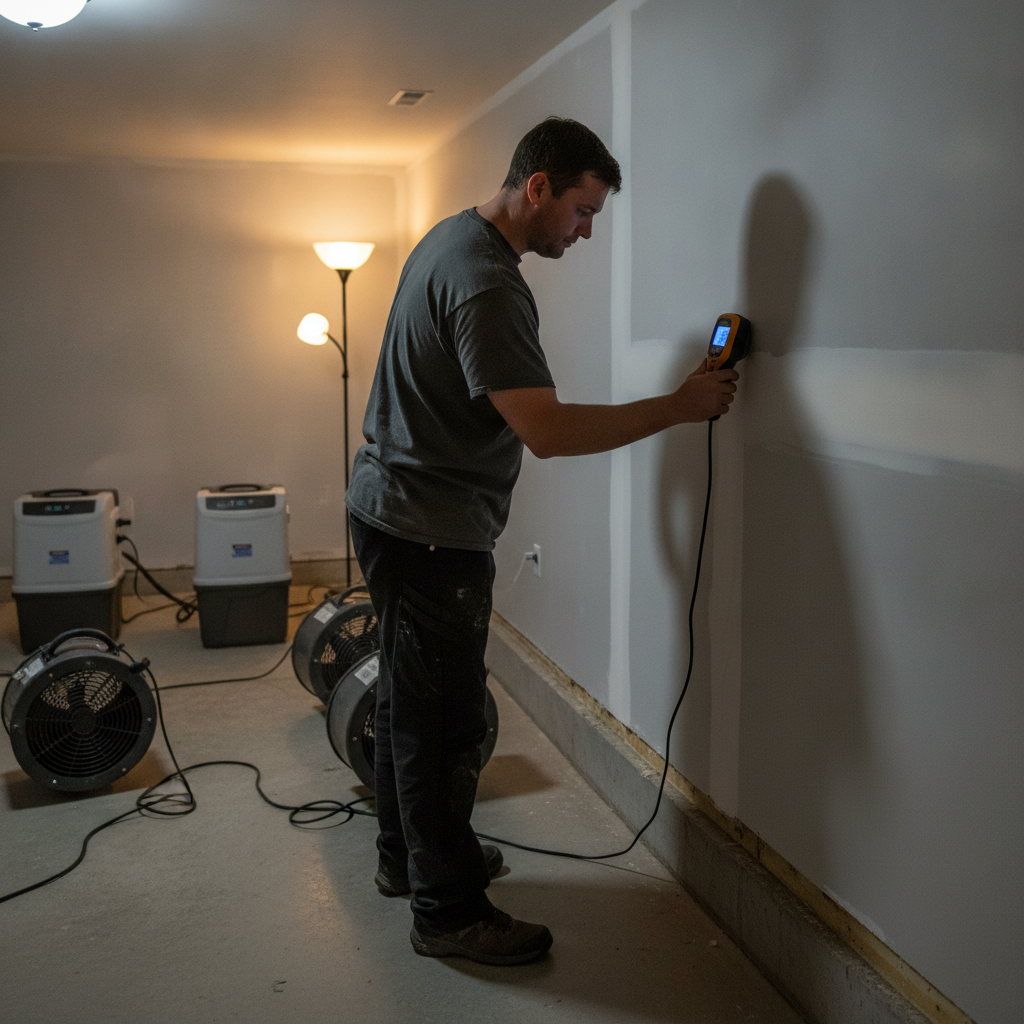
- Moisture readings in walls, sill plates, and slab; thermal imaging to trace cold spots that can indicate moisture.
- Check for foundation seepage, plumbing leaks, or condensation (dew point risk rises when RH exceeds ~60%).
- Define scope: demolition limits, equipment layout, ACH goals inside containment, and verification targets.
2) Isolate and control
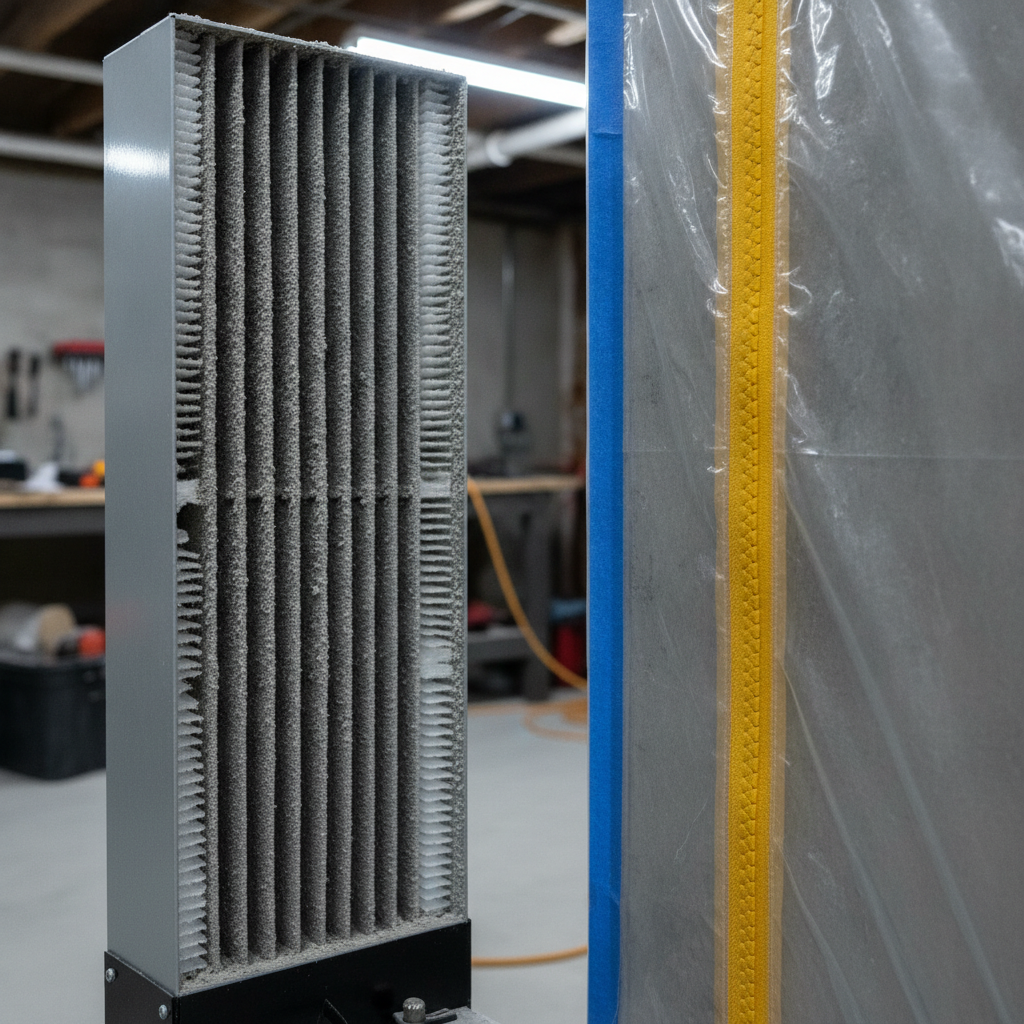
- Set up 6-mil poly containment with zipper access and floor protection; establish negative pressure using HEPA filtration.
- Target 6–12 ACH within containment to manage aerosolized spores and dust during removal.
- Air scrubbers and dehumidifiers staged to maintain 30–50% RH; continuous manometer checks confirm pressure differential.
3) Remove, clean, and treat
- Selective removal of unsalvageable porous materials (e.g., visibly colonized drywall and insulation).
- HEPA vacuuming of remaining surfaces, followed by damp wiping and mechanical agitation where required.
- Application of EPA-approved antimicrobials; wood may be sanded or soda-blasted before sealing.
4) Dry, verify, and document
- Drying continues until materials meet dry standards (e.g., comparable to unaffected areas).
- Clearance visual plus, when appropriate, air or surface sampling to confirm acceptable particulate levels.
- Issue a Mold Remediation Warranty Certificate once inspection criteria are met.
Most homeowners appreciate that methodical controls—especially pressure and RH targets—save time later by avoiding rework.
What Drives the Cost to Clean Mold in a Basement
Four variables shape basement mold pricing: contamination area, material types, whether moisture is ongoing, and access constraints. Control these inputs with a data-driven plan, and you’ll reduce hours on site, material waste, and follow-up visits.
While we never publish one-size-fits-all pricing, we can show you how scope forms—and how to keep it lean without cutting corners.
Key cost drivers
- Extent of growth: Larger footprints require more containment and cleaning passes. Small, isolated patches often resolve faster if the moisture source is truly fixed.
- Materials involved: Drywall and batt insulation are usually removed; concrete and dimensional lumber may be cleaned and sealed if structurally intact.
- Moisture dynamics: Active seepage or plumbing leaks add time for extraction and drying. Expect RH managed down to 30–50% to reach stable conditions.
- Access and finishes: Finished basements add careful demolition and reinstatement. Tight utility corners and storage-heavy rooms slow progress.
- Documentation needs: Real estate transactions often require post-remediation verification and a transferable warranty certificate.
DIY, Pro, or Hybrid? A quick comparison
| Approach | Best For | Controls Required | Risks if Done Wrong |
|---|---|---|---|
| DIY (very small) | Non-porous surfaces, under ~10 sq ft, no health sensitivities | Localized PPE, wipe-down, dehumidification | Spread to adjacent finishes, missed moisture source |
| Professional | Multi-room, porous materials, active moisture, sensitive occupants | Containment, negative pressure, HEPA, antimicrobial, verification | Re-growth, odors, structural damage if incomplete |
| Hybrid | Client performs move-out/prep; pros handle containment and remediation | Clear plan and handoff points | Cross-contamination during prep if uncoordinated |
Not sure where yours falls? Book a free inspection and we’ll size it precisely so you pay for what you need—nothing more. Start here: contact ASM.
5 Ways to Keep Basement Mold Fees Low
You can reduce basement mold cleanup fees by tackling moisture fast, clearing access, aligning on selective removal, protecting clean areas, and planning restoration efficiently. These five steps cut non-productive time and keep the project tightly scoped.
- Act within 24–48 hours after water. Begin dehumidification and air movement quickly. Rapid response limits colonization layers, so there’s less demolition and fewer cleaning passes.
- Clear the work zone ahead of time. Move storage bins and furniture out of the affected rooms. Fewer obstructions mean faster containment setup and safer access.
- Prioritize selective removal. Agree on what truly needs removal versus what can be cleaned and sealed. For example, keep intact framing when moisture content is normal and surfaces can be sanded and treated.
- Protect clean areas. Ask for robust entry protection, tacky mats, and pressure monitoring. Clean corridors mean less post-job housekeeping and fewer particle complaints.
- Bundle restoration smartly. Coordinate drywall, insulation, and paint reinstatement once clearance is confirmed. One mobilization for trades avoids duplicated trips.
We build these steps into every plan so your project stays efficient and documented.
Why Choose ASM Mold Removal Inc.
We combine rapid response, certified methods, eco-friendly products, and comprehensive documentation. You’ll get same-day inspections in Ontario, HEPA-controlled remediation, and a Mold Remediation Warranty Certificate when work passes inspection. It’s precise, transparent, and built for long-term prevention.
- Ontario same-day response: Faster action, less spread, shorter cleanup windows.
- Free inspection and moisture assessment: Pay for the right scope, not guesswork.
- Certified, insured technicians: Attic-grade rigor applied to basements and crawl spaces.
- EPA-approved, non-toxic products: Safer for families, schools, and healthcare settings.
- HEPA filtration and containment: Negative pressure with 6–12 ACH targets inside work zones.
- Repair and restoration: One team can take you from demo to repaint.
- Warranty certificate: Post-project assurance for homeowners and real estate deals.
Want a same-day assessment in Scarborough? Send a note via our contact page and we’ll call right back.
Service Area: Scarborough and Across Ontario
From Scarborough basements with seasonal humidity to Ontario-wide flood events, we mobilize fast. Our teams remediate homes, condos, retail units, warehouses, schools, and clinics with discreet scheduling and clean documentation.
When working with clients in Scarborough, we plan around seasonal humidity swings and freezing-thaw cycles that stress foundations. We also coordinate with building management for high-rise service corridors and staging.
Local considerations for Scarborough
- Plan remediation around spring thaw and late-summer humidity; basements see RH spikes that demand proactive dehumidification.
- After heavy rain, schedule inspections quickly. Address seepage or sump issues before restarting finished-wall repairs.
- For multi-unit buildings, coordinate elevator access windows and containment routes to keep common areas clean.
What Homeowners Say
Clients highlight our speed, clear communication, and spotless work zones. They also value that we document moisture, pressure, and cleanliness so there are no surprises during or after the job.
- “They were here the same day we called, found a small plumbing leak behind our stack, and contained everything. Basement smells fresh and looks new.”
- “Clear plan, careful demolition, tidy reinstatement. The warranty letter helped finalize our sale.”
- “I appreciated the updates—RH dropped under 45% by day two and the scrubbers kept dust down.”
Resources and Planning Tips
Planning basement projects alongside remediation lowers disruption. Review finishing sequences, storage strategies, and timeline staging so moisture fixes happen before new materials go in. It reduces callbacks and keeps your budget focused.
If you’re weighing future basement updates after mold clearance, explore how renovation staging interacts with remediation. Thoughtful sequencing avoids rework.
- See this overview of basement finishing planning to time reinstatement after clearance.
- Learn about basement renovation phases so moisture control precedes new drywall.
- Review a Scarborough-focused note on renovation logistics that can affect access and schedules.
Frequently Asked Questions
Common questions focus on safety, timeline, and prevention. We prioritize source control, clean containment, and documented clearance. Below are concise answers to help you plan with confidence.
How fast can mold start after a basement flood?
Mold can begin colonizing within 24–48 hours when organic materials stay wet and indoor humidity remains high. Start extraction, dehumidification, and airflow quickly to limit spread and reduce the amount of demolition required later.
Can I clean small basement mold myself?
If the area is very small, on non-porous surfaces, and there are no health sensitivities, light DIY may be feasible. For multi-room growth, porous materials, or ongoing leaks, professional containment, HEPA control, and verification are recommended for safety.
What documentation do I receive after remediation?
You receive a detailed summary of moisture readings, containment and pressure controls used, cleaning and treatment steps, and any verification results. ASM Mold Removal Inc. also issues a Mold Remediation Warranty Certificate upon successful clearance.
How do you prevent mold from coming back?
Prevention starts with fixing the moisture source, maintaining 30–50% RH, and improving ventilation. We treat and seal cleaned materials, recommend targeted insulation upgrades, and may suggest HVAC hygiene so airborne spores don’t redeposit on new finishes.
Final Call to Action
Get a free basement inspection and moisture assessment in Scarborough today. We’ll size the scope, build a clean plan, and document clearance with a warranty certificate—so you can finish the space with confidence.
Have questions about the cost to clean mold in basement conditions like yours? Start a same-day conversation: request your inspection.
Key Takeaways
Basement mold cost depends on contamination size, materials, moisture source, and access. Rapid drying, clear zones, selective removal, protection of clean areas, and smart restoration staging keep fees under control.
- Scope drives spend; measure first, then remediate.
- Containment with 6–12 ACH and 30–50% RH targets shortens timelines.
- Selective removal plus verified drying reduces rework risk.
- Documentation and a warranty certificate support real estate needs.