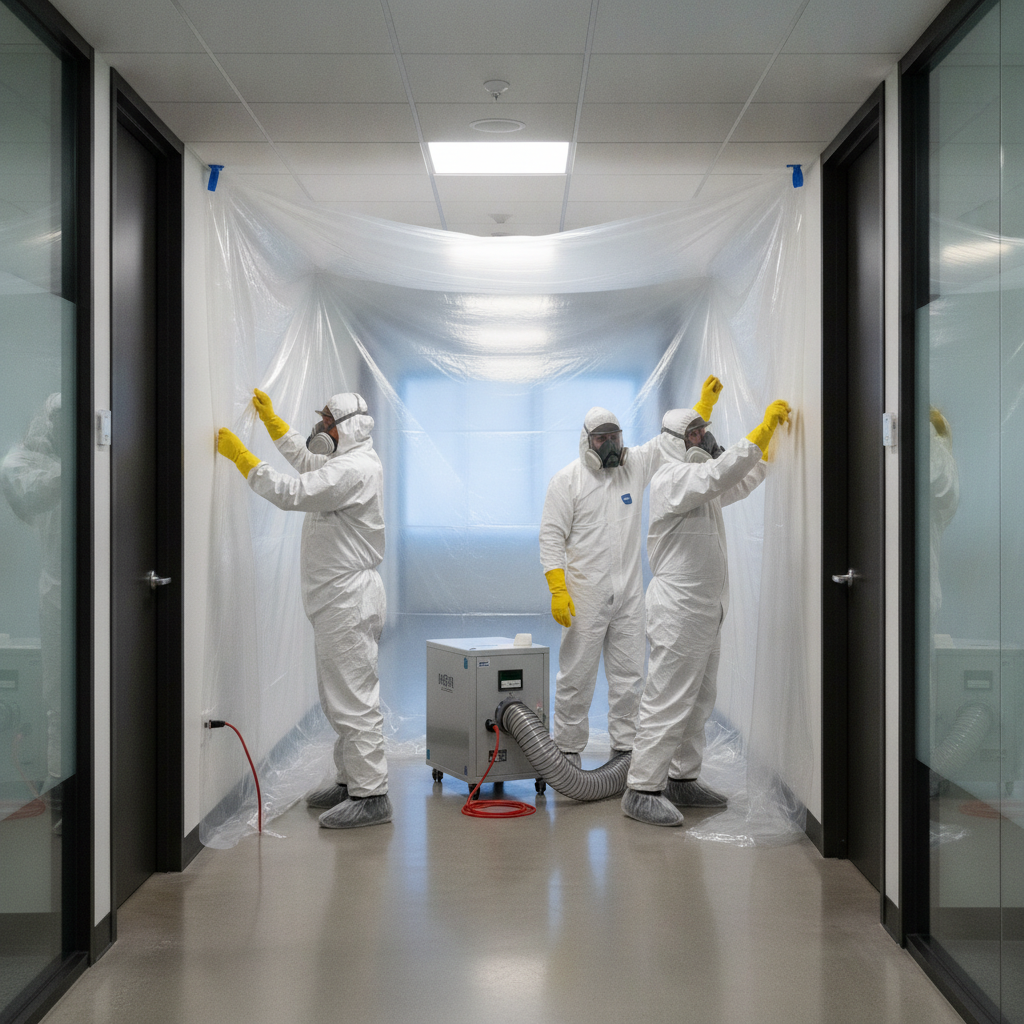
Commercial mold remediation is the professional process of containing, removing, and preventing mold in workplaces and public buildings. It prioritizes occupant safety, isolates growth, and addresses moisture at the source. In Scarborough facilities, rapid response within 24–48 hours after water intrusion limits spread, protects indoor air quality, and reduces downtime for offices, retail, warehouses, schools, and healthcare settings.
By Amardeep Mamidi • Last updated: 2026-06-23
Above the fold: quick overview and contents
Start with safety, source control, and containment. Then remove contaminated materials, clean and filter the air, and verify results. This guide shows what commercial mold remediation fixes first, how certified crews stage a site, and the checkpoints facility managers need to keep operations running in Scarborough.
Managing a commercial building means juggling safety, operations, and reputation. The order you fix things during a mold event decides how smoothly those three play together. This complete guide explains the sequence we use on Ontario projects and how you can keep your team productive while work proceeds behind sealed containment.
- What commercial mold remediation covers and why it matters
- Order of operations: what gets fixed first and why
- Containment, HEPA filtration, and verification explained
- Best practices for offices, retail, schools, and clinics
- Tools, templates, and documentation checklists
- Real-world scenarios from Ontario projects
What is commercial mold remediation?
Commercial mold remediation is a structured, standards-based process to locate moisture sources, contain affected zones, remove mold growth, decontaminate surfaces, and verify safe re-occupancy. It combines inspection, engineering controls, specialized cleaning, and documentation designed for offices, retail, warehouses, schools, and medical buildings.
At its core, commercial remediation aligns three tracks at once: safety, source control, and removal. Safety minimizes exposure with PPE, negative pressure, and access control. Source control solves why materials got wet—roof leaks, plumbing, condensation, or ventilation issues. Removal eliminates visible growth and airborne spores so the problem doesn’t return when people come back.
- Safety controls: Site-specific PPE, negative pressure inside containment, and entry logs reduce exposure while work proceeds. Typical practice targets a small but steady pressure differential to keep air flowing into the work zone.
- Source control: Teams isolate leaks and begin drying immediately. Many materials support growth if they remain damp for 24–48 hours, so early action limits spread to adjacent suites or classrooms.
- Removal & cleaning: Physical removal of colonized porous materials, HEPA vacuuming of settled spores, and antimicrobial treatment on cleaned surfaces finish the cycle.
ASM Mold Removal Inc. starts with a free inspection and moisture assessment. Our technicians use thermal imaging to reveal hidden damp areas behind walls or above ceilings. We build containment and establish negative pressure before any demolition so corridors, lobbies, and elevators remain safe and clean. That staging is what allows businesses to keep operating during work.
For multi-tenant buildings, tight staging and access control matter. We separate construction traffic, cover common paths, and use walk-off mats, reducing re-soiling and protecting indoor air for occupants outside the work zone. When the source is HVAC-related, we isolate returns and plan filter changes to prevent spores from circulating.
Why commercial mold remediation matters
Mold impacts health, property, and business continuity. Fast, compliant remediation protects indoor air, limits structural damage, and sustains operations. In commercial settings, clear documentation and post-clearance proof are essential for risk management and tenancy confidence.
Health and comfort are immediate concerns. Damp spaces can aggravate allergies and asthma, and musty odors erode tenant trust. Materials like drywall and ceiling tiles wick moisture, and visible colonies can appear in as little as 24–48 hours after a leak or flood. When air filtration and drying begin early, fewer suites and departments are impacted.
- Continuity: Phased work lets offices, retail, or classrooms keep operating. We routinely schedule higher-disruption tasks after hours to protect peak business windows.
- Compliance documentation: Insurers and stakeholders expect proof of containment, cleaning, moisture reduction, and final verification. Organized logs prevent claim delays.
- Reputation and leasing: Warranty-backed outcomes and clean re-occupancy help retain tenants and support real estate timelines.
ASM Mold Removal Inc. provides a Mold Remediation Warranty Certificate after completion and inspection. For property managers navigating move-ins, audits, or corporate EH&S reviews, one document that summarizes the scope, methods, and results reduces back-and-forth and speeds approvals.
From a building science perspective, moisture drives everything. Keeping indoor relative humidity at or below 60% and drying porous materials to safe moisture content are key benchmarks. When those numbers are measured and logged daily, the risk of recurrence drops substantially.
How commercial mold remediation works (order of operations)
The right order is: assess hazards, stop water, build containment, establish negative pressure, remove porous growth, clean and HEPA vacuum, dry to safe moisture levels, and verify clearance. This sequence reduces exposure, prevents spread, and shortens downtime.
Here’s the typical sequence ASM Mold Removal Inc. follows for Scarborough offices, retail, and industrial units. The steps are structured so safety and air control lead, demolition targets only what’s necessary, and re-occupancy is verified. Numbers—like relative humidity, air changes per hour, and moisture readings—guide decisions every day on site.
| Stage | Main actions | Why it’s first/next | Documentation |
|---|---|---|---|
| 1) Assessment | Free inspection, thermal imaging, moisture mapping | Locates hidden damp areas and prioritizes zones | Moisture readings, photos, site map |
| 2) Source control | Stop leaks, extract water, stabilize RH ≤60% | Prevents new growth and re-wetting | Dehumidifier logs, leak repair notes |
| 3) Containment | Poly walls, airlocks, negative air machines | Isolates spores from occupied areas | Containment diagram, pressure checks |
| 4) Removal | Targeted demo of porous materials, bag & dispose | Eliminates colonized substrates | Waste manifests, area photos |
| 5) Cleaning | HEPA vacuuming, damp wiping, antimicrobial treatment | Removes settled spores and residues | Daily cleaning logs |
| 6) Drying | Dehumidifiers, air movers, ventilation fixes | Brings materials to safe moisture content | Moisture/drying logs |
| 7) Verification | Visual check, air sampling if required | Confirms readiness for re-occupancy | Clearance report, warranty certificate |
Execution varies by building class, but the principle holds: you can’t clean the air until airflow is controlled, and you shouldn’t remove materials until the source is contained. Typical containment zones target multiple air changes per hour with HEPA scrubbers to dilute and capture spores. Moisture meters then confirm materials have returned to safe levels before reconstruction.
Clear, frequent communication prevents friction. Daily updates with moisture readings, pressure checks, and photos keep stakeholders aligned. When tenants understand why a zipper door is there and what noise to expect for the next 90 minutes, cooperation improves—and timelines shorten.
Types, methods, and approaches
Effective commercial remediation blends engineering controls, physical removal, HEPA cleaning, and moisture management. Crews tailor methods to material type (drywall vs. concrete), building use (office vs. healthcare), and the extent of growth confirmed during assessment.
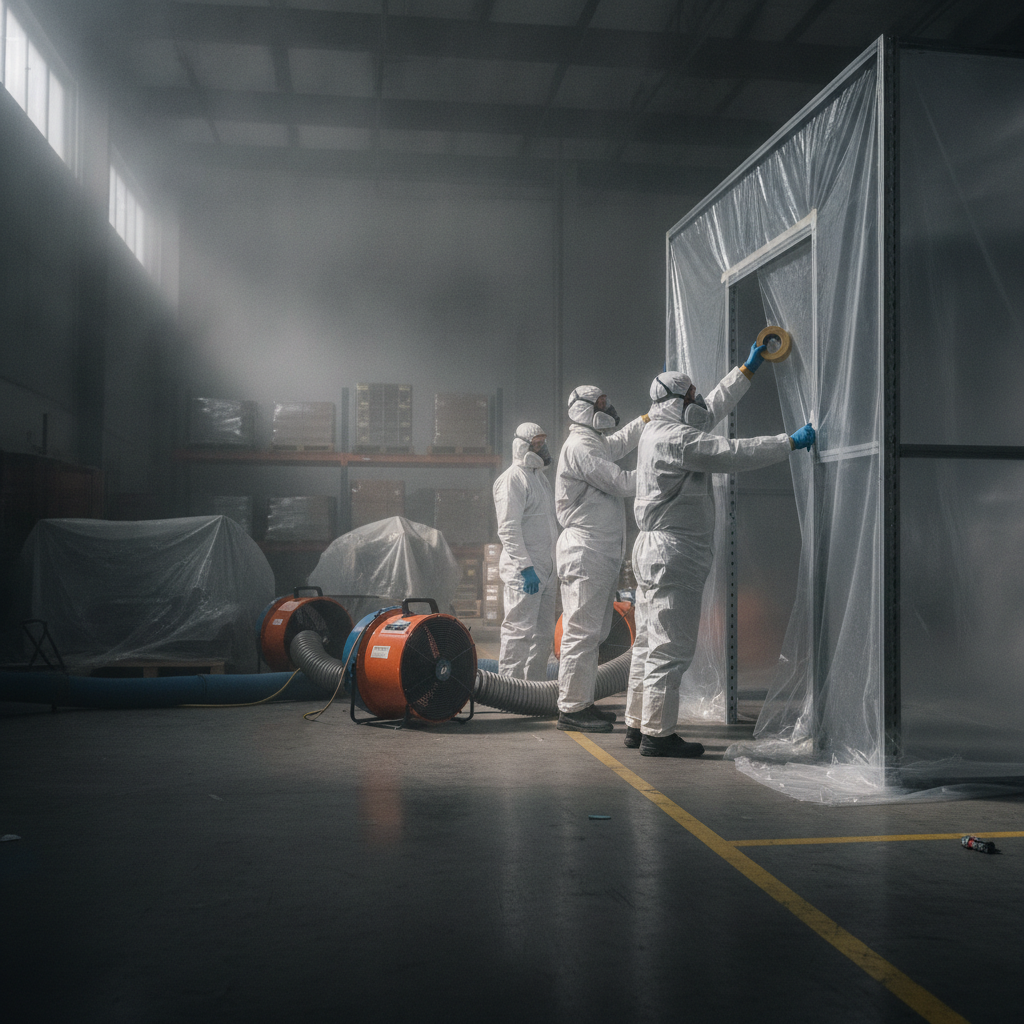
Containment is the backbone of any safe project. Floor-to-ceiling barriers, zipper doors, and pressure monitoring maintain negative pressure so air always moves into, not out of, the work zone. With that in place, material-specific methods remove growth efficiently without over-demolition or cross-contamination in public corridors or adjacent suites.
Containment and pressure control
- Install rigid or poly barriers to the deck above, seal penetrations, and add airlocks for people and materials.
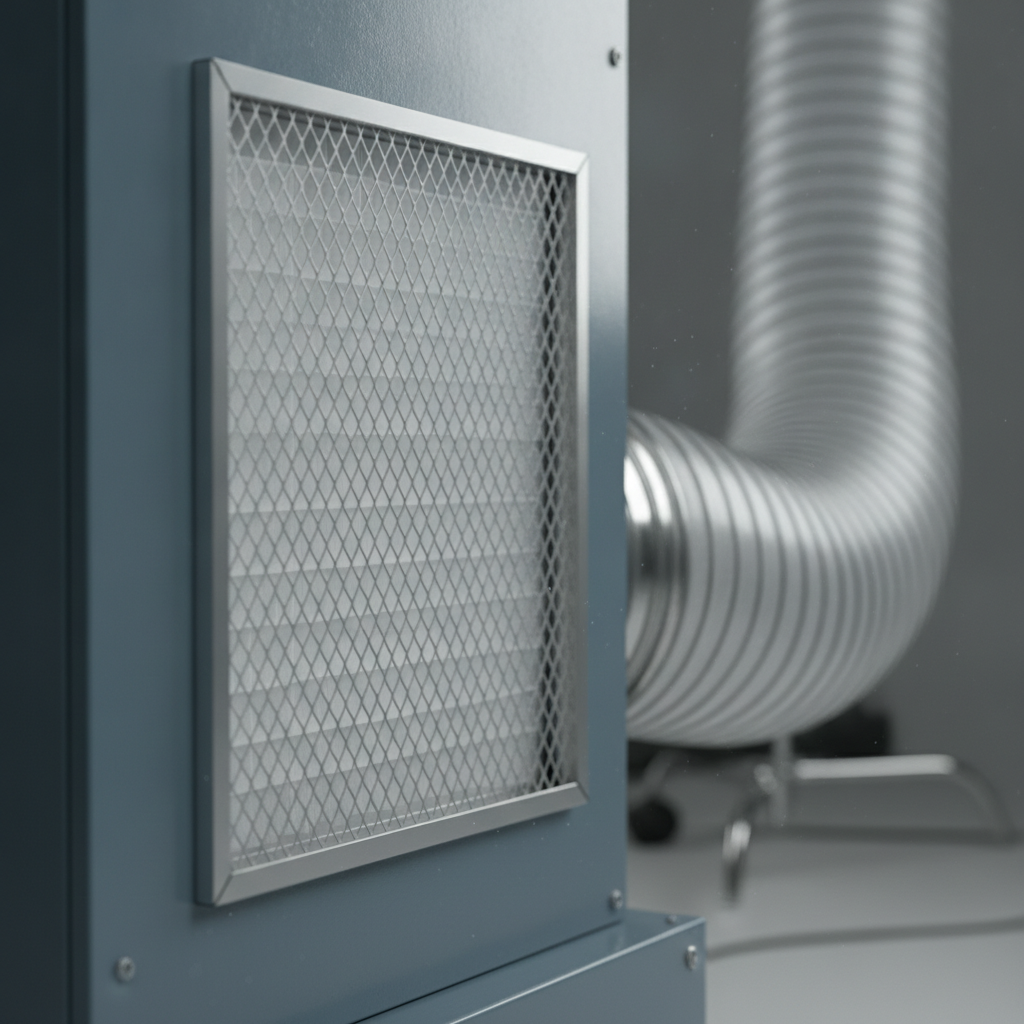
- Create negative pressure with HEPA-filtered machines and confirm with differential pressure checks.
- Vent exhaust safely to minimize recirculation; confirm airflow paths before cutting or removing materials.
Material-specific removal
- Porous (drywall, ceiling tiles, carpets): Remove and bag under containment to eliminate colonized fibers and paper facings.
- Semi-porous (wood framing, sheathing): HEPA sand and scrub, then apply antimicrobial treatment and dry to target moisture content.
- Non-porous (metal, sealed concrete): HEPA vacuum and damp wipe with compatible cleaners to remove residues and spores.
Air and surface decontamination
- Use HEPA vacuuming followed by microfiber wipe-downs to capture fine particulates.
- Apply antimicrobial products that are rated for indoor use and compatible with surfaces.
- Maintain air exchanges to dilute spore counts during and after removal; keep filtration running while drying completes.
For healthcare suites, clinics, or schools, we often extend containment footprints, deploy additional walk-off mats, and increase filter change-outs to protect vulnerable occupants. In offices and retail, phasing by zone avoids disrupting peak hours. The shared aim is simple: keep people safe, keep the building open, and prevent a rebound of growth.
Want a plain-language comparison of abatement-style controls used in other trades? This overview of containment and abatement practices shows how negative pressure and controlled waste handling carry across disciplines.
Best practices for facility managers
Lead with moisture control and communication. Require documented containment, daily logs, and a third-party verification plan. Schedule by zone to maintain operations and confirm HVAC protection so spores don’t reach occupied areas.
In our experience across Ontario, the buildings that move fastest share three habits: they confirm the source within hours, they approve a clear containment plan up front, and they set a daily reporting cadence. Those simple steps cut confusion, reduce disruption, and speed verification.
- Prioritize water shutoff and drying: Many materials support growth within 24–48 hours; early extraction and dehumidification limit spread.
- Ask for a containment diagram: Know where airlocks are placed and where negative air will vent before work begins.
- Protect HVAC: Isolate returns near the work zone, cap or seal as needed, and plan post-work filter changes.
- Track moisture and RH: Maintain indoor RH at or below 60% and log moisture content daily until materials normalize.
- Plan occupancy by zone: Phase work to keep critical areas open and schedule high-noise tasks after hours.
- Document everything: Photos, readings, and clearance or warranty documentation prevent future disputes.
Local considerations for Scarborough
- Winter-to-spring thaws and summer humidity can spike indoor RH; schedule pre-season inspections to catch attic or wall-cavity moisture before growth.
- Storm events can overwhelm roof drains; plan rapid response protocols for water intrusion to begin within the first 24 hours.
- For mixed-use buildings, coordinate off-hours work windows to minimize disruption for shared corridors and elevators.
For background reading on broader cleaning protocols—even outside mold work—this practical article on commercial cleaning controls outlines how professional crews manage airflow and safety during service.
If you want a general description of professional cleaning approaches (outside North America), this mould cleaning overview illustrates techniques that mirror containment-first thinking used in mold remediation projects.
Tools, equipment, and resources
Expect HEPA-filtered negative air machines, dehumidifiers, air movers, moisture meters, and antimicrobial products rated for indoor use. Thermal imaging, air sampling (when required), and detailed logs round out the verification package.
Well-equipped crews move faster and create fewer surprises. We size HEPA scrubbers to deliver multiple air changes per hour inside containment and choose LGR dehumidifiers that can pull moisture reliably even in cooler conditions. Moisture meters, both pin and pinless, track drying progress without over-opening walls.
- Engineering controls: Containment poly, zipper doors, foam and tape sealing, pressure monitors.
- Air management: HEPA scrubbers and negative air machines to maintain inward airflow and filtration.
- Drying gear: LGR dehumidifiers, air movers, and data-logging hygrometers to stabilize RH and speed evaporation.
- Diagnostics: Thermal imaging cameras and moisture meters to find and verify hidden damp spots.
- Cleaning: Commercial HEPA vacuums, microfiber systems, and compatible antimicrobial products.
- Documentation: Daily logs, photo records, and a final Warranty Certificate for stakeholder assurance.
ASM Mold Removal Inc. brings these tools to offices, retail units, warehouses, schools, and healthcare clinics across Ontario. For HVAC-influenced jobs, we isolate ducts, clean coils when needed, and swap filters so spores don’t ride the return air into clean areas. Those small steps change outcomes.
Case studies and examples (Ontario)
Staged, documented remediation keeps businesses open. These Ontario scenarios show how sequencing—source control, containment, targeted removal, and verification—minimizes disruption while delivering clear, warranty-backed outcomes.
Office wing, Scarborough
A weekend leak left three offices and a corridor with damp drywall and musty odors. Within hours, we completed a free inspection and moisture mapping, then erected containment and started negative air. Targeted drywall removal, HEPA cleaning, and drying followed. Adjacent suites stayed open with air monitoring, and a Mold Remediation Warranty Certificate documented clearance.
Retail unit, GTA
A hidden roof drain issue above a backroom led to recurring mold on ceiling tiles every rainy week. We isolated the leak, added a drain maintenance plan, replaced tiles under containment, and sealed the nearest HVAC return during work. Maintaining RH below 60% afterward prevented recurrence through the next storm season.
Warehouse, Ontario
After a sprinkler discharge, localized growth appeared on wood framing in a storage bay. We controlled the source, built sectioned containment, and used HEPA sanding with antimicrobial treatment. Visual clearance confirmed, and the inventory area remained operational throughout with a dedicated access route and debris airlock.
Frequently asked questions
Facility teams ask about timelines, what’s cleaned vs. removed, and whether operations can continue. With proper containment and sequencing, most spaces stay partially open, and post-work documentation confirms results for stakeholders and insurers.
What gets fixed first in commercial mold remediation?
Safety and source control come first. Teams isolate the area, establish negative pressure, and stop the moisture. Only then do they remove contaminated materials and complete HEPA cleaning and drying before a final verification.
Can our business stay open during remediation?
Often, yes. With zoned containment, separate access routes, and after-hours work, many offices and retail spaces remain operational. Critical areas are prioritized first, and HVAC is protected to prevent cross-contamination.
Do we always need air testing?
Not always. Clearance can be based on visual and moisture criteria, with air sampling used when required by policy or for sensitive environments like healthcare suites or schools.
How do we prevent mold from coming back?
Keep indoor RH at or below 60%, maintain roofs and plumbing, and ensure ventilation works as designed. Schedule seasonal inspections and address leaks within 24 hours to interrupt growth cycles.
Key takeaways
Stage the site, stop the water, and control the air before removal. Document each step and verify results. With tight sequencing and communication, most Scarborough businesses can stay partially open while remediation proceeds safely.
- Start with safety, source control, and containment; then remove and clean.
- HEPA filtration plus drying to targets (e.g., RH ≤60%) prevents recurrence.
- Daily logs with readings and photos speed claims and approvals.
- Phasing work by zone reduces disruption and maintains revenue.
Conclusion
Successful commercial mold remediation follows a strict order: assess, control, contain, remove, clean, dry, and verify. When each stage is documented and moisture is solved, results last—and your people can keep working with confidence.
Need help now? ASM Mold Removal Inc. offers Ontario-wide same-day response, free inspections, and warranty-backed outcomes for offices, retail, schools, warehouses, and clinics. Learn more about our approach on the About page, or contact our team to book a Scarborough site visit and keep your operations moving.
If you’re comparing options or want to see how we stage a site, start at our homepage and explore service areas, methods, and the warranty program we include after completion and inspection.