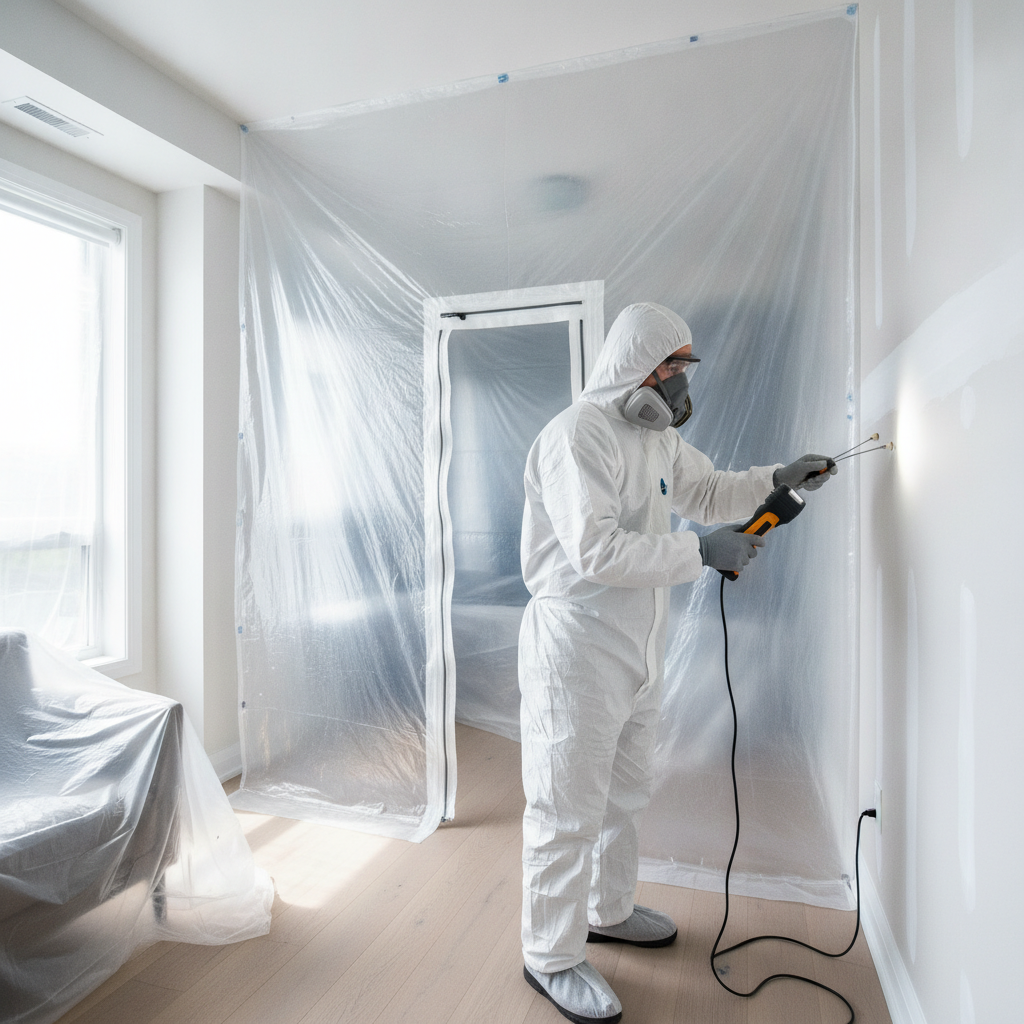
Cleaning mold off sheetrock is the targeted removal of light, surface mold from painted drywall without driving moisture deeper into the paper face. Small, intact areas (under ~10 sq ft) can be cleaned safely once the moisture driver is fixed. In Scarborough homes, we always verify humidity first.
By Amardeep Mamidi • ASM Mold Removal Inc. • Last updated: July 12, 2026
- Overview
- DIY vs professional
- Prerequisites checklist
- Step-by-step cleaning
- Troubleshooting
- Stop-and-call warnings
- Ontario-specific tips
- FAQ
Scarborough operator’s tip
If you see new specks after a steamy shower, place your palm on the wall. If it’s cool and damp to the touch, run the fan for 20–30 minutes and crack the door. Log RH; under 50% is your target.Overview
Cleaning mold off sheetrock only works when growth is light and truly on the paint film. Press the wall: if it gives like wet cardboard or smells musty, you’re past DIY. Fix moisture, set containment, HEPA‑vac, wipe with 3% hydrogen peroxide or an EPA‑registered product, and dry to 35–50% RH.
According to the U.S. Environmental Protection Agency (EPA), drying wet materials within 24–48 hours is critical because lingering moisture enables mold to colonize paper-faced products like drywall. That’s why we correct humidity and leaks before any wiping.
| Situation | DIY clean | Professional remediate |
|---|---|---|
| Painted drywall, < 10 sq ft, specks only | Yes—after moisture control | Not required |
| Soft/crumbly gypsum or brown stains | No | Yes—remove & replace |
| Area ≥ 10 sq ft or multiple rooms | No | Yes—full containment |
| High‑risk occupants (asthma, elderly, infants) | Discouraged | Yes—controlled process |
Need help confirming scope? Book a free inspection and moisture assessment with our Scarborough team.
When You Can Clean Mold Off Sheetrock Yourself (And When You Cannot)
DIY is fine for small, surface-only patches on sealed paint with humidity already under control. It is not fine if the wall feels spongy, stains “ghost” back after drying, there’s a musty odor, or the footprint is ≥ 10 sq ft. Those need removal under containment.
- DIY green-light signs: tight, glossy paint; no odor; RH 35–50%; recent leak already repaired.
- Pro-only signs: paper bubbling; soft spots; visible growth across multiple studs or rooms; ongoing odor.
- Why we avoid bleach: it re-wets paper, fumes are harsh, and it doesn’t correct moisture. General cleaners rarely address spores, and bleach adds water to the paper face—perfect for regrowth. On the flip side, ripping out every wall at the first speck wastes salvageable material. Our rule: save sealed paint films with light, disciplined cleaning; remove only where paper has been colonized or gypsum has lost strength.
What You Need Before You Start (Prerequisites Checklist)
- Stabilize to 35–50% RH: Dehumidify and ventilate until the wall feels dry (no clammy feel under your palm).
- Set light containment: Plastic and tape around the work zone; exhaust out a window unless it’s a garage/shared hall—then seal and keep HVAC off.
- PPE on: N95, gloves, and eye protection—keep them on for cleanup and disposal.
- HEPA vacuum: Slow, overlapping passes to capture loose spores before wiping; keep the nozzle off the surface to avoid scuffing paint.
- Wipe: Lightly dampen a microfiber cloth with 3% hydrogen peroxide or an EPA‑registered fungicide; wipe from clean to dirty, swapping cloths as they load. No dripping.
- Rinse/dry: Follow with a fresh damp cloth, then run fans and dehumidifier until RH holds under 50%.
- Reassess: Press gently—if it gives like wet cardboard or “ghost” stains return, schedule removal under containment.
Pro tip: If you hear a faint crunch under the paint when pressing near baseboards, the paper face or gypsum has lifted. Cleaning won’t reseat it—cut out and replace.
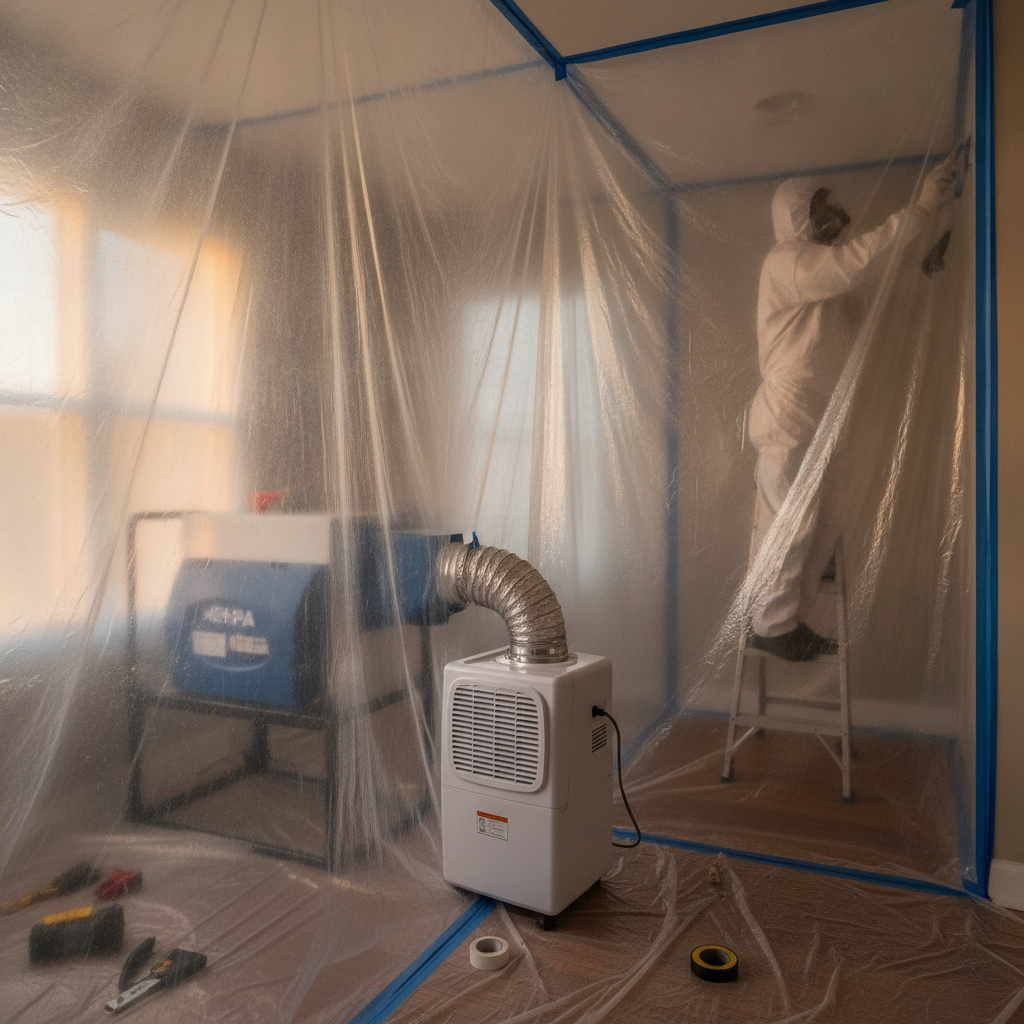
Need a second opinion? Our Scarborough team provides free inspections with moisture assessment, same-day remediation, and a Mold Remediation Warranty Certificate when professional work is completed.
Troubleshooting: Why the Mold Keeps Coming Back
Repeat growth means unresolved moisture: hidden leaks, high baseline RH, weak ventilation, or cold surfaces that condense vapor. Verify RH with a meter, use thermal imaging for cold seams, upgrade fans, and consider targeted removal if the paper face was colonized.
- Hidden leaks: Check under vanities and around shower valves; slow weeps leave brown “tea stains” and raised paper.
- Baseline humidity: Southern Ontario basements often sit over 55% in summer—run a dehumidifier daily until ~45% RH is steady.
- Ventilation: 80–110 CFM bath fans on a 20–30 minute post-shower timer keep walls dry; keep doors slightly open for make‑up air.
- Thermal bridging: Cold exterior corners condense—add insulation/air sealing before repainting. In attics, add baffles and fix roof leaks before tackling ceiling spots.
Airflow matters: duct performance and fan sizing influence how quickly moisture clears. See the role of ventilation in keeping interiors dry in this HVAC maintenance discussion.
Warning Signs That Mean Stop and Call a Professional
Stop DIY if the drywall feels spongy, the area is ~10 sq ft or more, there’s a persistent musty odor, or sensitive occupants are present. Certified remediation includes containment, negative air, HEPA filtration, removal, prevention steps, and documentation.
- Soft, crumbling board: The gypsum core is compromised; wiping won’t restore strength.
- Widespread spotting: Multiple studs/rooms demand full containment and removal.
- Odor that returns: That’s behind-the-wall activity or wet insulation.
- Real estate needs: DIY leaves no paper trail. Our Mold Remediation Warranty Certificate gives buyers and lawyers clear documentation.
Local Tip: Ontario-Specific Moisture and Mold Considerations
Freeze–thaw winters and humid summers drive drywall condensation in Ontario. Dehumidify May–September, upgrade bath fans, and check attic frost after cold snaps. Dry water-damaged drywall within 24–48 hours per EPA guidance or plan removal.
Local considerations for Scarborough
- Run a basement dehumidifier late spring to early fall; aim for ~45% RH.
- After deep cold, inspect top-floor ceilings for frost melt rings under the paint.
- In multi-family buildings, avoid venting fans into hallways; keep doors closed and run fans longer.
FAQ
Can I paint over drywall mold after cleaning?
Only after the surface is dry, odor-free, and stable. Use a stain-blocking primer on the paint film; it’s not a substitute for remediation. If stains “ghost” back or paper bubbles, replace the affected board under containment and get documented clearance.
Which cleaner is safest for painted drywall?
Do I need a respirator for small jobs?
Need help right now in Scarborough? Book a same-day inspection with moisture assessment and a prevention plan.