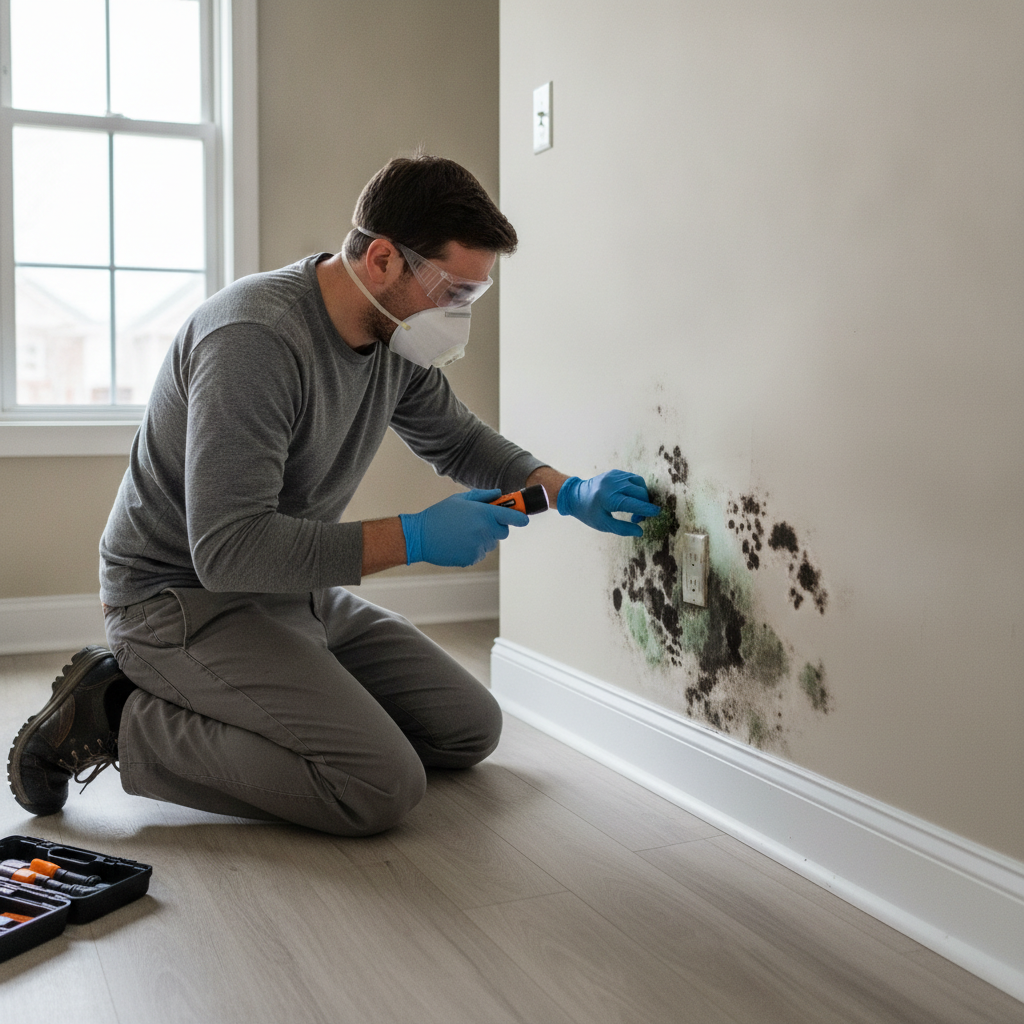
Cleaning mold off drywall is the targeted removal of visible fungal growth on painted or paper-faced gypsum board while preventing spore spread and fixing the moisture source. Small, surface-only spots can be cleaned safely; larger areas, soft drywall, or recurring stains require certified remediation. In Scarborough homes, fast action and proper containment stop repeat problems.
By Amardeep Mamidi — ASM Mold Removal Inc.
Last updated: July 13, 2026
Scarborough field note
We see two repeat triggers here: bathroom fans dumping moist air into attics and summer humidity condensing on cool basement walls. Fix venting and dehumidification first. That’s the difference between a one-time drywall cleanup and a return visit a month later.
Overview
This guide explains when DIY drywall mold cleaning is safe, the safety prerequisites, exact steps, and how to stop mold from coming back. It also flags clear signs to call pros and adds Ontario-specific tips from our Scarborough jobs so you can act with confidence today.
- DIY vs professional: fast decision
- Safety and prep checklist
- Step-by-step cleaning
- Fixing recurring mold
- When to call certified pros
- Ontario-specific tips
- FAQ
Quick Answer: Can You Clean Mold Off Drywall Yourself?
DIY drywall mold cleanup is safe for small, isolated patches on painted drywall when the surface is firm and dry. Wear PPE, isolate the room, and use a non-bleach cleaner. If growth exceeds 10 square feet, the wall feels soft, or stains bleed through paint, schedule certified remediation and moisture correction.
Use this quick matrix before you start:
| Drywall condition | Action |
|---|---|
| Painted surface with light speckling | DIY clean with PPE and light containment |
| Dark stains bleeding through paint | Remove and replace affected drywall |
| Soft, swollen, musty odor | Call certified remediation with moisture diagnostics |
Not sure which box you’re in? Book a same-day, free inspection. Our crew confirms scope and whether cleaning or replacement is warranted.
Prerequisites Before You Touch the Drywall (Safety + Legal Checklist)
Confirm the size, stop the moisture, gear up, and set simple containment. In multi-unit buildings or workplaces, hire certified, insured professionals for proper containment, documentation, and occupant protection. Thermal imaging and moisture readings up front prevent wasted effort and repeat growth.
Prep like a pro:
- Measure scope: Keep DIY to under 10 sq. ft. Larger areas need engineered containment and HEPA filtration.
- Find and stop moisture: Check for roof leaks, bath fans venting into the attic, plumbing drips, or basement condensation. Fix first.
- Personal protection: N95 (or better) respirator, gloves, and eye protection. Avoid dry-scrubbing.
- Basic containment: Close the room, cover supply/return vents, and lay plastic under the work area. Keep others out.
- Smart ventilation: Exhaust to the outdoors if available; skip high-speed fans that can push spores through the house.
- Diagnostics: We start inspections with thermal imaging and moisture meters. It reveals cold, wet cavities and hidden leaks in minutes.
ASM Mold Removal Inc. offers same-day inspections with moisture assessment in Scarborough and across Ontario, then delivers HEPA-filtered containment and eco-friendly treatments on remediation projects. We back qualifying work with a Mold Remediation Warranty Certificate after clearance.
How to Clean Mold Off Drywall — Step-by-Step
Work small, keep it damp, and protect the air. Clean painted drywall with a non-bleach cleaner, HEPA-vacuum residue, and dry the space below 50% RH within 24 hours. If staining reappears or the paper layer is colonized, remove and replace that section under containment.
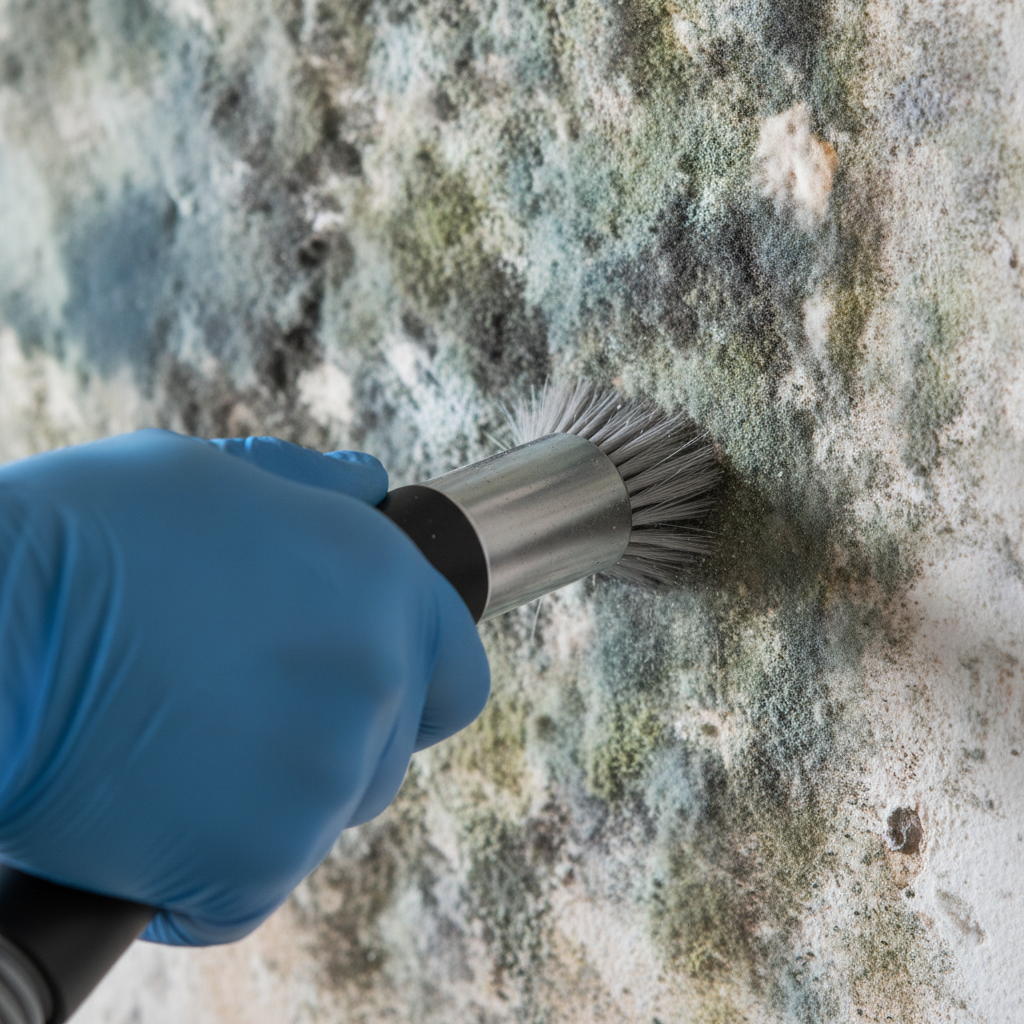
- Gear up. Wear an N95 (or better), gloves, and eye protection.
- Isolate. Close doors, cover vents, and place plastic sheeting under the work zone.
- Pre-vacuum. Lightly HEPA-vacuum to capture loose growth without gouging paint.
- Dampen, don’t drench. Mist the area to control dust; avoid soaking drywall.
- Clean the surface. Use one of these on painted drywall: hydrogen peroxide–based cleaner; botanical thymol disinfectant (e.g., Benefect-type); or a quat-based disinfectant labeled for fungi. Avoid straight bleach on porous paper.
- Final HEPA pass. After dry, vacuum again to capture residue.
- Dry fast. Dehumidify to hold indoor RH under 50% within 24–48 hours.
- Prime and paint. Only after you’ve fixed the moisture source and the wall is dry.
Tip: If cleaning reveals dark blotches embedded in the paper or gypsum, treat framing with an antimicrobial and replace the affected drywall under containment. Our crews handle containment, filtration, and safe disposal daily.
Troubleshooting: When the Mold Keeps Coming Back
Repeat drywall mold means moisture persists. Typical culprits include attic exhausts that stop in the attic, hidden plumbing leaks, cold-wall condensation in basements, and undersized dehumidifiers. Eliminate the source, then remediate properly. Wiping alone guarantees a comeback.
- Attic humidity: Redirect bath/dryer vents outdoors and improve attic ventilation to cut condensation on ceiling drywall.
- Basement condensation: Insulate rim joists, add a dehumidifier, and limit long hot showers without ventilation.
- Hidden leaks: Watch for stains that grow after showering or dishwasher cycles; trace and repair.
- HVAC hygiene: Clean coils and change filters; spores near supply registers often point to neglected systems.
In our Scarborough projects, we pair remediation with ventilation improvements, leak repair, and long-term prevention so drywall stays clean after the first visit.
When DIY Fails: Signs You Need Professional Remediation
Call certified, insured pros if growth exceeds 10 sq. ft., drywall is soft or crumbling, odors persist, or anyone in the home is sensitive to mold. Professional service adds negative air, HEPA filtration, selective demolition, antimicrobial treatment, and documentation you can use for real estate.

- Large or multi-room growth: Needs engineered containment and negative air machines.
- Paper-layer colonization: Black staining that returns through paint means removal and replacement.
- Health sensitivities: Infants, elders, or immunocompromised occupants need extra protection.
- Real estate deadlines: We provide inspection reports and a Mold Remediation Warranty Certificate after successful clearance.
Need help now? ASM Mold Removal Inc. offers Ontario-wide, same-day inspections with moisture assessment. Our certified technicians use HEPA filtration, containment, and eco-friendly products to remediate safely.
Local Tip: Mold Rules Specific to Ontario Homeowners
Ontario homeowners can clean small, isolated spots on painted drywall when they control moisture and protect indoor air. For larger growth or multi-unit buildings, hire certified, insured professionals who provide containment, filtration, and documentation. Use EPA-registered or DIN-listed disinfectants and verify humidity stays under 50%.
Local considerations for Scarborough
- Summer humidity often pushes indoor RH above 60%. Run a dehumidifier to keep drywall dry.
- Freeze–thaw seasons stress roofs and attics. Check for leaks and ice-dam staining on top-floor ceilings.
- Older bathrooms commonly vent into attics. Redirect exhausts outdoors to protect ceilings and nearby walls.
For documentation Scarborough buyers and sellers trust, our team provides inspection, remediation, and a Warranty Certificate after successful clearance.
FAQ
Most homeowners can clean small, surface mold on painted drywall with PPE and containment. If moisture persists, staining bleeds through, or the affected area is large, certified remediation removes damaged drywall, treats framing, and verifies results with documentation.
What cleaner should I use on painted drywall?
Use hydrogen peroxide–based cleaners, a botanical thymol disinfectant, or a quat-based disinfectant labeled for fungi. Avoid straight bleach on porous paper because it can discolor paint and won’t reach the paper layer. Keep the wall damp (not wet) and HEPA-vacuum after drying.
Can I just paint over mold with primer?
No. Primer may hide stains, but it won’t stop growth. Fix the moisture source, clean or replace affected drywall, then use a stain-blocking primer once readings are dry. Painting first traps moisture and almost always leads to peeling and a fast return.
How do I know if drywall must be replaced?
Replace drywall that is soft, swollen, crumbling, or shows stains bleeding through paint. Persistent odor or elevated moisture meter readings indicate colonized paper. Pros remove the section under containment and treat adjacent framing before reinstalling.
Do I need air testing after cleanup?
For a small, well-controlled cleanup, air testing isn’t always necessary. It’s useful after professional remediation, for real estate documentation, or when symptoms persist. Our team offers air sampling with clear, plain-English reports when verification matters.
Key takeaways
- DIY is safe only for small, surface mold on painted drywall with no active moisture.
- Hydrogen peroxide, botanical thymol, or quat-based cleaners work; avoid bleach on porous paper.
- Stop the source and dry below 50% RH to prevent recurrence.
- Certified remediation adds containment, HEPA filtration, and a warranty-backed result.
About the author: Amardeep Mamidi supports ASM Mold Removal Inc., an Ontario-wide remediation provider specializing in attic, basement, and crawl space mold. Our certified, insured technicians deliver same-day inspections, thermal imaging diagnostics, and a Mold Remediation Warranty Certificate on qualifying projects.
For further guidance, see U.S. Contact our certified team for a same-day inspection.