Attic mold removal service is the professional inspection, containment, and remediation of mold on attic framing and sheathing using HEPA filtration and EPA-approved treatments. At our Scarborough hub (1225 Kennedy Rd), Asmmoldremoval provides same-day assessments across Ontario to stop moisture-driven growth and protect home value and indoor air quality.
By Asmmoldremoval • Last updated: 2026-05-20
At a Glance
Attic mold removal safeguards health, structure, and resale by eliminating active growth and the moisture sources feeding it. This guide explains what attic remediation is, why it matters, how it works step by step, the tools and methods used, prevention best practices, real-world case studies, and how to choose a qualified provider.
- What you’ll learn: Definitions, causes, risks, and the end-to-end remediation process.
- Who it’s for: Ontario homeowners, buyers, sellers, real estate agents, and facility managers.
- Why now: Mold can colonize damp wood within 24–48 hours after leaks or high humidity.
- Outcome: A dry, clean attic—documented with a Mold Remediation Warranty Certificate.
What Is Attic Mold Removal Service?
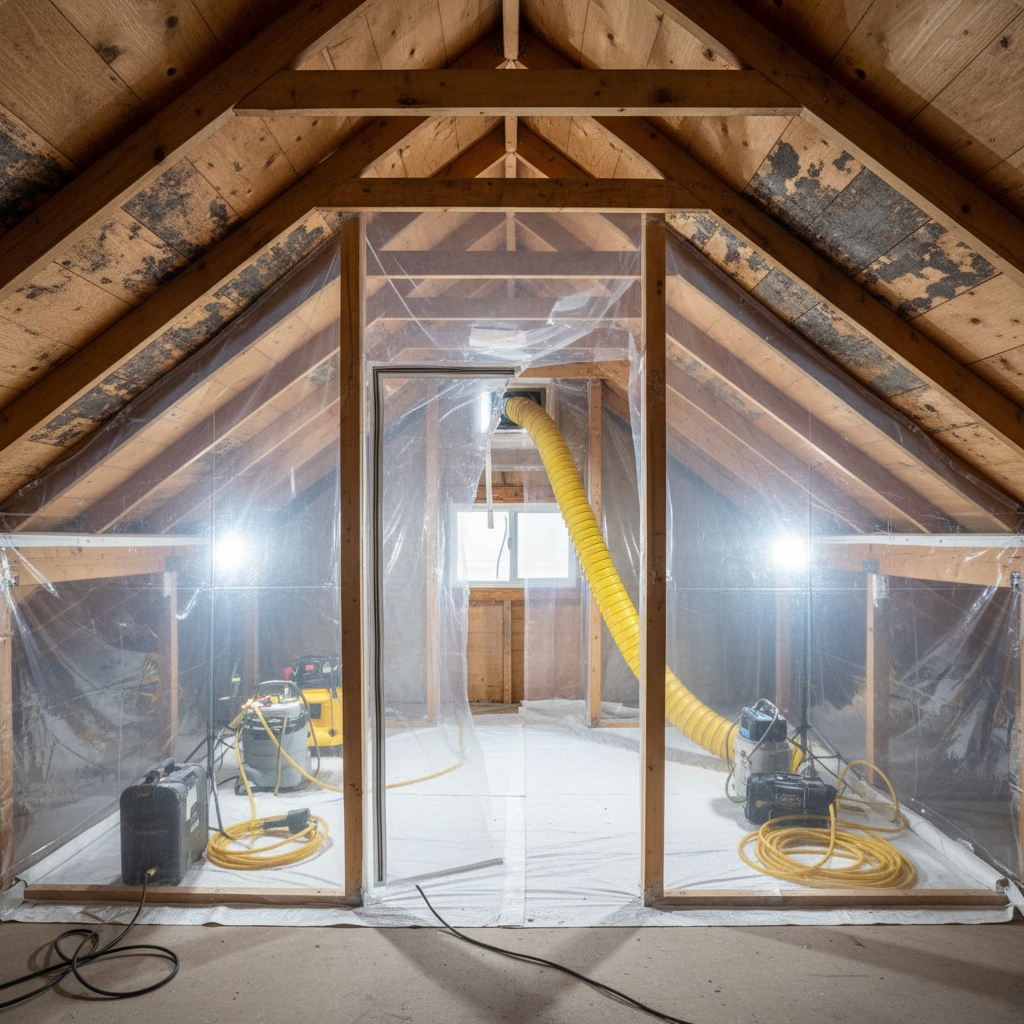
Attic mold removal service is a structured, safety-first process that identifies moisture sources, isolates the attic, removes visible growth, and treats wood surfaces so mold can’t rebound. It combines HEPA filtration, negative pressure, targeted cleaning, and EPA-approved antimicrobials, then verifies results with inspection and documentation.
In simple terms, it’s not just “cleaning.” It’s finding why mold grew, safely removing growth, and preventing its return. That means controlling humidity, improving ventilation, and fixing leaks—then proving the attic is dry and clean.
Typical signs you need service
- Dark spotting on roof sheathing, rafters, or trusses (often along nail lines).
- Musty odor that intensifies after rain or snowmelt.
- Frost or condensation on nails or sheathing in winter (moist air reaching cold surfaces).
- Insulation discoloration from prior wetting or air bypasses.
Root causes we see most
- Bathroom fans vented into the attic rather than outdoors.
- Blocked soffit vents from insulation or debris reducing airflow (1:150–1:300 net vent area guidelines are common).
- Roof or flashing leaks that wet wood framing and insulation.
- High indoor humidity (sustained RH above ~60% encourages mold growth).
In our experience, addressing ventilation alone can drop attic relative humidity by double digits, reducing condensation risk and protecting the sheathing. When combined with remediation, recurrence rates fall dramatically.
Why Attic Mold Removal Matters
Unchecked attic mold threatens indoor air quality, structural materials, and real estate value. Spores can move through air leaks, high humidity degrades wood over time, and visible growth often stalls home sales. Fast, professional remediation breaks this cycle and documents a healthy, market-ready attic.
Here’s the thing: the attic is a giant air plenum above your living space. Pressure changes and stack effect can draw attic air—and spores—downward through can lights, chases, and gaps. Tightening and cleaning the space prevents that transfer.
- Health: Spores and fragments aggravate allergies and respiratory issues, especially when RH stays above 60%.
- Structure: Chronic wetting accelerates wood fiber breakdown; staining along nail lines signals repeated condensation cycles.
- Real estate: Visible mold on sheathing is a common condition flag during inspections; buyers expect clear documentation.
Our team follows industry-standard containment with negative pressure often targeted around -0.02 to -0.03 inches water column, coupled with HEPA filtration that captures 99.97% of 0.3-micron particles. That combination yields clean air and a safer work zone.
To learn more about moisture sources that often start upstairs, some homeowners review a bathroom humidity overview to understand why venting outdoors matters.
How Attic Mold Removal Works
Effective attic remediation follows a repeatable sequence: assess moisture, isolate the attic, create negative pressure, remove contamination, treat wood, correct ventilation, and verify. Each step supports the next so the attic dries, stays clean, and passes post-remediation inspection.
- Free inspection and moisture assessment: We document staining, check RH and temperature, and scan for wet areas with moisture meters and thermal imaging.
- Containment and negative pressure: Poly sheeting seals access; a negative air machine exhausts outdoors to prevent cross-contamination.
- HEPA air filtration: Air scrubbers filter particulates; we size units for appropriate air changes per hour.
- Source correction: We recommend fixes (venting bath fans outside, unblocking soffits, sealing bypasses) so moisture stops feeding growth.
- Dry cleaning: HEPA vacuuming removes loose spores and debris from framing and sheathing.
- Mechanical agitation: Light sanding or abrasive pads lift adhered growth and staining on wood surfaces.
- Antimicrobial application: EPA-approved products are applied per label to sanitize and inhibit regrowth.
- Insulation considerations: Heavily impacted insulation is bagged and removed; clean, dry insulation is preserved or replaced.
- Final air/visual checks: We verify surfaces are clean and dry, then remove containment.
- Documentation and Warranty: You receive photos and a Mold Remediation Warranty Certificate upon completion and inspection.
Most projects organize around airflow targets and surface cleanliness. We often recommend maintaining post-project attic RH below ~50% to minimize condensation risk in cold snaps.
| Aspect | DIY | Professional Service |
|---|---|---|
| Safety & PPE | Basic masks; limited fit | P100 respirators, Tyvek, fit-tested PPE |
| Containment | Minimal isolation | Full poly containment, negative pressure |
| Filtration | Household air purifiers | Commercial HEPA (99.97% @ 0.3μm) |
| Source Correction | Often overlooked | Ventilation, air sealing, drainage fixes |
| Verification | Visual only | Moisture readings, photo logs, warranty |
| Recurrence Risk | Higher | Lower with prevention plan |
Types, Methods, and Approaches
Choose remediation methods that match contamination level and wood condition. HEPA vacuuming plus mechanical agitation addresses most attics; EPA-approved antimicrobials sanitize surfaces; ventilation corrections prevent recurrence. Advanced options, like dry ice blasting, are reserved for heavy, stubborn staining.
Core remediation methods
- HEPA vacuuming: Captures loose spores and dust without spreading contamination.
- Mechanical agitation: Hand sanding or abrasive pads remove adhered growth and discoloration.
- Antimicrobial application: EPA-approved products sanitize and inhibit regrowth on wood fibers.
When specialized methods help
- Dry ice blasting: Non-abrasive media removes heavy staining quickly; useful on large, open sheathing areas.
- Peroxide-based cleaners: Oxidize staining while disinfecting; applied carefully to protect materials.
Practices to avoid or limit
- Encapsulation over active mold: Paint doesn’t fix moisture or remove contamination; it can trap problems.
- Unvented ozone or fogging only: These do not correct moisture sources or remove settled spores.
We align methods to the attic’s layout, roof pitch, and ventilation path. In tight spaces, targeted hand work outperforms bulk approaches; in open spans, controlled media blasting speeds removal without compromising control.
Best Practices: Keep Your Attic Dry After Remediation
Prevention locks in your remediation results. Keep RH under ~50–55%, move bathroom air outdoors, maintain clear soffits and baffles, and air-seal bypasses. With a dry, ventilated attic, staining doesn’t return and indoor air stays cleaner.
Moisture and ventilation control
- Vent bath and kitchen fans outdoors: Use rigid duct where possible; seal joints and insulate runs in unconditioned spaces.
- Clear soffits and install baffles: Maintain intake so ridge or roof vents can exhaust; aim for balanced intake-to-exhaust.
- Air-seal bypasses: Seal around can lights, utility chases, and attic hatches to reduce warm air migration.
Humidity management
- Target RH: Keep living-space RH below ~50% during heating season; use dehumidifiers if needed in shoulder seasons.
- Dry-out timelines: After leaks, begin drying within 24 hours and continue until wood reads dry on a moisture meter.
Insulation and roof care
- Set correct R-value: Adequate insulation minimizes warm air reaching the roof deck and condensing.
- Fix ice dam causes: Improve attic air sealing and insulation to reduce melt-freeze cycles.
As part of our remediation plans, we outline specific prevention steps tailored to each home, from adding baffles to rerouting a single problematic fan. Small fixes compound into lasting results.
Tools and Resources We Use
Professional attic mold removal relies on the right equipment: negative air machines, HEPA air scrubbers, P100 respirators, moisture meters, and thermal cameras. These tools let us control airflow, capture contaminants, measure dryness, and document clean results.
- Negative air machines: Create directional airflow so particles leave the home.
- HEPA air scrubbers: Capture 0.3μm particles at 99.97% efficiency.
- Moisture meters and hygrometers: Confirm wood and air are within safe ranges.
- Thermal imaging: Reveal hidden leaks, wet insulation, and bypasses.
- PPE: Tyvek suits, P100 respirators, eye protection, and gloves keep crews and occupants safe.
If you want a general sense of cleaning and disinfection concepts used alongside structural drying, some readers browse a mold cleaning explainer for background, then return here for attic-specific guidance.
How to Choose an Attic Mold Removal Service
Vet providers for same-day assessments, certified technicians, documented containment and HEPA control, EPA-approved products, and written warranties. Ask for before/after photos and a clear prevention plan addressing ventilation, air sealing, and insulation.
- Ask about speed: Same-day inspections reduce spread and shorten timelines.
- Confirm credentials: Use insured, certified technicians who follow current remediation standards.
- Demand documentation: Moisture readings, photos, and a warranty certificate build buyer confidence.
- Evaluate prevention: A good plan fixes moisture sources, not just stains.
Serving Scarborough and the greater Toronto area, we specialize in attics and provide Ontario-wide response. Learn about our team and approach on our about page, or request an appointment through our contact form.
Get a same-day attic assessment
- Call: 647-451-0493
- Online: Book at asmmoldremoval.ca
- What to expect: A free inspection and moisture assessment, followed by a clear remediation plan.
Case Studies and Examples
Every attic tells a moisture story. These snapshots show how source correction plus disciplined remediation delivers clean, dry outcomes—and the documentation real estate deals require.
Scarborough bungalow near Lawrence East
- Issue: Nail-line staining across north slope; bathroom fan exhausted into attic.
- Fix: Rerouted vent outdoors, added baffles at soffits, HEPA vacuum + light sanding, antimicrobial treatment.
- Outcome: RH stabilized under 50%; homeowner received a Mold Remediation Warranty Certificate.
Toronto semi-detached (McGregor Park area)
- Issue: Blocked soffits from prior insulation job; intermittent roof leak at flashing.
- Fix: Cleared soffits, sealed bypasses, coordinated flashing repair, full remediation.
- Outcome: Odor resolved; no visible growth on reinspection after a wet week.
Brampton two-story home
- Issue: Heavy staining on sheathing; high indoor humidity reported in winter.
- Fix: Added dehumidification guidance, attic remediation with mechanical agitation and antimicrobial.
- Outcome: Clean surfaces and improved IAQ reported by the household.
Commercial daycare (GTA)
- Issue: Odor complaints and visible spotting near rooftop penetrations.
- Fix: Coordinated leak repair, nighttime containment work, HEPA filtration, and treatment.
- Outcome: Minimal disruption; documentation provided for compliance file.
Local considerations for Scarborough
- Plan access and parking near the Lawrence East subway station area; crews may stage negative air exhaust to safe exterior points.
- Winter swings can create fast freeze-thaw cycles; keep living-space RH under ~50% and verify soffit intake remains open after snow events.
- Homes around Midland Lawrence Plaza often have mixed-era upgrades; verify bathroom fans truly vent outdoors, not just into roof cavities.
Attic Mold Removal FAQ
These quick answers address what homeowners ask most: timelines, safety, insulation decisions, painting, and proof of success. Each response is practical and based on field experience across Ontario attics.
How fast does attic mold develop after a leak?
Mold can begin to colonize damp materials within 24–48 hours, especially when relative humidity stays above ~60%. Quick dry-out and source correction limit growth. If you suspect a leak, schedule a same-day inspection to contain issues early.
Can I stay in the home during attic remediation?
Usually, yes. We isolate the attic, use negative pressure, and filter air with HEPA scrubbers. Entry points are sealed, and work stays contained. Sensitive individuals may choose to be off-site during active agitation but can typically return the same day.
Do you remove attic insulation if it’s moldy?
If insulation is visibly impacted or wet, we bag and remove it under containment. Clean, dry insulation is preserved. After remediation and drying, we can coordinate proper replacement and add baffles to protect soffit airflow.
Will painting over mold solve the problem?
No. Encapsulation over active contamination traps issues and doesn’t fix moisture. The right sequence is remove, treat, dry, and prevent—then apply finishes if desired. We focus on long-term prevention so staining doesn’t return.
How do you prove the attic is clean and dry?
We provide photo documentation, surface and air checks as appropriate, and moisture readings showing wood is within normal range. You also receive a Mold Remediation Warranty Certificate after completion and inspection.
Key Takeaways
Attic remediation succeeds when cause and effect are both addressed: remove contamination and fix moisture. Choose certified pros who isolate the space, filter air, treat wood, and document results—then keep RH low and vents clear.
- Address moisture sources first; remediation alone isn’t enough.
- Containment and HEPA filtration reduce spread and improve safety.
- EPA-approved antimicrobials plus mechanical cleaning deliver results.
- Balanced ventilation and air sealing prevent condensation cycles.
- Documentation and a warranty support real estate and peace of mind.
Conclusion: Your Next Step
If you see staining, smell mustiness, or suspect a leak, act now. A fast inspection, moisture control, and disciplined remediation restore a clean, dry attic—and protect your home’s value and air quality.
We’re ready to help from our Scarborough base, serving the Toronto metro and communities across Ontario. Explore our attic specialization, learn more about our team, or book your free inspection today. Same-day response means moisture problems don’t get a head start.
Related Topics We Cover
Attics rarely act alone—moisture moves through the whole building. Explore connected services that often interact with attic conditions.
- Mold inspection and testing to locate hidden moisture sources.
- Basement and crawl space cleanup to reduce whole-home humidity.
- Water damage restoration to speed dry-outs after leaks and storms.
