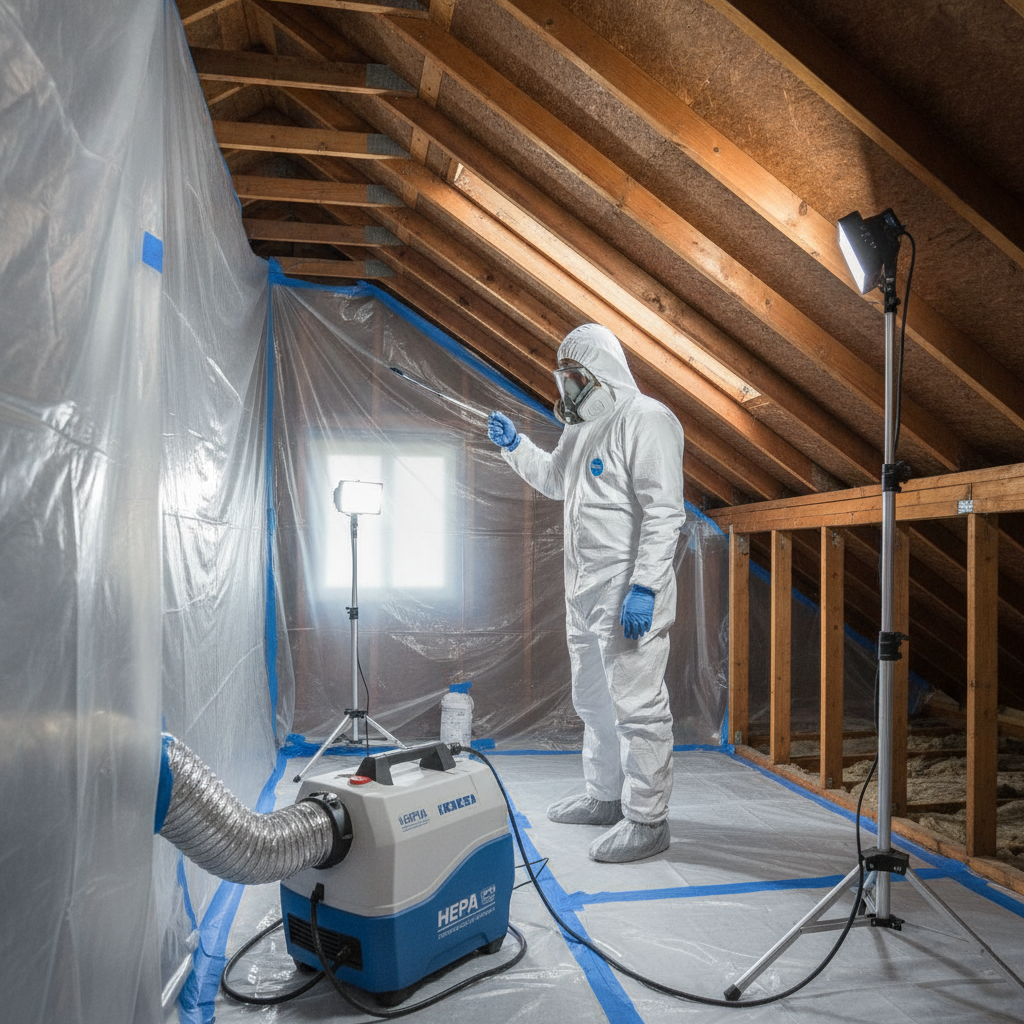
Attic mold removal is the professional elimination of mold from roof sheathing, rafters, and insulation using containment, HEPA filtration, hands‑on surface cleaning, and moisture correction. Growth can start soon after a leak or heavy condensation. In Scarborough, fixing ventilation and insulation is what actually stops regrowth and protects indoor air quality.
By Amardeep Mamidi • Last updated: July 8, 2026
| Service area | Ontario (based in Scarborough) |
|---|---|
| Response speed | Ontario‑wide same‑day inspections (subject to availability) |
| Hours | Open daily, 7:00 AM – 7:00 PM |
| Core specialty | Attic remediation including insulation removal, wood treatment, and ventilation fixes |
| Documentation | Mold Remediation Warranty Certificate after completion and inspection |
| Average rating | 5.0 ★ (12 Google reviews) |
- Overview
- What causes attic mold in Ontario
- 5 signs your attic has mold
- Our step‑by‑step remediation process
- Insulation removal and replacement
- Ventilation fixes that prevent return
- What to expect on inspection day
- Key takeaways
- FAQ — Attic Remediation
Scarborough homeowner tip
GTA freeze–thaw swings and ice dams hit attics hard. After a cold snap followed by a warm, sunny day, open the hatch and check the sheathing near the eaves. If you smell a musty, earthy odor or see frosty crystals on nails, book a same‑day attic check via our contact page.
Recent feedback: “They were professional, arrived on time, and completed the work efficiently… the area was cleaned thoroughly.” — Ajaz Ahmed (Google review)
“He was quick, friendly and thorough and delivered as promised.” — Frank Razzolini (Google review)
Average rating: 5.0 ★ from 12 Google reviews.
Overview
ASM Mold Removal Inc. focuses on attic remediation for Ontario homes. We combine containment and HEPA filtration with wire‑brushing, HEPA vacuuming, and EPA‑approved wood treatments—then fix the driver by opening soffits, adding baffles, sealing bypasses, and replacing affected insulation. Results are documented with a Warranty Certificate.
Most homeowners discover attic mold during a pre‑sale inspection or while chasing ice‑dam leaks. That’s a stressful moment—health worries, a tight closing date, and pressure from multiple sides. Our job is to steady the process: same‑day triage, clear photos, a plain‑English plan, and work that actually prevents a repeat.
You’ll see articles from regional names like Mold Guy (Toronto), Canadian Home Inspection’s “Mould in Attics,” and CPR24 Restoration’s cost explainers. Good context, but here’s our stance: cleaning the wood without correcting airflow is a short‑lived fix. We’re a single local crew (not a franchise dispatch) that handles cleaning, insulation, ventilation, and documentation end‑to‑end.
For independent health and cleanup guidance, see the U.S. Environmental Protection Agency mold resources and the CDC’s mold guidance. For cold‑climate roof and attic behavior, consult CMHC building‑science resources.
What Causes Mold in Ontario Attics (and Why It Keeps Coming Back)
Ontario attics grow mold from roof leaks, ice damming, misrouted bath/dryer exhausts, and blocked soffits. If intake and exhaust stay unbalanced—or insulation leaves cold spots—condensation returns and so does mold. Durable results pair cleaning with airflow and insulation corrections.
What we see on Scarborough jobs, step off the ladder and it’s obvious:
- Ice damming: Melt water refreezes at the eaves and drives back under shingles, wetting the first sheets of plywood.
- Bath fans venting inside: Warm showers pump steam into the attic; the sheathing sweats and darkens in bands.
- Choked intake: Blown‑in insulation slumps over soffits; without baffles, air sits stale and damp.
- Minor roof penetrations: Flashing and nail holes wet the same rafters repeatedly until stains spread bay by bay.
- Insulation gaps: Compressed or missing batts create cold stripes where nails rust and mold halos form.
Here’s our firm view: wiping stains without rerouting that bath fan or opening soffits wastes your money. We won’t sell that band‑aid. We fix the moisture path the same day we clean.
How to Tell If Your Attic Has Mold Before It Spreads
Look for five early signals: blotchy dark patches on sheathing, fuzzy speckled growth on rafters, a musty/earthy smell at the hatch, rusty nail tips, and insulation that’s damp, matted, or sunken. If two or more show up, schedule a pro inspection and moisture check.
During a quick self‑check, note these tells:
- Dark, irregular staining tracing along plywood seams or near eaves.
- Fuzzy, green/black or white growth on truss members and sheathing.
- Musty odor that lingers after rain or a thaw.
- Rusty nail tips and metal hangers from repeated condensation.
- Damp or clumped insulation—a sign of leaks or high humidity.
See two? Book a same‑day assessment on our contact page. We document with photos, take moisture readings, and, where helpful, add thermal imaging or targeted air testing. You’ll get a clear, prioritized plan.
ASM’s Attic Remediation Process — Step by Step
We isolate the attic with poly and negative air, then wire‑brush and HEPA‑vacuum surfaces before applying EPA‑approved treatments. Next, we remove affected insulation, open soffits with baffles, seal bypasses, and balance intake/exhaust. Final photos and a Mold Remediation Warranty Certificate complete the job.
What the day actually looks like:
- Inspection and plan: We pop the hatch, take photos, probe for moisture, and map intake/exhaust paths. You’ll see what we see.
- Containment + negative air: Poly sheeting around the hatch; HEPA air scrubbers hum quietly to keep particles in check.
- Hands‑on cleaning: Wire brushing to break the biofilm, then HEPA vacuuming each rafter bay so dust and spores don’t resettle.
- Wood treatment: Apply an EPA‑approved, non‑bleach antimicrobial; on stained areas we prep the surface so treatments bond to bare wood.
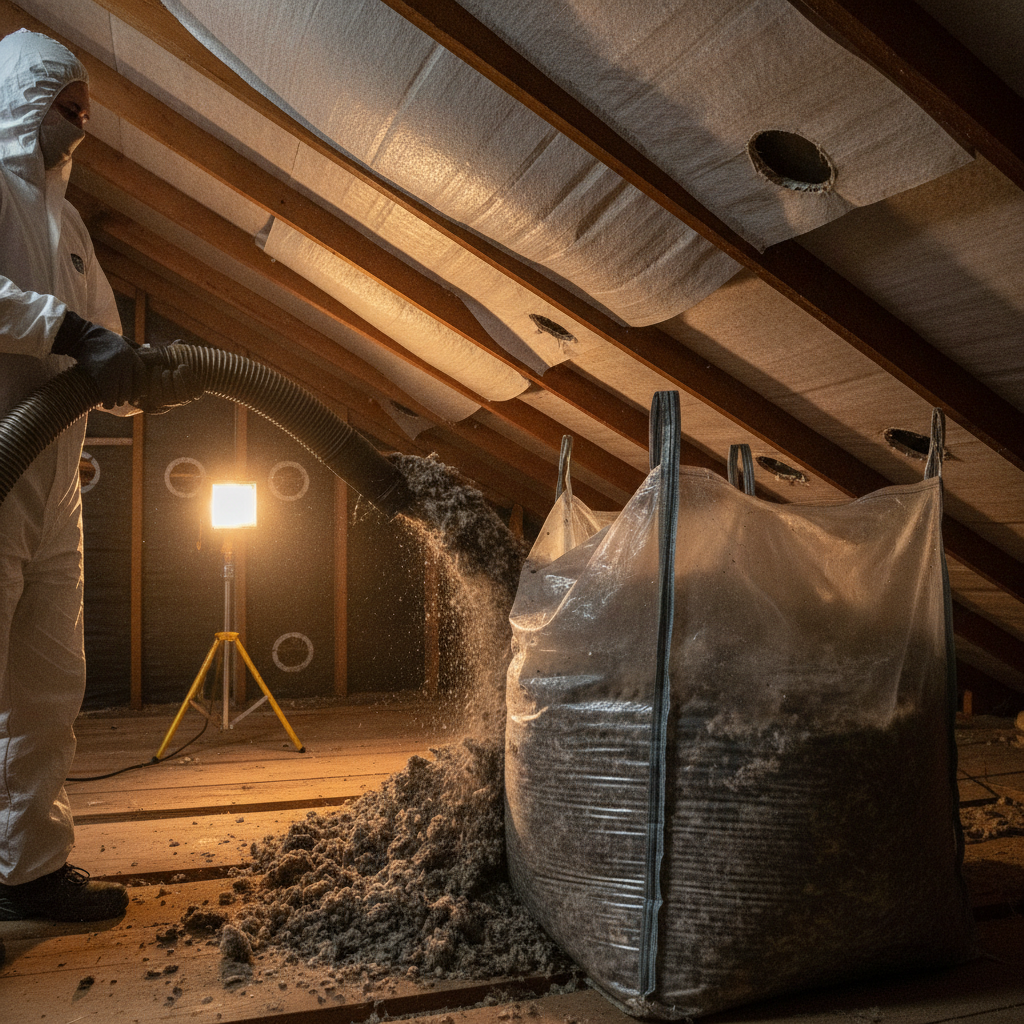
- Insulation work: If material is wet or contaminated, we extract it with HEPA‑filtered equipment into sealed bags.
- Ventilation fixes: Install baffles to protect soffit intake, correct exhaust, and re‑route any bath/dryer ducts outdoors.
- Verification + warranty: Final walkthrough with photos and prevention notes; we issue your Mold Remediation Warranty Certificate.
| Step | Purpose |
|---|---|
| Containment | Protect living areas and control airborne spread |
| HEPA filtration | Continuously scrub air for cleaner, safer work |
| Wire‑brush + vacuum | Remove growth and residue down to sound wood |
| Antimicrobial treatment | Treat affected wood with EPA‑approved products |
| Insulation service | Eliminate reservoirs and restore thermal performance |
| Airflow corrections | Balance intake/exhaust to prevent recurrence |
| Documentation | Provide photos and a warranty certificate |
Want our credentials and approach at a glance? Check the About page, or start a booking from the contact page. For broader service context, visit the ASM home page.
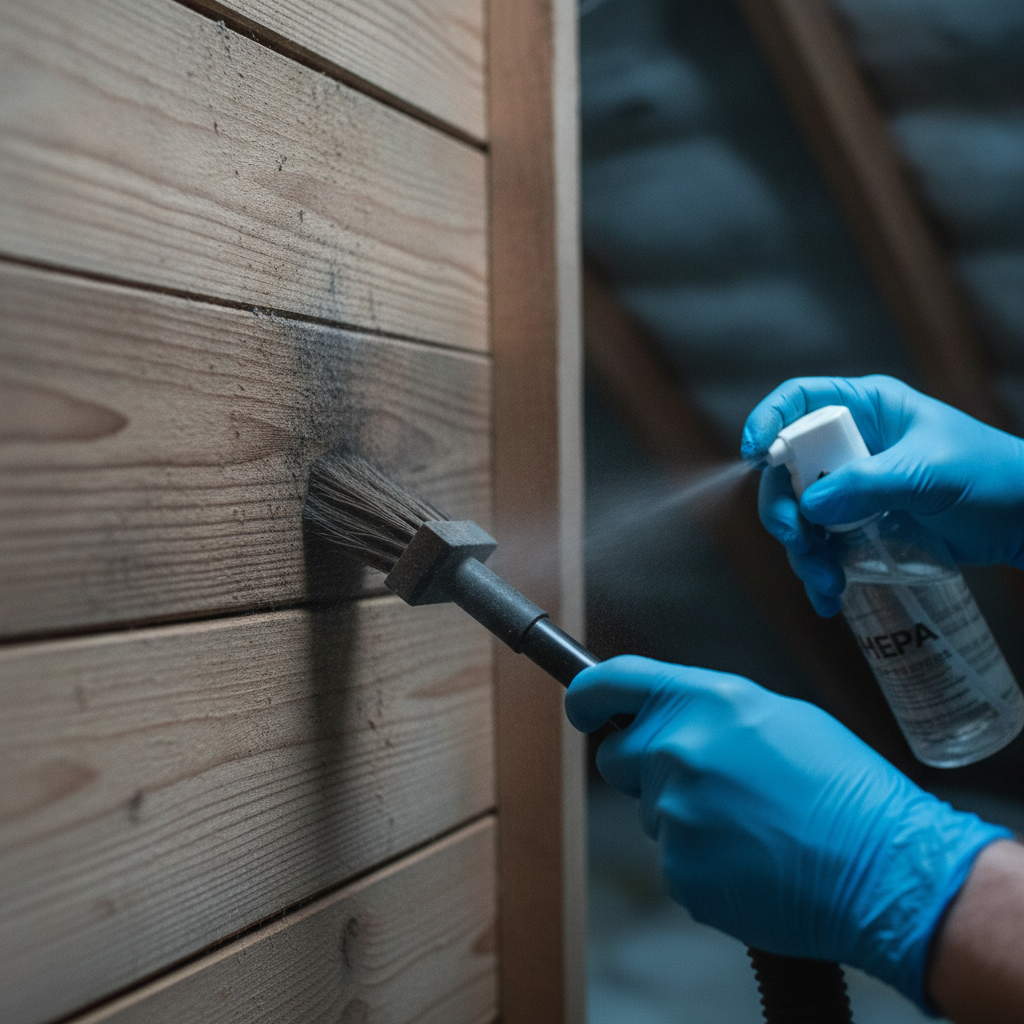
Attic Insulation Removal and Replacement: The Step Most Companies Skip
Wet or mold‑affected insulation traps humidity against cold sheathing and can re‑seed growth. We remove the bad material, install soffit baffles, and replace with clean insulation only after wood is clean and dry. Skipping this step is why mold often returns by next winter.
What homeowners notice during this phase:
- The sound: A steady vacuum as we extract blown‑in material into sealed bags—no clouds of dust drifting through your hallway.
- The look: Clear rafter bays with visible baffles protecting each soffit opening so intake can’t get buried again.
- The finish: Fresh, evenly laid insulation that supports ventilation instead of choking it.
This is the fork in the road between a cosmetic cleanup and a real fix designed for Ontario’s freeze‑thaw pattern.
Ventilation Fixes That Prevent Mold from Returning
Prevention depends on balanced intake/exhaust, open soffits with baffles, sealed attic bypasses, and bath/dryer ducts vented outdoors. These stabilize attic humidity and temperature so conditions for mold growth don’t return.
- Protect intake: Keep soffits open with baffles so insulation can’t drift and choke airflow.
- Match exhaust: Ridge or roof vents need enough intake behind them; too little intake starves exhaust and traps moisture.
- Re‑route exhausts: Bath and dryer vents must terminate outdoors with intact, sealed ducts.
- Air sealing: Close gaps around can lights, hatches, and chases so warm, moist air isn’t feeding the attic.
We leave you with simple monitoring tips—peek near eaves after thaws; if nails sweat or stains grow, call us before it snowballs.
What to Expect on Inspection Day (Same‑Day Bookings Available)
Expect a calm walkthrough, moisture readings, and photos you can share with family, insurers, or agents. Most inspections wrap within an hour. Approve the plan and we schedule remediation—mobilizing the same day for urgent cases when crews are open.
- We meet you where you are: Many calls come two days before closing when an inspector flags the attic. We prioritize documentation and fast action.
- Tools we bring: Moisture meters, thermal imaging when useful, and a camera so you can see exactly what we see.
- Your next steps: A written plan with prevention notes, links to our About page for credentials, and the contact page to lock in dates.
Key Takeaways for Scarborough Homeowners
Lasting attic results require two things: meticulous cleaning and fixing the moisture path. If bath fans vent inside or soffits are blocked, stains will return. Choose a provider that cleans, corrects airflow, replaces affected insulation, and documents the outcome.
- Surface cleaning without airflow fixes is a short‑term band‑aid.
- Insulation removal/replacement and soffit baffles are non‑negotiable in our climate.
- Documentation matters for sales and peace of mind—ask for a warranty certificate.
- Same‑day triage prevents small attic issues from becoming roof‑wide problems.
- For health and cleanup principles, consult the EPA, CDC, and CMHC.
FAQ — Attic Remediation in Toronto and the GTA
Homeowners ask about safety, testing, timelines, and recurrence. The core answer is consistent: pair professional cleaning with ventilation and insulation fixes, and document the result. That’s how you prevent a repeat and satisfy real‑estate requirements.
Is attic mold dangerous to my family?
Mold signals a moisture problem that can affect indoor air quality. We isolate the attic, run HEPA filtration, and clean down to sound wood. The prevention step—balanced airflow and sealed bypasses—helps protect living spaces going forward.
Do I need air testing before remediation?
Not always. Visible growth with a confirmed moisture source is typically enough to proceed. We use targeted testing for real‑estate documentation, complex moisture histories, or to verify clearance after remediation when helpful.
How long does attic remediation take?
Modest attics often finish within a day; larger or heavily insulated spaces take longer. Timelines depend on containment setup, insulation removal needs, and ventilation corrections. We set expectations during your inspection.
Will mold come back after cleaning?
If moisture drivers remain, it returns. That’s why we refuse “clean only” requests. We correct soffit intake, balance exhaust, seal bypasses, and replace affected insulation so the conditions for growth are removed.
Need fast help? Book a same‑day attic inspection in Scarborough. We’ll confirm the cause, show you photos, and outline a step‑by‑step plan—often mobilizing immediately for urgent cases. Start here: ASM contact.
About the author: Amardeep Mamidi writes for ASM Mold Removal Inc., a Scarborough‑based team specializing in attic remediation across Ontario. Our certified, insured technicians use containment, HEPA filtration, and EPA‑approved products—and we back work with a Mold Remediation Warranty Certificate.